
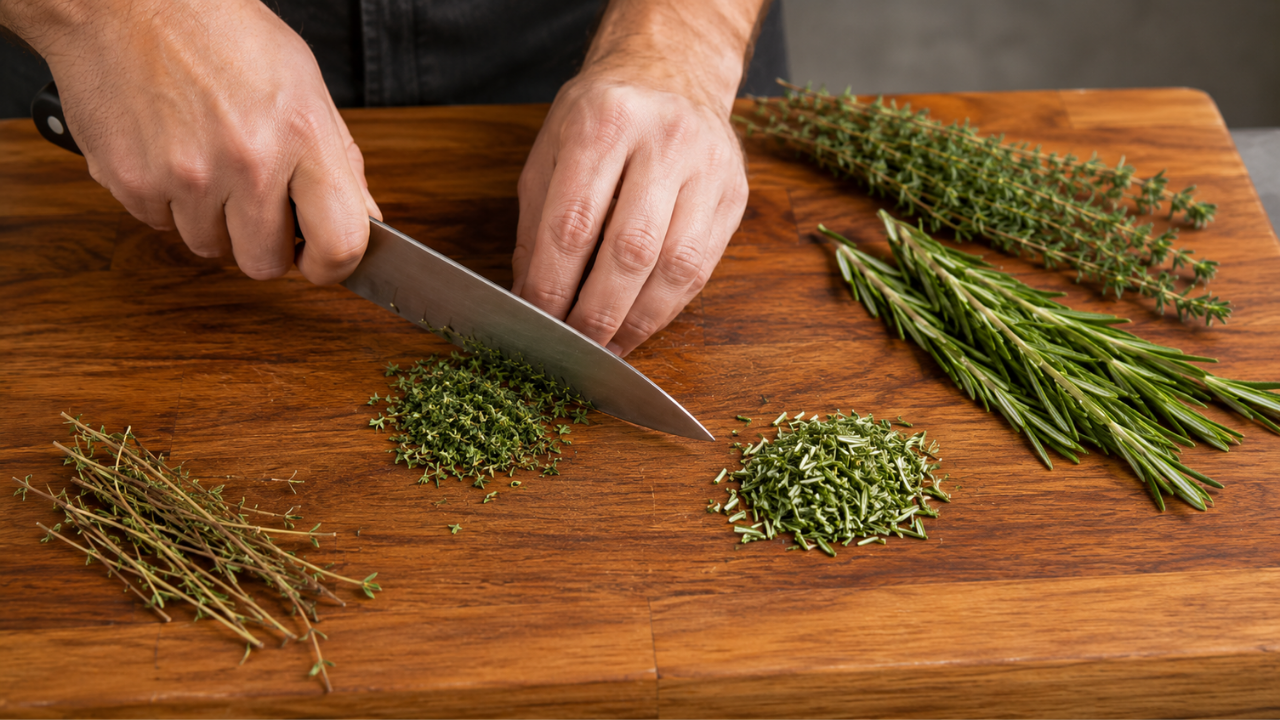
Chopping fresh herbs is not just about making them smaller. It is about keeping the knife in control of the herb, not the other way around. In this demonstration, Chef Mark Sandoval shows how to prepare, gather, and chop thyme and rosemary so the work stays organized from start to finish.
The detail to study is what happens before the knife moves. Setup, gathering, and small resets on the board are what separate a clean chop from scattered pieces chased around the surface. Watch for those moments, and the rest of the technique becomes easier to read.
Watch: Chef Mark Sandoval Demonstrates How to Chop Thyme and Rosemary
Watch the full demonstration before focusing on the individual cuts. The most important details happen before the chopping begins.
Chef Mark first shows how each herb is removed from its stem, then how the pieces are brought into a contained working area on the board. As the herbs become smaller, watch how he corrects their position before continuing.
That correction is the part of the demonstration worth studying closely. The knife does not chase scattered herbs. The herbs are organized first, then chopped with control.
What You Will Notice in This Demonstration
This demonstration is built around small movements that are easy to miss. The setup, the way the herbs are gathered, and the way the cutting area is reset all affect how clean the final chop becomes.
Chef Mark does not begin with chopping. He begins by preparing the herbs so the knife can work cleanly.
Thyme and rosemary are both removed from their stems before they are cut, but they do not behave the same way on the board. Thyme falls into small, delicate leaves. Rosemary separates into firmer, longer needles. Watching that difference explains why Chef Mark adjusts his board control for each herb.
Once the herbs are on the board, notice how Chef Mark keeps them within the blade’s path. As the pieces become smaller, they naturally spread. The professional detail is how he brings them back into position before continuing.
Ingredients in This Demonstration
The two herbs in this demonstration behave differently once they are removed from the stem. Watching that difference helps explain why Chef Mark handles thyme and rosemary with slightly different control on the board.
Fresh Thyme
Fresh thyme is shown first. The important detail is how small the usable leaves are once they are removed from the stem. Before any chopping begins, Chef Mark separates the leaves so the tougher stem does not become part of the finished cut.
Once the thyme is on the board, it forms a light, loose pile. That is what makes control important. The leaves are small enough to scatter easily, so the knife work depends on bringing them into a tighter cutting area before chopping begins.
Fresh Rosemary
Fresh rosemary behaves differently. The needles are longer, firmer, and attached to a woody stem. Chef Mark removes them before beginning the chop.
After the rosemary is stripped from the stem, the pieces are still too long to require refinement. As Chef Mark chops, watch how the rosemary changes from visible needles into shorter, finer pieces. The texture is firmer than thyme, so the cut looks more deliberate, and the gathering step becomes more important.
Tools Visible in the Demonstration

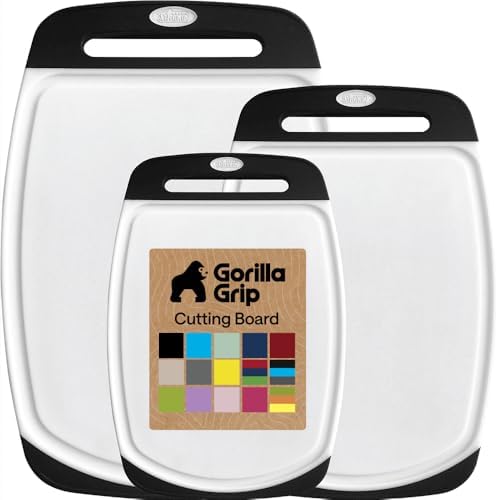
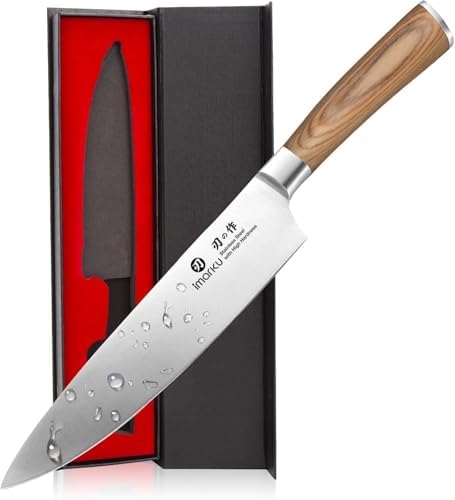
Only a few tools are used, but each one supports control. The knife, board, and small bowl help keep the herb work organized as the pieces become smaller.
Chef’s Knife
Chef Mark uses a chef’s knife to chop both herbs once they have been prepared on the board. The knife works within a contained area rather than moving across scattered leaves and needles.
The blade also helps organize the work. When the herbs spread, Chef Mark uses the knife to bring them back together before continuing.
Watch how close the knife stays to the board. With small herbs, control comes from short, controlled movements, steady contact, and keeping the herbs within reach of the blade.
Cutting Board
The cutting board provides a stable surface for stripping, gathering, chopping, and resetting. Because the herbs are small, the open board also makes it easy to see when they start moving away from the cutting area.
That visible spread is one of the key cues in the demonstration. When the herbs move out of position, Chef Mark brings them back into a workable pile rather than continuing to chop across a scattered surface.
Small Bowl
The small bowl keeps the herb work organized near the cutting area. It helps separate prepared herbs and stem pieces from the active knife work, which keeps the board cleaner throughout the demonstration.
Technique Breakdown
The demonstration moves through two herbs, but the same pattern repeats for each: prepare the herb, gather it, chop it, and bring it back together as needed.
Preparing the Thyme
Chef Mark begins with the thyme before any chopping. The first visible action is separating the small thyme leaves from the stems.
As the leaves come off, they collect loosely on the board. This matters because thyme leaves are small and light, and they can spread quickly if the board is not kept organized from the start.
Chopping the Thyme
Once the thyme is prepared, Chef Mark gathers the leaves into a small working area. The loose leaves become easier to cut once they are brought together into a compact pile.
The knife then moves through the thyme with short, controlled strokes. Because the pile is small, the blade does not need large movement to do the work. Watch how the thyme stays within the path of the knife throughout the cut.
Preparing the Rosemary
Chef Mark then moves to the rosemary. Before chopping, he removes the needles from the woody stem. The rosemary looks different from the thyme as soon as it lands on the board. The pieces are longer, firmer, and more structured than the thyme leaves.
That difference matters. Rosemary needs the same board control as thyme, but its texture changes how the knife moves through it and how often the gathering step is needed.
Chopping the Rosemary
With the rosemary prepared, Chef Mark gathers the needles into a workable mound. The knife begins shortening the longer pieces into a finer cut.
As the rosemary spreads, he brings it back together before continuing. This keeps the chop organized and prevents the knife from working across a scattered board. The final texture becomes finer through repeated gathering and cutting. The professional detail is not speed. It is the steady control of the herb pile from the first cut to the finish.
Professional Details to Notice
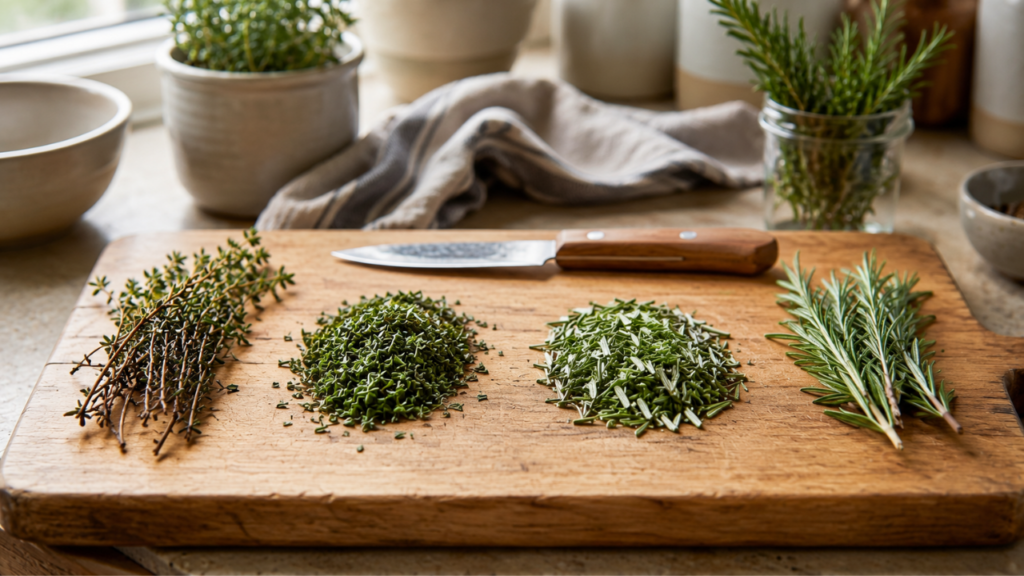
The refinements in this demonstration are small, but they are what keep the herb work clean. These are the main adjustments to watch:
Remove stems before the knife touches the board. Thyme leaves and rosemary needles both need to be separated from their stems first. Skipping this step pulls tough, woody material into the finished chop.
Gather before you cut. A scattered pile of herbs gives the knife less to work with. Bring the herbs together into a compact mound, then begin chopping.
Reset as the herbs spread. Small herbs move during chopping. Bring them back into position before continuing rather than chasing pieces across the board.
Stop when the texture is right. The goal is a clean, usable chop, not an herb paste. Chef Mark stops when the pieces are fine enough for the dish.
Common Mistakes to Avoid
The common problems with chopping thyme and rosemary are visible on the board. This demonstration helps correct a few common habits:
Chopping the stems with the leaves. Chef Mark removes the thyme leaves and rosemary needles from their stems before the knife touches the board. The stem is not part of the chopped herb pile.
Letting small herbs scatter across the board. Small herbs spread quickly once they are removed from the stem. Chef Mark corrects this by gathering the herbs into a tighter working pile before chopping, then resetting them as they move.
Treating thyme and rosemary the same way. Both herbs need stem removal, but thyme has small, delicate leaves, while rosemary has longer, firmer needles. The demonstration helps correct the habit of applying the same pressure and rhythm to all herbs.
Continuing to chop without resetting. As the herbs become smaller, they naturally spread. If the cook keeps chopping without bringing them back together, the knife has less control over the cut. Chef Mark clearly shows the correction: reset first, then continue.
Where This Technique Transfers
This same control matters whenever chopped thyme or rosemary will remain in the finished dish. The cleaner the herb prep, the more evenly the herbs can be distributed throughout the food.

- Cotton
- Value Pack – This kitchen towel set includes 12 premium cotton towels in a classic dobby weave style, each measuring 15x…
- Functionally Reliable – These cotton kitchen towels is elegant yet highly functional. Whether wiping counters, drying di…
Roasted Vegetables and Potatoes
When thyme or rosemary is chopped for roasted vegetables or potatoes, the herbs need to be small enough to distribute evenly across the surface rather than sitting in large, stemmy pieces. The board control in this demonstration gives the herbs a cleaner texture before they go into the pan, resulting in more even coverage on the food.
Chicken, Meat, and Marinades
Chopped thyme and rosemary are often pressed directly onto the surface of chicken or meat, or stirred into a marinade where even distribution matters. A cleaner chop helps the herbs spread more consistently. Rosemary needles, in particular, benefit from repeated gathering and chopping, since they can become noticeable in the dish if left too long.
Sauces, Dressings, and Compound Butter
For sauces, dressings, and compound butter, chopped herbs need to blend into the mixture rather than remain visible in large pieces. The controlled chop in this demonstration helps reduce the herbs to a size small enough to mix more evenly. The reset is especially important here because finer herbs spread more easily and need to be brought back together more often to maintain a consistent cut.
When a Looser Chop Is Enough
A finer chop is not always necessary. If thyme or rosemary is being used only to infuse flavor and will be strained or removed later, a looser preparation may be more practical. That distinction still comes back to intention. The technique in this demonstration is built for dishes where the chopped herb will remain in the finished food.
Related Skills and Further Learning
This demonstration connects naturally to Chef Mark’s chiffonade demonstration. In both videos, the herbs are controlled before the knife moves. Chiffonade shows that principle with leafy herbs like basil. This thyme-and-rosemary demonstration applies the same idea to smaller herbs that scatter more readily.
It also connects to Chef Mark’s onion, shallot, and vegetable-cut demonstrations, where the same gathering-and-resetting principle applies at a larger scale.
Knife sharpening and honing are useful supporting skills as well. With small herbs, a clean edge helps the knife cut through the gathered pile without crushing or dragging the pieces across the board.
Take It to the Board
The most important part of this demonstration happens before the chopping begins. Chef Mark first separates the usable herb from the stem, then brings the herbs into a controlled area on the board. As you watch, focus on three details: stem removal, pile control, and resetting the cutting area. Those small adjustments keep the knife work cleaner as the thyme and rosemary become finer.
Watch another Chef Mark Sandoval demonstration to continue refining your knife precision.