
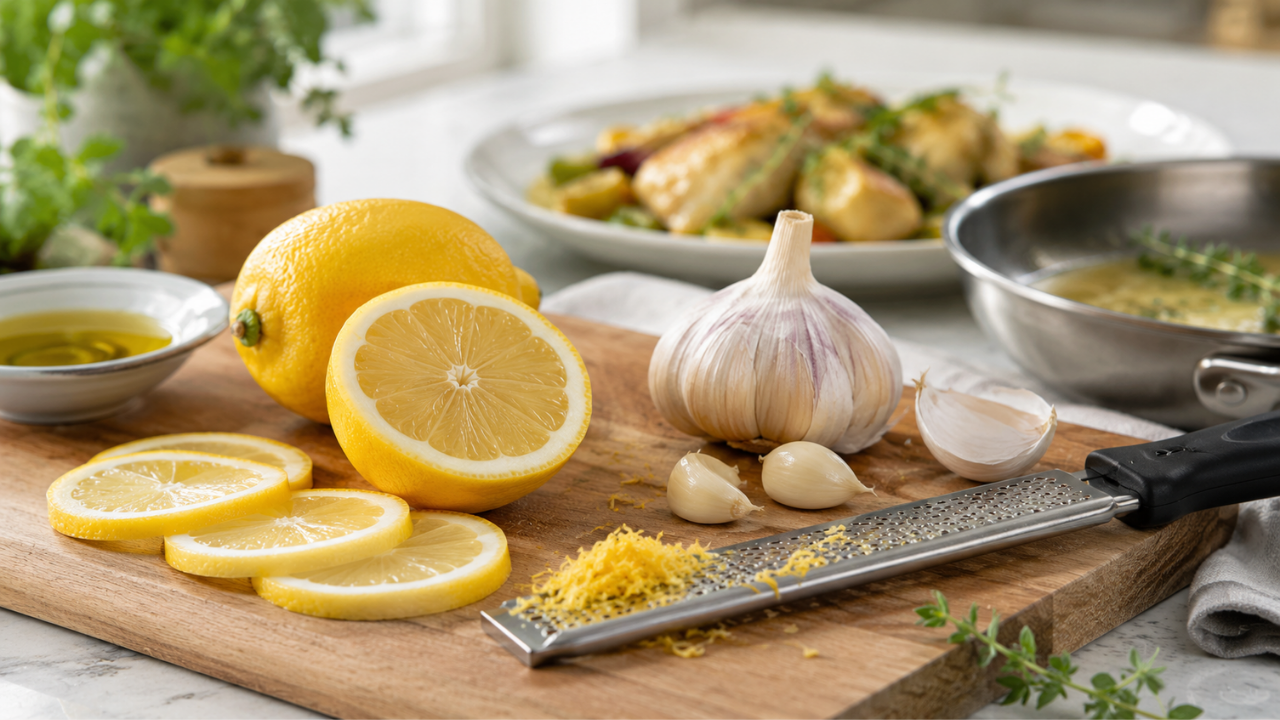
Lemon and garlic are two of the most familiar ingredients in savory cooking, but they do not improve a dish in the same way.
Garlic gives food a savory base. It adds depth, warmth, and aroma. Lemon works from the other direction. It brings acidity, freshness, and lift. When used well together, the dish does not simply taste more lemony or garlicky. It tastes clearer.
That is why this pairing appears in so many savory dishes, from roasted vegetables and seafood to chicken, pasta, dressings, marinades, and pan sauces. Garlic helps build the flavor. Lemon helps sharpen it.
The key is control. Raw garlic can taste sharp. Burned garlic can taste bitter. Too much lemon can make a dish taste sour instead of bright. The goal is not to use more of either ingredient. The goal is to understand what each one does, when to add it, and how it changes the food around it.
Once you understand that, lemon and garlic become more than a common flavor combination. They become a simple way to judge what a dish needs before it reaches the table.
Lemon and Garlic Work in Different Ways
Lemon and garlic are often used together, but they do not do the same job in a dish.
Lemon brings acidity. That acidity makes food taste brighter and more defined. It can cut through richness, wake up mild ingredients, and make a finished dish feel fresher. Lemon also brings aroma, especially from the zest, which carries citrus flavor without as much sharpness as the juice.
Garlic works differently. It is aromatic, which means it helps build the dish’s flavor base. Depending on how it is prepared, garlic can taste sharp, warm, sweet, or deeply savory. Raw garlic is more direct and aggressive. Gently cooked garlic becomes softer and rounder. Roasted garlic becomes sweeter and more mellow.
That difference matters because lemon usually lifts a dish, while garlic gives it a stronger foundation. Lemon helps the flavors feel clearer. Garlic helps the food feel fuller and more savory.
The best results do not come from using equal amounts of lemon and garlic. They come from using each ingredient for the role it plays. A rich dish may need more lemon to balance it. A mild dish may need only a small amount of garlic. A dressing may need both in sharper form, while a warm pan sauce may need softened garlic and lemon added near the end.
When lemon and garlic are balanced well, neither one takes over. The dish tastes brighter, deeper, and more complete.
Why This Pairing Makes Savory Food Taste Brighter
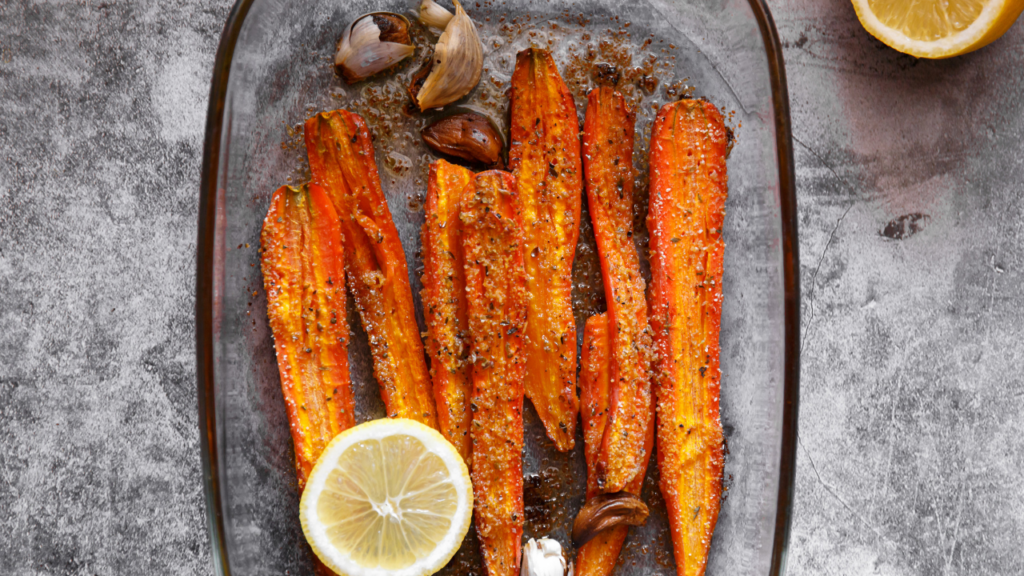
When a savory dish tastes heavy, flat, or dull, it often does not need more seasoning in the usual sense. It may need contrast.
Lemon provides that contrast through acidity. A small amount of lemon juice can sharpen the flavors already in the dish. It can make roasted vegetables taste cleaner, seafood taste fresher, chicken taste less heavy, and pasta or grains taste more defined. The lemon does not replace the main ingredient. It helps the main ingredient come into focus.
Garlic gives that brightness something savory to work against. Without a deeper flavor underneath it, lemon can taste thin or sharp. Garlic adds warmth, aroma, and depth, so the acidity has a fuller base to lift. This is why lemon and garlic often feel more complete together than either one does alone.
You can see this in many everyday foods. Roasted vegetables become more vivid with garlic in the roasting pan and lemon added at the end. Seafood benefits from garlic’s savory depth and lemon’s clean finish. Chicken can taste richer without becoming heavy. Pasta, sauces, dressings, and grains can all feel more balanced when paired with a bit of control.
The important point is that brightness does not mean sourness. A bright dish tastes lively and clear. A sour dish is dominated by acid. In the same way, garlic does not need to take over for the pairing to work. When garlic is controlled and lemon is added judiciously, the dish tastes more alive without being harsh.
Where Lemon and Garlic Appear in Real Cooking
Lemon and garlic often appear together in many savory dishes because the pairing is versatile. The ingredients remain the same, but their roles change depending on how they are used.
| Dish or Use | How Lemon Works | How Garlic Works | What to Notice |
| Vinaigrettes | Adds sharp acidity and freshness | Adds a direct savory edge, often in raw form | The flavor is usually sharper because the dressing seasons food on contact |
| Marinades | Brightens and seasons the surface of the food | Adds aroma and savory depth before cooking | The goal is balance, not making the food aggressively acidic or garlicky |
| Pan sauces | Brightens the sauce near the end | Often softened first for warmth and depth | Cooked garlic builds the base, while lemon keeps the sauce from tasting heavy |
| Roasted vegetables | Sharpens the roasted flavor after cooking | Can become sweeter and more mellow as it roasts | Heat builds depth, while final acidity brings lift |
| Seafood | Adds freshness and definition | Gives delicate seafood a savory base without heaviness | A small amount of lemon can make seafood taste cleaner |
| Chicken | Cuts through richness and makes the dish feel lighter | Adds warmth, aroma, and savory depth | The pairing can make chicken taste fuller without becoming heavy |
| Pasta, grains, and beans | Makes mild ingredients taste clearer and less flat | Gives the dish a stronger savory foundation | Lemon and garlic help simple foods taste more complete |
The important pattern is simple: acid plus aromatic creates lift plus depth. Lemon brings the lift. Garlic brings the depth. Raw lemon and raw garlic taste sharper. Cooked garlic and warmed lemon taste softer. Once you recognize that difference, the pairing becomes easier to control across many dishes.
How Form and Heat Change Lemon and Garlic

- SIMPLE TO USE & BUILT TO LAST: Our premium quality garlic press is constructed from food-grade, rust-resistant materials…
- CRUSH AND MINCE UNPEELED CLOVES: No more strong garlic odor or sticky residue lingering on your hands! Our garlic mincer…
- EASY TO CLEAN: Simply rinse your garlic and ginger press tool under running water and use the included cleaning brush to…
Lemon and garlic both change depending on how they are prepared. Juice, zest, raw garlic, cooked garlic, and roasted garlic do not create the same result. Heat matters. Texture matters. Timing matters.
This is why the question is not only whether a dish needs lemon or garlic. The better question is what kind of lemon and garlic flavors the dish needs.
Garlic Changes With Heat
Heat changes garlic quickly. Raw garlic tastes sharp, direct, and sometimes aggressive. When garlic is gently cooked in fat, its flavor softens. It becomes warmer, rounder, and more savory. With enough gentle cooking, garlic can even taste slightly sweet.
That is why many dishes begin by cooking garlic briefly in oil or butter. The fat carries the garlic flavor through the dish, while the heat softens its raw edge. The goal is usually aroma, not deep browning.
Garlic also has a limit. If it browns too far or burns, it can turn harsh and bitter. This is especially easy with minced or grated garlic because the pieces are small and cook very fast. Once garlic burns, its bitterness can spread throughout the dish.
Lemon Juice Brings Fresh Acidity
Lemon juice behaves differently. It is usually at its brightest when added near the end of cooking. Heat can soften its sharpness, but it can also dull the fresh, clean flavor that makes lemon useful in the first place.
A squeeze of lemon just before serving can make a sauce, a vegetable dish, or a piece of fish or chicken taste more alive. It can also help balance richness from butter, olive oil, cream, cheese, or meat juices.
Because lemon juice quickly alters the balance of the whole dish, it should be added gradually. A small amount can brighten. Too much can sour the dish.
Lemon Zest Brings Aroma Without Sourness
Lemon zest works differently from lemon juice. Zest brings citrus aroma more than acidity. Because it is not adding the same sharp sourness as the juice, it can handle gentle heat better.
Zest can be stirred into warm pasta, softened into butter, added to roasted vegetables, or used in a sauce where aroma matters as much as brightness. It gives the impression of lemon without pushing the dish strongly toward acidity.
This makes zest useful when a dish needs freshness but not a sour finish.
Choosing the Right Form Matters
Each form of lemon and garlic plays a different role. Choosing the right one matters more than simply adding the ingredient.
| Form | What It Adds | Best Used For | Watch For |
| Lemon juice | Acidity and immediate brightness | Finishing sauces, vegetables, seafood, chicken, grains, and beans | Too much can taste sour |
| Lemon zest | Citrus aroma without much sourness | Pasta, dressings, seafood, vegetables, sauces, and compound butters | Avoid the bitter white pith |
| Raw garlic | Sharpness and intensity | Dressings, dips, marinades, and cold sauces | Can taste harsh if the dish needs softness |
| Gently cooked garlic | Warmth and savory depth | Pan sauces, pasta, beans, grains, soups, and vegetables | Burns quickly when minced or grated |
| Roasted garlic | Sweetness and softness | Spreads, sauces, roasted dishes, mashed vegetables, and meats | Can be too mellow if the dish needs a sharper edge |
The basic rule is simple: cook garlic gently for depth, and add lemon juice late for freshness. Use lemon zest when you want citrus aroma without making the dish noticeably sour.
Using Lemon and Garlic in Your Own Kitchen

- Premium Quality With Thicker Steel – This top rated set of mixing bowls is made using thicker than industry standard sta…
- Non-Slip Silicone Base – Keep your bowl exactly where you want it to be no matter how passionately you mix with our non-…
- Mix And Measure In The Same Bowl – With this premium PriorityChef mixing bowl set, we have used etched measurements that…
Lemon and garlic are most useful when you know what problem they are solving.
Start by tasting the dish. If it tastes rich, heavy, muted, or one-dimensional, it may not need more ingredients. It may need better balance. Garlic can add a stronger savory foundation when the dish needs it. Lemon can help when the dish needs a lift, freshness, or sharper definition.
Use garlic when the food tastes thin or lacks depth. A little garlic can give vegetables, beans, grains, sauces, and proteins a more complete savory base. The form matters. Raw garlic is sharp and direct. Gently cooked garlic is softer and warmer. Roasted garlic is sweeter and more mellow. Choose the form that fits the dish, not just the amount.
Use lemon when the dish tastes dull or too heavy. Lemon juice can brighten a pan sauce, finish roasted vegetables, sharpen a dressing, or make chicken, seafood, pasta, and beans taste clearer. Add it gradually and taste as you go. Acidity can quickly change a dish, and a small amount can make a big difference.
The timing matters too. Garlic often works best when it has time to flavor the fat, sauce, or dressing around it. Lemon juice often works best near the end, when its freshness is still clear. Lemon zest can be added earlier for a citrus aroma with less acidity.
A good way to think about the pairing is this: garlic gives the dish a foundation, and lemon gives it a cleaner finish. One builds depth. The other brings lift. When both are used in moderation, the food tastes more balanced without being obviously lemony or garlicky.
Common Mistakes and Misconceptions
Lemon and garlic are familiar ingredients, which can make them feel easy to use. But because both are strong in different ways, they can also throw a dish out of balance quickly.
- Using too much lemon. Lemon should make a savory dish taste brighter, cleaner, and more defined. If too much is added, the brightness turns sour. Instead of supporting the food, the acidity becomes the main thing you taste. Add lemon juice gradually, especially near the end of cooking.
- Adding raw garlic when the dish needs a bit of softness. Raw garlic can be useful in vinaigrettes, dips, and some cold sauces, but it is sharp and direct. In a warm vegetable dish, pan sauce, pasta, or bean dish, raw garlic may feel too aggressive. Gently cooking the garlic first makes it warmer, rounder, and easier to blend into the dish.
- Burning garlic and mistaking bitterness for depth. Deep color is not always the same as deep flavor. Garlic that is browned too far can turn bitter, especially when it is minced, grated, or sliced thinly. Once that bitterness enters the oil or sauce, it is hard to remove. Garlic often needs only enough heat to become fragrant and softened.
- Adding lemon too early. Lemon juice has a fresh, clean finish that is most pronounced when added near the end. If it cooks too long, that freshness can become dull. The dish may still have acidity, but it may not have the same lift.
- Treating lemon and garlic as a fixed formula. The right amount depends on the dish. A rich chicken dish may need more lemon than a delicate piece of fish. A bean dish may benefit from softened garlic, while a dressing may need a sharper note from raw garlic. The method, ingredient, and timing all change how the pairing should be used.
- Assuming more garlic automatically means more flavor. Garlic can add depth, but too much can cover the rest of the dish. Good flavor does not always come from making one ingredient louder. It comes from making the whole dish clearer and more balanced.
The goal is not to make food taste strongly of lemon and garlic. The goal is to use lemon for lift, garlic for depth, and enough restraint that the main ingredient still leads.
Controlled Exceptions and Judgment Calls
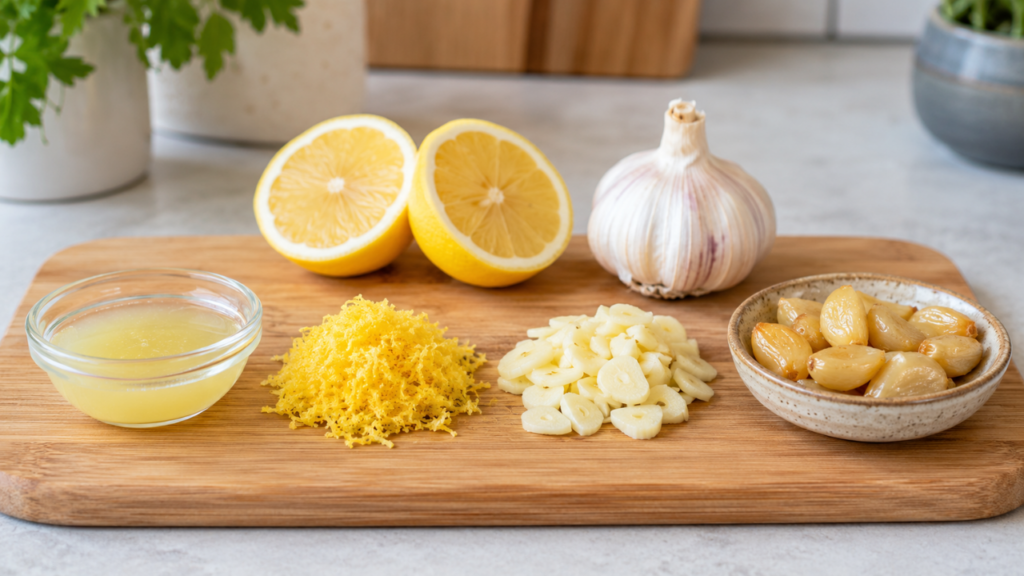
Good cooking rules are useful, but they are not fixed laws. Lemon and garlic both depend on context. The same ingredient can be helpful in one dish and too strong in another, depending on the method, timing, and main ingredient.
Raw Garlic Works When Sharpness Has a Purpose
Raw garlic can taste too sharp in many cooked dishes, but that does not make it wrong. In dressings, dips, marinades, and some cold sauces, its direct bite can be useful.
A vinaigrette may need raw garlic to stand up to oil, greens, or roasted vegetables. A dip may need that intensity because it is served cold and spread over other foods. The key is intention. Raw garlic works best when its strength has a clear role.
Lemon Can Be Added Earlier in Marinades
Lemon juice is often added near the end of cooking for freshness, but marinades are an exception. In a marinade, lemon can season and brighten the surface of the food before it reaches the heat.
Even then, control matters. Too much acid, or too much time in acid, can affect texture, especially with delicate foods like fish or seafood. The lemon should support the ingredient, not start changing it too aggressively.
Lightly Browned Garlic Needs Close Control
Garlic can be browned lightly in some dishes. A pale golden color can bring a deeper, nuttier flavor, especially in oil-based sauces, sautés, or simple pasta dishes.
But this is a narrow window. Garlic moves quickly from fragrant to golden to bitter, especially when it is sliced thin, minced, or grated. If browning garlic is the goal, the heat needs to be moderate, and the garlic needs close attention.
Some Dishes Need Zest Instead of Juice
Some dishes need lemon flavor without much acidity. This is where lemon zest can be more useful than lemon juice.
Delicate seafood, mild vegetables, cream sauces, and light pastas can be overpowered by too much lemon juice. Zest gives citrus aroma without making the dish taste sour. It can make the food seem fresher while still letting the main ingredient take center stage.
Rich Dishes Can Handle More Lemon
Rich dishes often need more lemon than lean dishes because fat softens acidity. Butter, olive oil, cream, cheese, and fatty cuts of meat can all make lemon taste rounder and less sharp.
A lean piece of fish may need only a few drops. A buttery pan sauce may need a stronger squeeze to taste balanced.
The real skill is not memorizing a single amount of lemon or a single way to use garlic. It is learning to read the dish. Ask whether it needs sharpness or softness, acidity or aroma, depth or lift. Then choose the form of lemon or garlic that solves that specific problem.
Quick Takeaways
Lemon and garlic work best when each ingredient plays its own role.
- Lemon brightens; garlic deepens.
- Lemon juice adds acidity, while lemon zest adds aroma.
- Garlic changes dramatically depending on whether it is raw, cooked, browned, or roasted.
- Add lemon near the end for a fresh finish.
- Use the pairing to make savory food clearer, not louder.
FAQs
Lemon and garlic are simple ingredients, but the way they are used changes the result. These questions focus on timing, balance, and choosing the right form for the dish.
Is lemon and garlic always a good combination?
Lemon and garlic work well in many savory dishes, but they are not automatic. The amount, timing, and form need to fit the food. A bold dressing may handle raw garlic and lemon juice well, while a delicate fish dish may need only lemon zest and a small amount of gently cooked garlic.
Should lemon juice be added before or after cooking?
Lemon juice is usually best added near the end for a fresh, bright finish. Heat can soften the lemon’s sharpness, but it can also dull its clean flavor. Marinades are an exception, because the lemon is added earlier to season and brighten the surface of the food before cooking.
Why does garlic sometimes taste bitter?
Garlic can taste bitter when it is cooked too aggressively or browned too far. Minced, grated, or thinly sliced garlic burns quickly because the pieces are small. Gentle cooking brings out warmth and sweetness, while too much heat can create harshness.
What is the difference between lemon juice and lemon zest?
Lemon juice adds acidity. It makes food taste brighter and sharper. Lemon zest adds citrus aroma without making the dish noticeably sour. Use juice when the dish needs a lift. Use zest when the dish needs lemon flavor without a strong acidic bite.
Can lemon and garlic make a dish taste too sharp?
Yes. Too much lemon can make food taste sour, and too much raw garlic can make it taste harsh. The goal is balance. Lemon should clarify the dish, and garlic should support the savory base. Neither ingredient should cover the main food.
When should I use raw garlic instead of cooked garlic?
Use raw garlic for a sharp, direct flavor. It works well in vinaigrettes, dips, marinades, and some cold sauces. Use cooked garlic when the dish needs a softer, warmer flavor, such as in pan sauces, pasta, beans, grains, soups, or roasted vegetables.
Why do rich dishes often need more lemon?
Fat softens acidity. Butter, olive oil, cream, cheese, and fatty cuts of meat can make lemon taste rounder and less sharp. That is why a rich pan sauce or buttery pasta may need more lemon than a lean piece of fish or a simple vegetable dish.
Kitchen Tools That Support This Concept


Lemon and garlic are simple ingredients, but the right tools make them easier to control. The goal is not special equipment. The goal is better texture, cleaner distribution, and more balanced flavor.
A Microplane or fine grater is useful for lemon zest because it removes the fragrant outer layer without taking too much of the bitter white pith underneath. Fine zest spreads more evenly through a dish than large strips of peel, helping the lemon aroma reach more bites.
The same tool can also be used for garlic when you want a very fine texture. Finely grated garlic blends easily into dressings, marinades, sauces, and pastes. Because it releases flavor quickly, it should be used with care. Grated garlic tastes stronger than chopped garlic, even when the amount is the same.
A citrus juicer or reamer helps extract lemon juice cleanly and efficiently. It also makes it easier to add juice gradually rather than squeeze aggressively over the dish. That control matters because acidity changes flavor quickly. A little lemon can brighten a dish, while too much can push it into sourness.
A small mixing bowl and whisk are useful for dressings, marinades, and pan sauces. They help evenly combine lemon juice, garlic, fat, salt, and other ingredients. This matters because lemon and garlic can taste harsh when they are not well distributed. A dressing should taste balanced throughout, not sharp in one bite and flat in the next.
These tools support the same basic idea: control. A fine grater controls texture. A juicer controls acidity. A bowl and whisk control distribution. Together, they help lemon and garlic do their jobs without overpowering the dish.
How to Use Lemon and Garlic With Better Judgment
Lemon and garlic work so well together because they solve different problems in savory cooking. Garlic adds depth, warmth, and a stronger savory base to food. Lemon brings acidity, aroma, and lift. One builds the dish from underneath. The other helps the finished dish taste clearer.
The important part is control. Raw garlic, cooked garlic, roasted garlic, lemon juice, and lemon zest all create different results. Choosing the right form matters more than simply adding the ingredients.
Before serving a dish, taste it and ask what it needs. If it feels flat or heavy, a little lemon may bring it back into focus. If it feels thin or unfinished, garlic can add depth. If it already tastes balanced, it may not need more of either one.
Good cooking is not always about making flavors louder. Often, it is about making them easier to understand. Lemon and garlic are useful because they can make a savory dish taste brighter, deeper, and more complete when used with restraint.
Explore related Kitchen Know How articles to deepen your technique and cook with clearer control.