
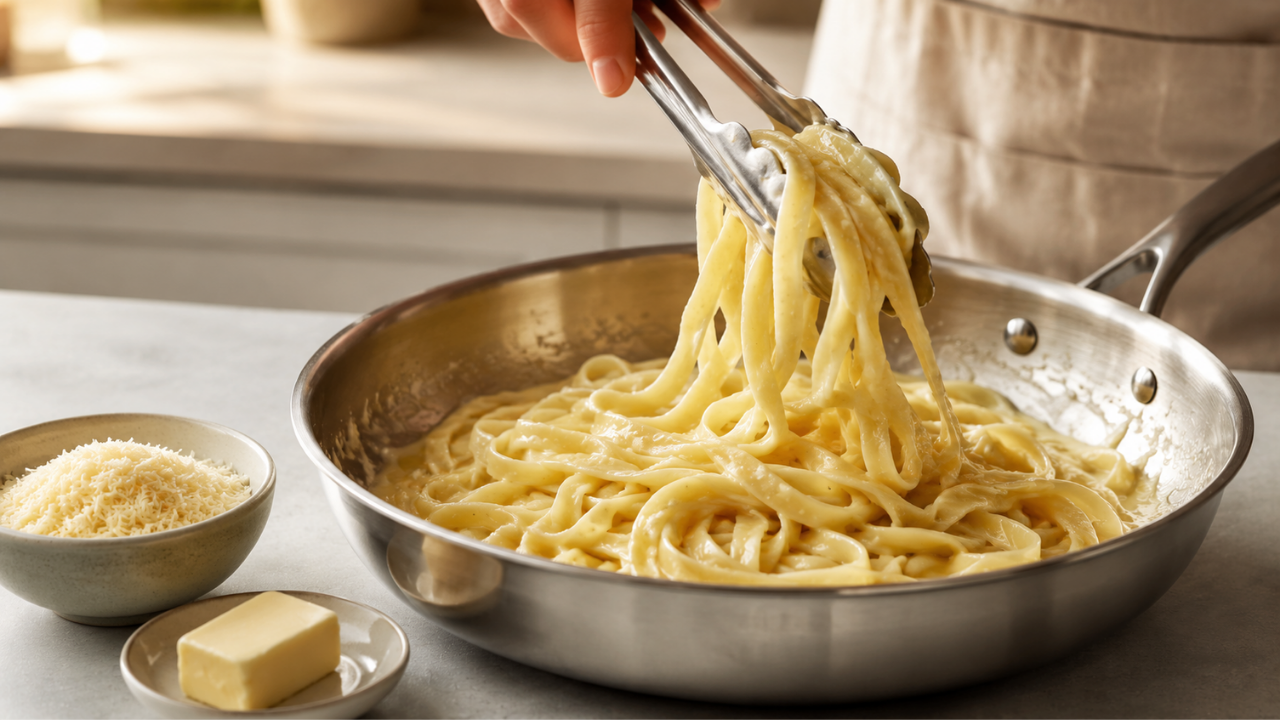
Alfredo sauce is one of the most familiar pasta sauces for home cooks, but it is also one of the most misunderstood.
Many people know Alfredo as a rich, creamy white sauce served with fettuccine. In everyday American cooking, that version is common. But the original idea behind Alfredo was much simpler: hot pasta, butter, Parmesan, and enough movement to turn those ingredients into a smooth coating. Fettuccine Alfredo is associated with Rome, Alfredo di Lelio, and a pasta dish built around fettuccine, butter, and Parmesan.
That difference matters because Alfredo is not only about richness. It is about how fat, cheese, heat, and pasta work together. When you understand where Alfredo sauce comes from, you can make better choices in the kitchen. You can tell when the sauce needs more looseness, when the cheese is overheating, and when adding more cream or butter will not solve the problem.
Home cooks encounter Alfredo in many forms: restaurant pasta, jarred sauces, quick weeknight dinners, and homemade versions that either turn silky or become heavy and grainy. Understanding its origin gives you a clearer way to judge the sauce, rather than just following a recipe.
Alfredo Began as Butter, Cheese, Pasta, and Emulsion
At its core, Alfredo is not a separate sauce poured over pasta. It begins with hot fettuccine, butter, and finely grated Parmesan brought together until they coat the noodles.
That coating is the important idea.
The heat from the pasta softens the butter and helps the cheese begin to melt. As the pasta is tossed, the fat from the butter, the moisture clinging to the noodles, and the starch from the pasta water work together. When those elements come together properly, they form a smooth, glossy coating rather than a heavy sauce on top.
This is what distinguishes Alfredo’s original idea from many modern versions. The early Roman style was not built like a cream sauce made in a separate pan. It was closer to a pasta finish, where the noodles themselves help create the sauce.
The foundational rule is simple: Alfredo works when heat, fat, cheese, and starchy moisture stay in balance.
If the pasta is too cool, the cheese may not melt smoothly. If the heat is too aggressive, the cheese can tighten or turn grainy. If there is not enough moisture, the sauce can become thick and clumpy. If there is too much liquid, it can lose its coating power.
Understanding Alfredo this way gives you a better starting point. You are not just trying to make pasta taste rich. You are trying to build a smooth coating that clings to the noodles.
How the Origin Changes the Way You Cook Alfredo

- STRUDY FOOD-GRADE STAINLESS STEEL COOKING TONGS – EDDEAS kitchen tongs for cooking are made of 1mm thick food-grade stai…
- LOCKING MECHANISM AND PULL-DOWN DESIGN – Perfect Metal Kitchen Tongs for Cooking .Our food cooking tongs feature a pull-…
- HEAT RESISTANT ERGONOMIC HANDLES – Tongs For Cooking have ergonomic handles with silicone cushioning to ensure good grip…
When you understand where Alfredo comes from, the sauce becomes easier to control.
Instead of thinking of Alfredo as a thick white sauce, you begin to think of it as a coating built around the pasta. That shift changes what you pay attention to. The goal is not just richness. The goal is smoothness, cling, and balance.
The original method teaches three important cooking cues.
- The pasta must be hot enough to soften the butter and help the cheese melt.
- The sauce must stay loose enough to move around the noodles.
- The cheese must melt gently, not cook aggressively.
This is why Alfredo can go wrong when it is treated only as a cream sauce. Heavy cream can make the sauce feel rich, but it can also make it thick before the cheese has a chance to blend cleanly. Too much dairy can soften the Parmesan’s flavor, leaving it less sharp and clear. Too much heat can cause the fat to separate or the cheese to tighten into a grainy texture.
The history helps you make better decisions in the pan. If the pasta looks dry, the answer may be a splash of pasta water, not more cream. If the sauce tastes flat, it may need a better balance of cheese rather than more butter. If the sauce looks greasy, it may need less heat and more movement, not another layer of fat.
Alfredo becomes more predictable when you judge it by how it behaves on the pasta. A good Alfredo should coat the noodles smoothly, move with them as they are tossed, and feel rich without becoming heavy.
Where Alfredo Appears in Italian and Italian American Cooking
Alfredo falls into two different cooking traditions, which is why the name can mean different things depending on where you encounter it.
In its Roman form, fettuccine Alfredo is closely tied to pasta, butter, and Parmesan. The focus is on how the hot noodles carry the fat and cheese. The sauce is meant to feel like an extension of the pasta. It should cling to the fettuccine and remain smooth because the pasta, cheese, butter, and starchy moisture work together.
In Italian American cooking, Alfredo often means a richer, cream-based sauce. This version is usually thicker, more abundant, and more stable for restaurant service or home cooking. It may include heavy cream, garlic, extra butter, and sometimes other ingredients such as chicken, shrimp, or vegetables. Outside Italy, cream and additions such as chicken, shrimp, or broccoli are common variations.
This distinction helps explain why Alfredo can be confusing. One cook may think of a simple Roman pasta finish. Another may think of a creamy white sauce served over fettuccine. Both versions are familiar, but they require different judgment.
Alfredo also pairs well with other simple Italian pasta preparations. Pasta with butter and cheese, pasta in bianco, and fettuccine al burro all show the same basic idea: a few ingredients can coat pasta when heat, fat, cheese, and starch are managed well. Fettuccine Alfredo is often described as related to fettuccine al burro, pasta burro e parmigiano, and pasta in bianco.
For home cooks, the useful lesson is recognition. When you see Alfredo on a menu, in a jar, or in a recipe, ask what style it is using. Is it a pasta coating made with butter and cheese, or a cream-based sauce? Once you know that, you can judge the texture, richness, and cooking method more clearly.
Reading Alfredo Sauce by Texture, Heat, and Coating

- 【TRI-PLY STAINLESS STEEL】Tri-Ply Stainless Steel Pan Combines Ergonomic kitchenware Design and superior features for bet…
- 【SPECIALITY】Multi-layer compositse steel effectively solves the cooking conduction problem of pure steel and makes quick…
- 【HIGH-QUALITY MATERIALS】Made with High-quality stainless steel, our stir fry pan is built to last. The healthy non-coate…
Alfredo tells you what is happening before you taste it.
When the sauce is working, the pasta looks glossy, not wet. The coating clings to the fettuccine instead of sliding off. The noodles should move easily when tossed, with the butter, cheese, and starchy moisture forming one smooth layer around the pasta.
The cheese should disappear into the coating. You should not see dry clumps of Parmesan or rough patches on the noodles. The sauce should look fluid while it is hot, because Alfredo continues to tighten as it sits.
Signs Alfredo is working
- The pasta looks glossy.
- The sauce coats the noodles instead of pooling in the pan.
- The cheese melts into the sauce without visible clumps.
- The noodles move easily when tossed.
- The sauce feels rich but still fluid.
Signs Alfredo needs correction
- A grainy texture indicates the cheese may have overheated or been added too quickly.
- Greasy sauce means the butter or cream may have separated.
- A stiff sauce usually needs more starchy moisture.
- Liquid pooling in the pan means the sauce has not fully bonded to the pasta.
The response should be small and controlled. Lower the heat if the cheese is tightening. Add a splash of hot pasta water if the sauce is too thick or stiff. Toss the pasta gently to help the starch, fat, and cheese come back together.
The most important signal is movement. Alfredo should coat the pasta while it is still flowing. Once the sauce is smooth, glossy, and evenly distributed over the noodles, stop cooking. Extra heat can turn a finished sauce into a broken one.
Misunderstandings That Make Alfredo Harder Than It Needs to Be
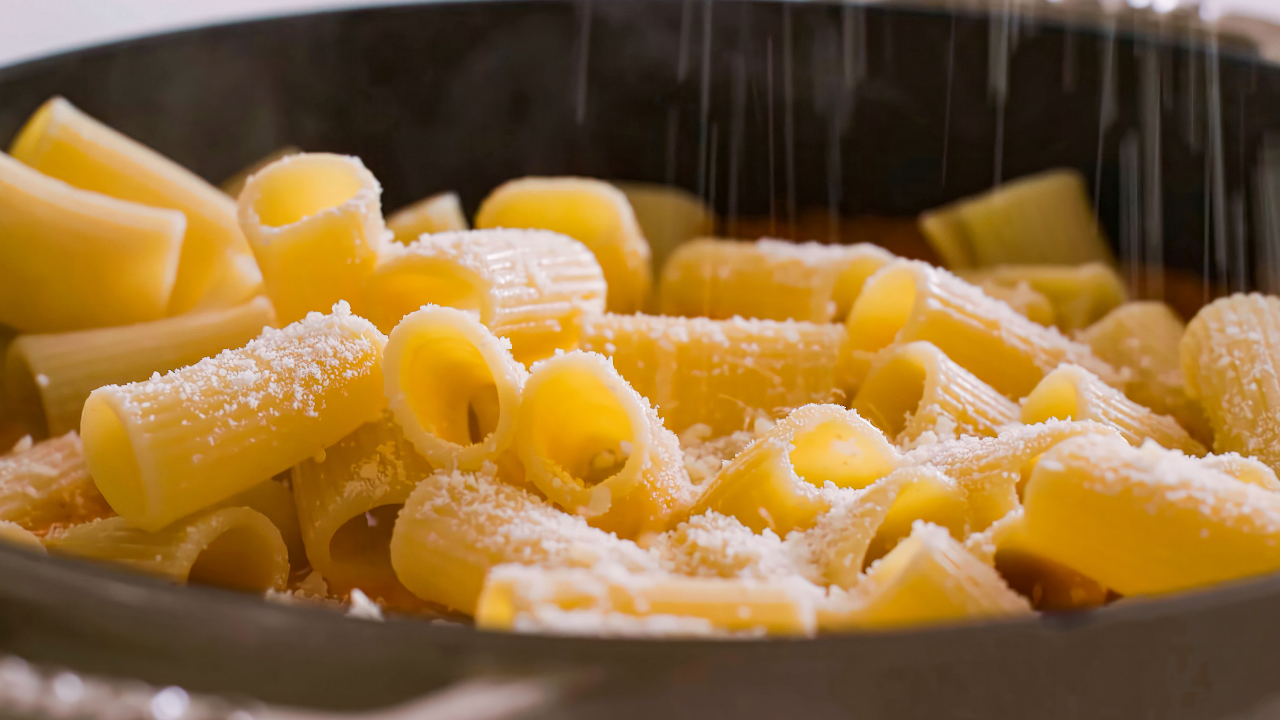
Alfredo becomes difficult when it is treated as a heavy cream sauce first and a pasta sauce second.
Alfredo does not always need cream
The most common misunderstanding is that Alfredo must always contain heavy cream. Cream is common in many Italian American recipes, and it can help stabilize the sauce. But the original idea does not depend on cream. It depends on hot pasta, butter, cheese, and enough starchy moisture to bring everything together. Milk Street describes the classic version as fresh egg fettuccine, butter, Parmigiano Reggiano, water, and salt, with the starchy pasta water helping the butter and cheese form a smooth sauce.
Parmesan needs gentle heat
Another mistake is adding cheese to heat that is too strong. Parmesan needs gentle heat to melt into the sauce. If the pan is too hot, the cheese can tighten before it blends. Instead of becoming smooth, it turns grainy or clumpy.
This is why Alfredo often works better when the heat is low, indirect, or even turned off while the cheese is added.
More richness is not always better
More richness is not always the answer.
If the sauce feels dry, adding more butter or cream may only make it heavier. A small amount of hot pasta water can be more useful because it loosens the sauce and helps it coat the noodles.
If the flavor feels flat, more cream may soften the cheese even further. Better balance often comes from the right amount of Parmesan, salt, and pasta water, not just extra fat.
Jarred and restaurant Alfredo shape expectations
Jarred Alfredo and the restaurant Alfredo also shape expectations. Jarred sauces are usually designed to stay thick, creamy, and stable on a shelf. Restaurant versions are often built for richness, speed, and consistency.
Those versions can be enjoyable, but they are not always the best way to understand how Alfredo works.
For home cooks, the correction is simple: judge Alfredo by texture before richness. A good sauce should coat the pasta smoothly, taste clearly of cheese and butter, and feel rich without becoming heavy.
Roman Alfredo Compared with American Alfredo
Roman Alfredo and American Alfredo share the same name, but they do not behave the same way in the pan.
Roman Alfredo is built around pasta, butter, Parmesan, and starchy pasta water. The sauce forms as the hot noodles are tossed with the fat and cheese. It is lighter than many cooks expect, because the goal is not to create a thick sauce. The goal is to coat the pasta smoothly.
American Alfredo is usually cream-based. It often starts as a separate sauce made with cream, butter, and cheese, then combined with pasta. This version is richer, heavier, and more stable, especially for restaurant service or quick home cooking.
| Feature | Roman Alfredo | American Alfredo |
|---|---|---|
| Base | Butter, Parmesan, hot pasta, pasta water | Cream, butter, cheese |
| Texture | Glossy coating | Thicker, creamier sauce |
| Cooking focus | Tossing, heat control, emulsion | Simmering, richness, stability |
| Flavor | Clear butter and Parmesan | Softer, richer dairy flavor |
| Main risk | Grainy cheese or clumping | Heaviness or separation |
| Best for | Lighter pasta finish | Rich comfort-style pasta |
The difference matters because each version asks for a different kind of control.
Roman Alfredo depends on timing and movement. The pasta must be hot, the cheese must melt gently, and the sauce needs enough moisture to stay fluid. If the mixture gets too hot or too dry, it can turn grainy or clumpy.
American Alfredo is more forgiving because cream adds body and stability to the sauce. It can hold its texture longer, but it can also become too thick or heavy if it reduces too much or if too much cheese is added.
Neither version is automatically better. They simply produce different results.
- Choose the Roman style when you want a cleaner pasta coating, a clearer Parmesan flavor, and a sauce that feels more directly tied to the noodles.
- Choose the American style for a richer, creamier sauce that feels fuller and more familiar as comfort food.
For home cooks, the important step is knowing which result you are aiming for before you start. If you want lightness and cling, think like the Roman version. If you want creaminess and body, think like the American version. That choice will guide how much heat, moisture, cheese, and fat the sauce needs.
When Cream Makes Sense and When It Changes the Sauce
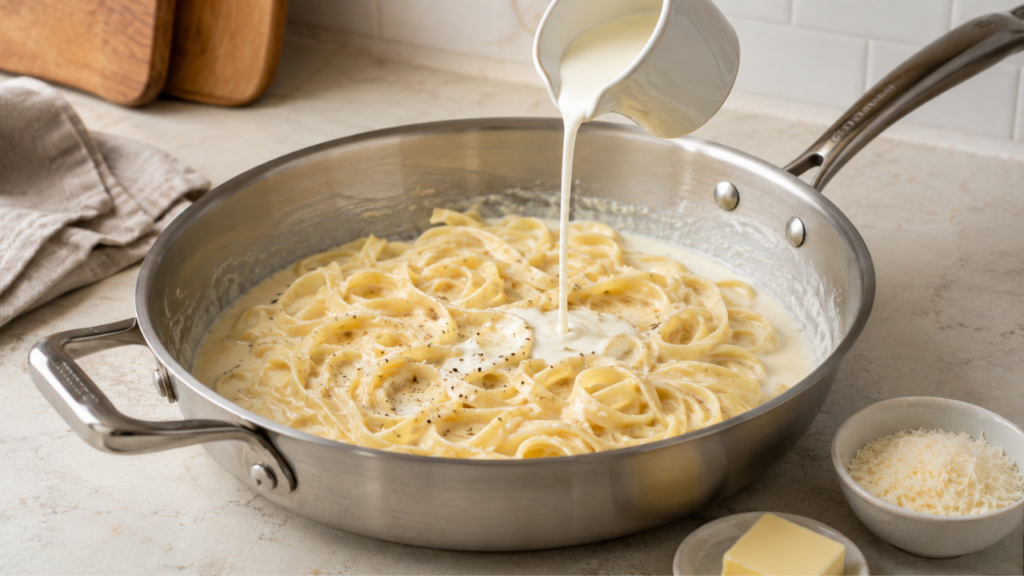
Cream is not required for Alfredo, but it can be useful.
For home cooks, cream makes the sauce easier to manage by adding body and stability. It gives the cheese somewhere to melt, helps the sauce stay smooth longer, and makes the texture more forgiving if the pasta sits for a few minutes before serving.
That stability is why many American Alfredo sauces use cream. It creates a fuller sauce that feels rich, coats easily, and holds well on the plate. But cream also changes the sauce.
A butter-and-cheese Alfredo depends on emulsification. The sauce comes together through hot pasta, butter, Parmesan, and starchy pasta water. The result should be glossy, fluid, and closely attached to the noodles.
A cream-based Alfredo is different. The cream becomes the base of the sauce, while the butter and cheese enrich it. The texture is thicker and more dairy-driven. The Parmesan flavor can become softer because the cream rounds out its sharpness.
This does not make one version right and the other wrong. It only means the cook needs to understand the choice.
- Use cream when you want a richer, more stable sauce that feels familiar and comforting.
- Use less cream, or none at all, when you want the pasta, butter, and Parmesan to stay more direct and clear.
The best choice depends on the result you want, the people you are cooking for, and your comfort level with heat and tossing. Once you understand what cream does, you can use it as a decision, not as a default.
Quick Takeaways
- Alfredo began as a Roman pasta dish built around hot fettuccine, butter, and Parmesan.
- The original idea relies on a coating and an emulsion, not a separate cream sauce.
- American Alfredo is usually richer, thicker, and more cream-based.
- Pasta water helps loosen the sauce and support a smooth coating.
- Understanding the difference helps you choose between a lighter pasta finish and a richer comfort-style sauce.
FAQs
Is Alfredo sauce originally Italian?
Yes. Alfredo began in Rome as fettuccine Alfredo, a pasta dish associated with Alfredo di Lelio. The original idea was built around fettuccine, butter, and Parmesan, not a separate cream sauce.
Did the original Alfredo sauce have cream?
No. The original Roman style did not rely on cream. Its smooth texture came from hot pasta, butter, Parmesan, and the pasta’s starchy moisture.
Why is Alfredo sauce so different in the United States?
In the United States, Alfredo became a richer, creamier sauce. Heavy cream and additions such as chicken, shrimp, broccoli, or garlic are common in American versions, whereas the Roman version focuses on pasta, butter, and cheese.
Is Alfredo the same as fettuccine al burro?
They are closely related, but not always identical, in how people use the names. Fettuccine al burro means fettuccine with butter, and Alfredo is often understood as a richer or more specific version of that butter-and-cheese pasta tradition.
Why does Alfredo sauce turn grainy?
Alfredo usually turns grainy when the cheese overheats, is added too quickly, or lacks enough moisture to melt smoothly. Parmesan needs gentle heat and stirring so it can blend into the butter and pasta water rather than forming clumps.
Can Alfredo be made without cream?
Yes. Alfredo can be made without cream, and the Roman style depends on that approach. The sauce becomes creamy through butter, Parmesan, hot pasta, and starchy pasta water coming together into a smooth coating.
Kitchen Tools That Support This Concept

- Cheese Grater Combination Set: Grater with fine, Coarse and Extra coarse holes and a cleaning brush. Each one comes with…
- Meet Your Different Needs: The multi-functional grater helps you complete the pre-cooking preparation for pillow Parmesa…
- Superior Process: Lemon Zester is made of 304 stainless steel ;The blade is uniform, sharp, and does not clog easily. Th…
Alfredo does not require special equipment, but a few basic tools make the sauce easier to control.
A wide skillet gives the pasta room to move. That space matters because Alfredo comes together through tossing, not just stirring. When the noodles can move freely, the butter, cheese, and starchy pasta water are more likely to coat the pasta evenly rather than collecting in one part of the pan.
A fine grater or Microplane helps the cheese melt more smoothly. Finely grated Parmesan blends into the hot pasta more easily than large shreds or chunks. This reduces the risk of clumping and helps the sauce become glossy instead of grainy.
Tongs give you better control when combining the pasta and sauce. They help lift, turn, and move the fettuccine without breaking it apart. That movement is important because Alfredo depends on an even coating. The goal is to help the sauce cling to the noodles rather than sit at the bottom of the pan.
These tools do not change the basic principle. They simply make it easier to manage heat, movement, and texture while the sauce comes together.
Understanding Alfredo Helps You Cook with Better Control
Alfredo is easier to understand when you see it as a lesson in sauce control rather than just a rich pasta dish.
Its origin shows how much can happen with a few ingredients when heat, fat, cheese, and starchy pasta water are handled well. The sauce does not need to be heavy to feel satisfying. It needs to coat the pasta smoothly, carry the Parmesan clearly, and stay balanced enough to move with the noodles.
Cream-based Alfredo can still have a place in the kitchen. It gives the sauce more body and stability, which can be helpful. But once you understand the original idea, cream becomes a choice rather than a requirement.
That is the main takeaway. Alfredo is not only about what you add. It is about how the sauce behaves.
If you want to keep building this kind of kitchen judgment, explore more Kitchen Know How articles and look for the same pattern in other sauces: heat, moisture, fat, and movement working together.