
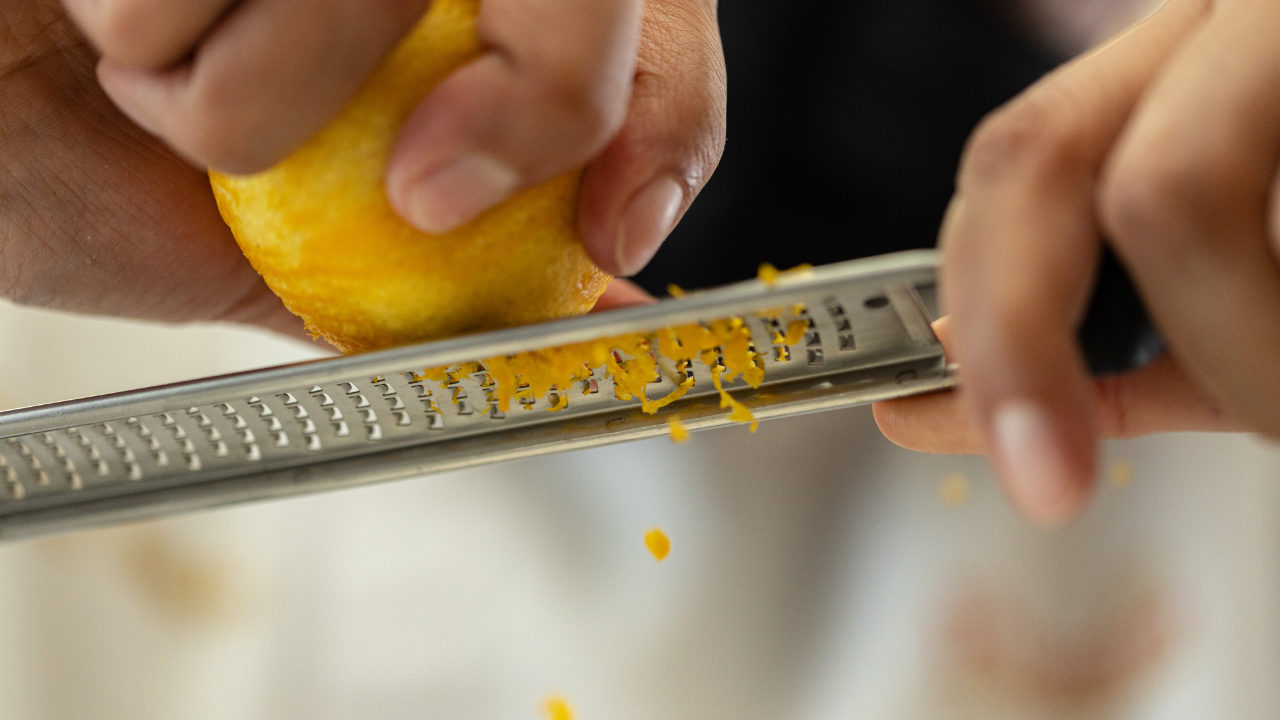
Most home cooks own a Microplane. Fewer use it to its full potential.
You may pull it out for lemon zest or a little Parmesan, then put it back in the drawer. But the Microplane is not just a zester or a small grater. It is a precision tool that changes how ingredients release flavor, move through a dish, and disappear into the food around them.
That is the key idea.
A Microplane is useful when you want an ingredient to season a dish from within rather than sit on top. Citrus zest, garlic, ginger, hard cheese, nutmeg, turmeric, horseradish, and even frozen butter behave differently when they are shaved into very fine particles.
Once you understand that, the Microplane becomes more than a tool. It becomes a way to control flavor.
Fine Grating Is a Technique, Not Just a Tool Function
A Microplane is a fine-toothed rasp grater. Its sharp, uniform blades shave ingredients into extremely fine particles. Depending on the ingredient, the result may look like a light powder, fine threads, or a soft paste. That fine texture is what makes the tool different.
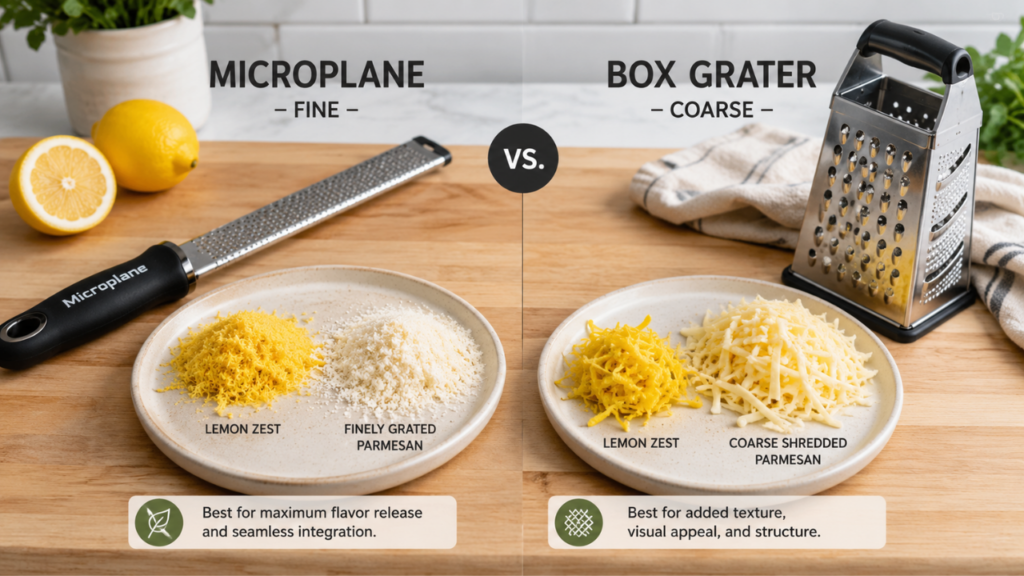
A box grater shreds. A channel zester cuts strips. A garlic press crushes. A Microplane shaves ingredients so finely that they dissolve, bloom, melt, or spread more evenly through a dish. This matters because surface area changes flavor release.
The smaller the particle, the more surface area is exposed. More exposed surface area means faster flavor release, better distribution, and stronger aroma from the same ingredient. That is why a small amount of microplaned citrus zest can make a dish taste brighter than a larger amount of coarsely grated zest.
The tool is simple. The effect is powerful.
What the Microplane Does Better Than Other Graters
The Microplane is not the right tool for every grating job. Its strength is specific: it creates maximum flavor release with minimum physical presence. That makes it especially useful when the ingredient should disappear into the dish.
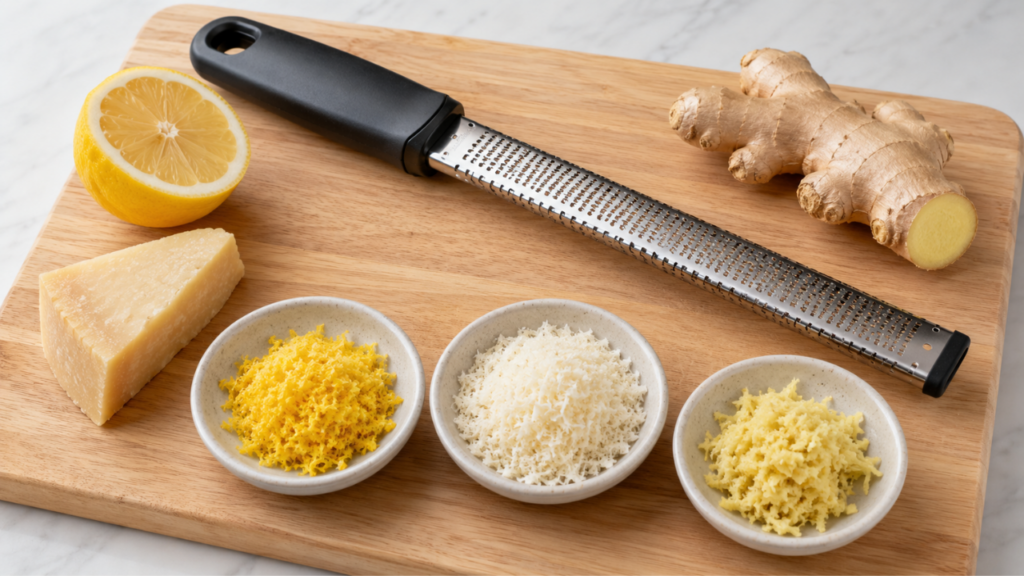
Citrus Zest
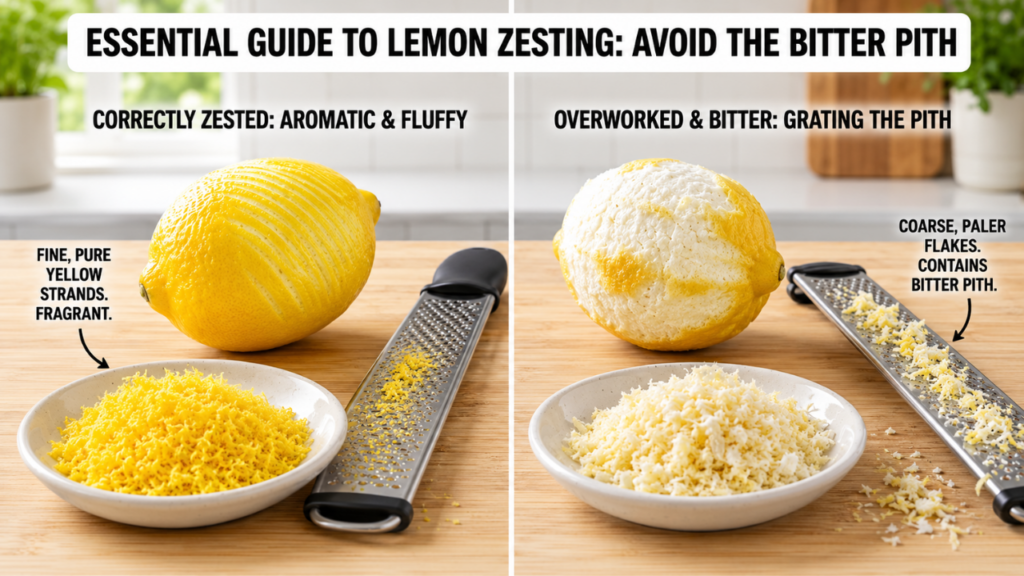
Citrus flavor lives in the colored outer skin, where the essential oils are concentrated. The white pith beneath is bitter and lacks the same aromatic value.
A Microplane removes the colored zest in fine particles while releasing those oils directly into the dish. Used with light pressure and steady rotation, it keeps you in the flavorful outer layer and helps you avoid the pith.
This is why microplaned lemon, orange, or lime zest works so well in vinaigrettes, pasta, cakes, custards, compound butter, marinades, and as a finishing touch.
Garlic
Microplaned garlic turns into a fine paste. It disappears into sauces, dressings, marinades, and soups without leaving chunks or uneven pockets of sharpness.
This is different from minced garlic. Minced garlic retains its texture and cooks unevenly. A garlic press crushes garlic, but it still leaves some fiber and structure. A Microplane breaks the garlic down more completely, so the flavor spreads quickly and evenly.
That can be helpful in raw preparations like vinaigrettes, aioli-style sauces, yogurt sauces, and marinades, where even distribution matters.
Hard Aged Cheese
Parmigiano-Reggiano, Pecorino Romano, aged Manchego, and similar cheeses work beautifully on a Microplane because they are dry, firm, and concentrated.
Fine-grated cheese melts quickly into hot pasta, risotto, soup, or sauces. Instead of sitting on top in heavy clumps, it becomes part of the dish. This is especially useful when cheese is meant to add body and richness, not just serve as a visible topping.
Ginger, Nutmeg, and Whole Spices
Fresh ginger grated on a Microplane produces a smooth paste that blends into marinades, dipping sauces, stir-fry sauces, dressings, and braises without leaving fibrous pieces behind.
Whole nutmeg, grated fresh over béchamel, custard, eggnog, or a warm drink, releases an aroma that pre-ground nutmeg cannot match. The same logic applies to fresh turmeric, horseradish root, and other firm aromatic ingredients.
The Microplane is useful whenever aroma matters, and the ingredient needs to spread quickly.
The Core Judgment Rule
Before reaching for a Microplane, ask one question:
Do I want this ingredient to be felt and seen, or do I want it to disappear and season the dish from within?
- If you want texture, structure, or visual presence, use a different tool.
- If you want flavor release, even distribution, and a clean finish, use the Microplane.
That single question covers most decisions.
| Lemon twist for a cocktail | Visible garnish and aroma at the rim | Channel zester or peeler | The citrus needs shape and visual presence. |
| Lemon zest for vinaigrette | Fine flavor throughout the dressing | Microplane | The zest should disappear and release its oils into the dressing. |
| Mozzarella for pizza | Visible melted pools | Box grater | The cheese needs enough structure to melt in pockets. |
| Parmigiano-Reggiano for pasta | The zest should be removed and its oils released into the dressing. | Microplane | Fine cheese melts into pasta water and fat more easily. |
| Carrot salad | Texture and body | Box grater | The carrot needs structure, not paste. |
| Fresh ginger for marinade | Even heat and aroma throughout | Microplane | The ginger should spread through the liquid without fibrous pieces. |
The tool follows the desired result.
Where Fine Grating Makes the Biggest Difference
The Microplane appears across many cuisines because the underlying principle is universal: fine grating helps concentrate ingredients’ flavors throughout a dish.
You see that clearly in:
- Italian cooking: Finely grated Parmigiano-Reggiano or Pecorino Romano can melt into pasta water and fat, helping form a sauce. It becomes part of the dish rather than a separate layer on top.
- French pastry and sauce work: Citrus zest adds brightness to madeleines, tarts, custards, compound butter, vinaigrettes, and creams. Fine zest releases aroma without adding strips of texture.
- Asian preparations: Fresh ginger, grated into marinades, dipping sauces, broths, and braises, delivers clean heat and aroma without fibrous pieces.
- Beverage work: Freshly grated nutmeg over eggnog, hot toddies, milk punch, or cream-based drinks adds aroma at the moment of serving.
The pattern is the same each time: the ingredient is strong and aromatic, and it tastes better when it spreads evenly.
How to Read the Results as You Grate
The Microplane does not require advanced technique, but it does require attention. The tool gives immediate feedback if you know what to notice.
Watch the Texture
- Fine, dry particles that fall freely usually mean the tool is working properly.
- Wet, compacted material that sticks to the grater can mean you are pressing too hard, using an ingredient with too much moisture, or grating something that is not suited to a fine rasp.
Garlic will naturally become paste-like, but citrus zest should look light and separate. Hard cheese should fall in fine strands, not smear across the blade.
Watch the Color
Citrus zest should be bright and vivid. Lemon zest should look yellow, orange zest should look deep orange, and lime zest should look green.
If the grated material looks pale or white, you have reached the pith. Stop, rotate the fruit, and find a fresh surface. Color tells you where you are on the ingredient.
Watch the Yield
A medium lemon should give enough zest to season a dish meaningfully. If you are pressing hard and getting very little, the fruit may be old, dry, or waxy. The Microplane blade may also be dull.
Fresh ingredients give better feedback. Old citrus releases less aroma. Old garlic can taste harsh. Dry ginger can become fibrous. A Microplane will not hide ingredient quality. It will reveal it.
Smell the Ingredient
Aroma is the most reliable signal. When citrus zest, fresh ginger, whole nutmeg, or fresh turmeric hits the blade, you should smell it immediately. That aroma is evidence that volatile compounds and essential oils are being released.
If you smell very little, something is off. The ingredient may be past its prime, the blade may be dull, or the pressure may not be right.
Common Microplane Mistakes
Most Microplane mistakes are easy to correct. They usually come from treating the tool like a regular grater.
Pressing Too Hard
The Microplane works best with light, steady pressure. Pressing harder does not always produce better output. With citrus, it pushes you into the bitter pith. With ginger, it can drag more fiber into the paste. With cheese, it can compact the strands and clog the blade.
Let the tool’s sharpness do the work.
Staying in One Spot
- Do not grate the same patch of citrus repeatedly. Once the color is gone, the flavor is gone too.
- Rotate the fruit often. The goal is to stay on a fresh colored surface, not to scrape deeply into one area.
The same habit helps with ginger, turmeric, and hard cheese. Rotation gives cleaner output and better control.
Using It for the Wrong Ingredient
Soft cheeses, wet vegetables, and ingredients that need structure do not belong on a fine Microplane.
- Fresh mozzarella, brie, and soft goat cheese will smear.
- Zucchini and carrots will turn mushy.
- Potatoes for latkes or rösti need to be shredded, not mashed.
The Microplane is excellent when you want integration. It is not useful when the dish needs texture.
Forgetting to Clean Between Ingredients
A Microplane holds aroma. Garlic, ginger, citrus, cheese, and nutmeg can cling to the blade.
If you grate garlic and then immediately grate lemon zest, some of that garlic flavor can carry over. Rinse and dry the tool between strong ingredients, especially when moving from savory to sweet.
The Finishing Stage Is a Missed Opportunity
Many home cooks use the Microplane during prep, then forget about it at the end of cooking. That is a missed opportunity.
Fine grating is one of the simplest ways to add fresh aroma right before serving. A few passes of lemon zest over pasta, a sprinkle of fresh nutmeg over béchamel, Parmesan over soup, or horseradish over roasted beef can change how the dish lands at the table.
These additions are not just garnishes. They are last-minute flavor adjustments.
Heat, time, and cooking can soften aroma. A Microplane lets you bring some of that aroma back at the end, when the food is ready to eat.
Use it as you would salt, acid, or fresh herbs: as a final adjustment to add lift, sharpness, richness, or clarity.
Microplane vs. Box Grater vs. Zester
Each grating tool has a place. The goal is not to replace every grater with a Microplane. The goal is to choose the tool that matches the result you want.
| Tool | Cut Type | Produces | Best Used For | Where It Falls Short |
| Microplane Classic | Ultra-fine rasp | Fine particles, light threads, or paste | Cheddar, mozzarella, firm vegetables, and vegetable gratins | Soft cheese, wet vegetables, anything needing texture |
| Box Grater, Fine Side | Fine shred | Compact, moist shreds | Thick-textured shreds | Citrus zest, garlic paste, fine cheese integration |
| Box Grater, Coarse Side | Coarse shred | Thick textured shreds | Potato pancakes, rösti, carrot salads, zucchini bread | Applications needing fine distribution |
| Channel Zester | Strip cutter | Long strips or twists | Cocktail twists, garnish strips, decorative citrus | Flavor integration and fine zest |
| Microplane Coarse Grater | Medium rasp | Coarser dry shreds | Semi-firm cheese, chocolate, firm vegetables | Ultra-fine zest, garlic paste, whole spice |
The difference is not about quality. It is about purpose.
Use the Microplane when the ingredient should disappear into the dish. Use a box grater, peeler, or channel zester when the ingredient should remain visible, textured, or structural.
When Coarser Grating Is the Better Choice
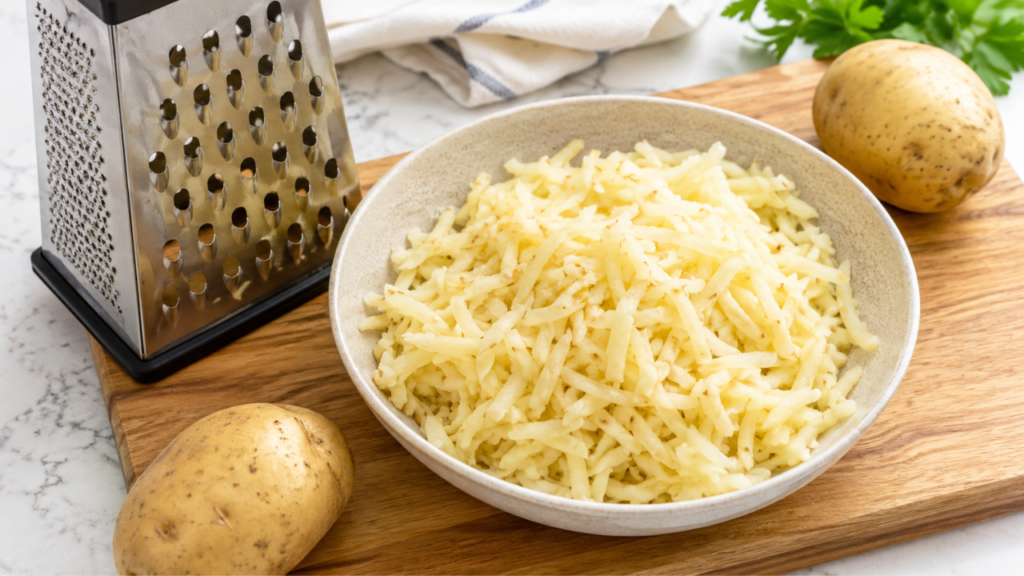
The Microplane is not always the answer. Some dishes depend on grated ingredients that keep their shape.
Rösti, latkes, potato pancakes, and vegetable fritters need shreds with enough structure to bind, crisp, and hold together in the pan. If you use a Microplane, the vegetables become too wet and paste-like.
Carrot salads and zucchini breads also need texture. The grated vegetable is part of the dish’s structure, not just a flavoring agent.
Cheese can also require a coarser cut. Mozzarella on pizza, cheddar in a gratin, and cheese in baked pasta should often melt in visible pockets. A fine grating would make them dissolve too quickly and alter the texture.
Garnishes are another example. Chocolate curls, wide cheese shavings, citrus twists, and visible ribbons of zest are meant to be seen. A Microplane removes that visual presence.
The rule stays the same: use the Microplane for flavor release and integration. Use a coarser tool for texture, structure, and appearance.
Quick Takeaways
- The Microplane is a tool for flavor release, not just grating. It helps concentrated ingredients spread more evenly throughout a dish.
- Fine particles change how ingredients behave. Citrus zest, garlic, ginger, hard-aged cheese, whole nutmeg, turmeric, horseradish, and similar ingredients release flavor more quickly when grated finely.
- Surface area is the reason it works. Smaller particles expose more surface area, which helps aroma and flavor release faster and distribute more evenly.
- Light pressure matters. Pressing too hard can push you into bitter citrus pith, fibrous ginger, or clogged cheese.
- Rotation matters too. Move the ingredient often to keep it on a fresh surface and avoid overworking one area.
- Aroma is your best feedback signal. If the ingredient smells bright, fresh, and immediate, the Microplane is doing its job.
- The Microplane is not always the right tool. When the dish needs texture, structure, or visible garnish, use a box grater, peeler, or channel zester instead.
Frequently Asked Questions
These questions cover the most common Microplane problems: what it can handle, when it struggles, and how to get cleaner results from the tool you already own.
Can I use a Microplane for soft cheeses like fresh mozzarella or brie?
No. Soft cheeses have too much moisture for fine grating. They smear, clog the blade, and produce a paste instead of clean particles.
Use a knife, wire cutter, spoon, or your hands, depending on the cheese and the dish. Save the Microplane for hard-aged cheeses like Parmigiano-Reggiano, Pecorino Romano, aged Manchego, and similar styles.
How do I clean a Microplane safely?
Rinse it soon after use so food does not dry onto the blade. Brush from the back side of the blade outward with a stiff kitchen brush under running water.
Avoid wiping across the sharp side with a sponge or towel. The teeth can catch the material and may also cut your hand.
Many Microplane models are dishwasher-safe, but handwashing helps preserve sharpness longer. Dry it immediately before putting it away.
Does microplaned garlic taste different from minced garlic?
Yes. Microplaned garlic is more intense and more evenly distributed.
Mincing leaves small pieces with texture. Those pieces cook and release flavor at different rates. Microplaned garlic becomes a paste, so it spreads quickly through dressings, sauces, marinades, and soups.
That can be useful, but it can also make the garlic taste stronger. Start with less when replacing minced garlic with microplaned garlic, especially in raw preparations.
Why does my citrus zest taste bitter?
Bitterness usually means you grated into the pith.
The colored outer skin contains the citrus oils. The white layer beneath is bitter and lacks the same aroma. Use lighter pressure and rotate the fruit more often.
Once the color is gone from one spot, move to a fresh section.
Can I grate frozen ingredients on a Microplane?
Yes. Some ingredients grate better when cold or frozen.
Frozen butter can be grated into pastry dough, distributing evenly without warming too quickly. Frozen ginger often grates more cleanly than fresh ginger and can produce less fibrous output.
Use caution with small frozen ingredients. They can slip, and the blade is sharp.
How much zest should I expect from one lemon or orange?
A medium lemon usually yields about 1 to 2 teaspoons of fine zest. A medium orange yields about 2 to 3 teaspoons.
Those amounts vary depending on the fruit, skin thickness, freshness, and pressure. Use the numbers as a guide, not a rule. Taste and smell matter more than exact yield.
Is there a difference between a Microplane and a generic rasp grater?
There can be a meaningful difference.
Microplane brand graters are known for sharp, photo-etched blades that shave cleanly. Some cheaper rasp graters use stamped blades that tear more than they shave. That difference is most obvious with citrus zest, hard cheese, and whole spices.
A sharp fine-rasp grater matters. A dull one can make you press harder, which leads to bitter zest, clogged blades, and uneven output.
Kitchen Tools That Support This Concept
These tools are not about collecting more equipment. Each one supports a specific result.


Microplane Classic Zester and Grater
This is the standard fine-rasp model. Use it for citrus zest, hard-aged cheese, garlic, ginger, whole nutmeg, fresh turmeric, horseradish, and frozen butter.
If you already own one, check the blade. A dull Microplane makes you press harder and gives worse results.
Microplane Coarse Grater
A coarse Microplane is useful when you want more texture than the classic fine rasp provides. It works well for semi-firm cheese, chocolate, and some firm vegetables.
It does not replace the fine rasp. It answers a different question.
Cut-Resistant Kitchen Glove
A cut-resistant glove can be useful when grating small, hard ingredients like nutmeg, ginger, turmeric, or the last piece of hard cheese.
It helps you work with steadier pressure and less hesitation, especially during longer grating sessions.
What You Now Understand
The Microplane is not just a zester. It is a tool for controlling how flavor enters a dish. It works because fine particles expose more surface area. More surface area means faster flavor release, stronger aroma, and better distribution.
That is why lemon zest tastes brighter, garlic spreads more evenly, Parmesan melts more cleanly, ginger loses its fibrous bite, and nutmeg becomes more aromatic when grated fresh.
The most important lesson is not that the Microplane is better than other graters. It is that each tool produces a different result.
Use the Microplane when you want an ingredient to disappear and season from within. Use another grater when you want texture, structure, or visual presence. That judgment is what makes the tool useful.
What to Try Next
Choose one dish you already cook often.
It could be pasta, salad dressing, soup, a marinade, a baked good, or a sauce. Replace your usual grating or mincing method with the Microplane. Do not change anything else.
Then taste the difference.
Notice whether the flavor feels more evenly distributed. Notice whether the aroma is clearer. Notice whether the ingredient becomes part of the dish instead of sitting apart from it.
That one comparison will teach you more than any tool description can.
For more technique-focused cooking articles, browse the Kitchen Know How library, visit Recipe Destination for recipes that apply these principles, or join the Kitchen Know How mailing list for weekly cooking explanations built around practical kitchen judgment.
1 thought on “The Microplane Explained: Why Fine Grating Changes Flavor”
Comments are closed.