
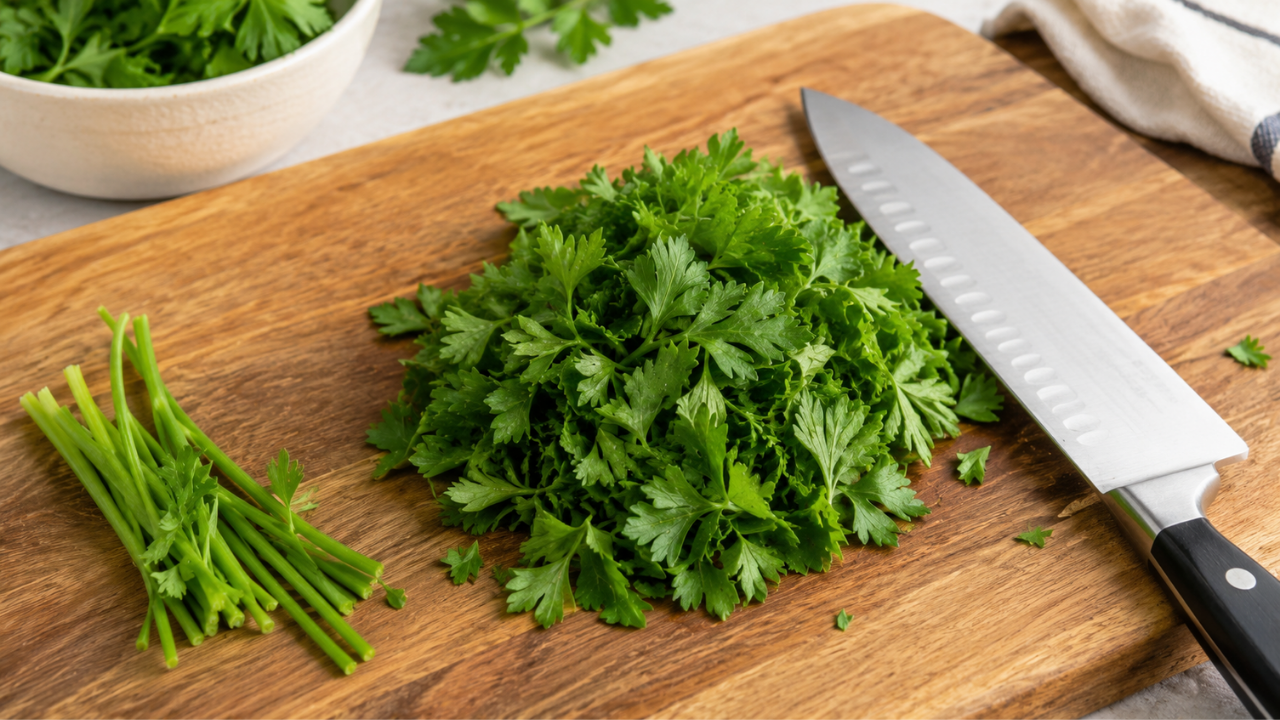
Fresh parsley looks simple until it scatters across your cutting board and ends up bruised, wet, and uneven. The fix is not about knife speed alone. It starts before the knife does.
In this demonstration, Chef Mark Sandoval shows how controlling the herb first makes everything else cleaner. By separating the leafy tops from the thicker stems and gathering the parsley into a compact pile before cutting, the knife has a clear path instead of chasing loose leaves around the board.
Watch: Chef Mark Sandoval Demonstrates How to Chop Parsley
Watch the moment before the knife moves. That is where this demonstration earns its place.
Notice how Chef Mark first organizes the parsley on the board. Then watch how much smaller and quieter the actual cutting motion is than you might expect. Most of the control is established before the blade comes down.
Pro Tip: The most common parsley mistake happens before a single cut is made: skipping the gather. Bring the leaves into a compact pile before chopping.
Why the Parsley Matters
This demonstration uses fresh parsley. Its loose, leafy structure is the reason control matters before chopping begins.
The leaves can scatter easily if they are spread across the board. Thicker stems can also alter the texture of the final chop, making it feel coarse or uneven. Chef Mark separates the leafy tops first so the knife works through a cleaner, more consistent pile.
Tools Used in This Demonstration
Chef Mark works with a chef’s knife and a cutting board. Both support the same goal: keeping the parsley controlled before and during the cut.
Chef’s Knife
The chef’s knife gives Chef Mark enough blade length to move through the gathered parsley with small, controlled motion. The knife does not need to be forced through the herb. Once the parsley is organized, the blade can work cleanly through the pile.
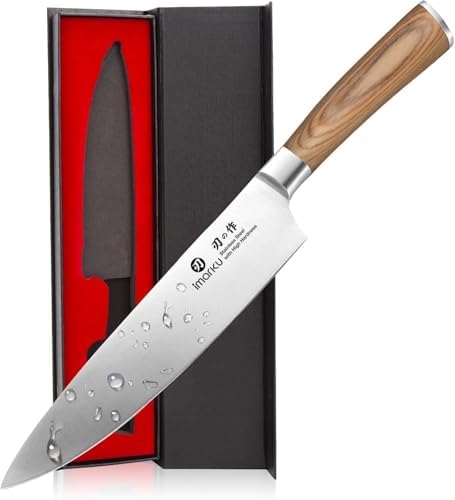
- High-carbon stainless steel blade: It is manufactured from high-quality stainless steel that maintains its functionality…
- Multi-functional knife: The gyutou knife is classified and designed to be multipurpose knife for professional applicatio…
- Ergonomic pakka handle: To make it more professional and minimize any fatigue, finger numbness or aches after holding it…
Cutting Board
The cutting board gives the parsley enough space to be gathered before cutting. A stable board matters because the technique depends on control. If the board shifts or the parsley is spread too widely, the knife has a harder time moving evenly through the herb.
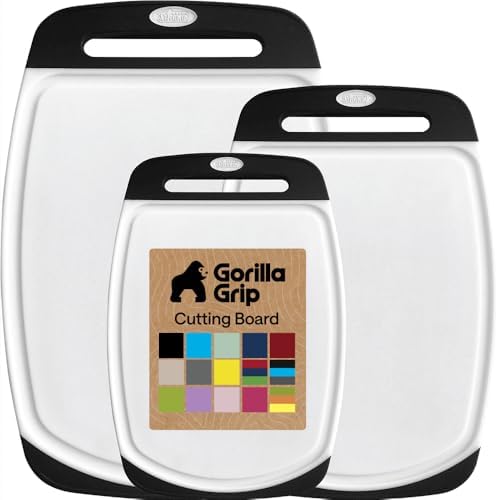
- ULTRA DURABLE STRENGTH: 3rd Party Tested for durability, thick cutting boards have a nonporous surface that won’t splint…
- TOUGH GRIP: cutting boards for kitchen designed with slip resistant handle and rubber border, secure grip helps reduce s…
- LONG LASTING QUALITY: durable cutting board construction resists wear and tear; unlike wood or bamboo boards, ours are d…
Technique Breakdown
The demonstration moves through four visible phases: separating the stems, gathering the leaves, chopping with contained movement, and stopping before the parsley becomes overworked. Each phase shows how Chef Mark builds control before refining the final texture.
Phase 1: Separating the Stems
- Chef Mark starts by holding the parsley by the stems and separating the leafy portion before chopping.
- Thick stems are firmer than the leaves. If too many are left in the pile, the finished parsley can feel coarse and uneven.
- Removing the heavier stems first gives him a cleaner pile to work with.
Phase 2: Gathering Before Cutting
- Once the leaves are on the board, Chef Mark brings them together into a compact pile before the knife moves.
- This is the adjustment many home cooks skip. When parsley is spread across the board, the knife chases the herb instead of cutting through it.
- A gathered pile gives the blade a clean, controlled path.
Phase 3: Chopping with Small, Contained Movement
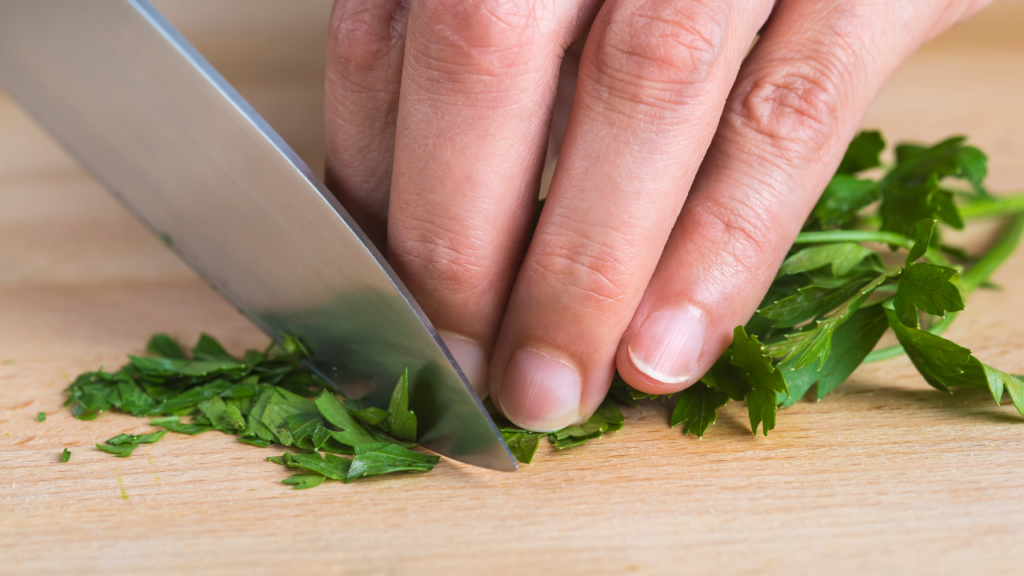
- Watch the blade as Chef Mark chops. The movement stays small and steady, not wide or aggressive.
- Wide strokes can push parsley across the board and press the herb too hard into the surface. Smaller movements keep the parsley in place and let the knife do the work cleanly.
- As the herb becomes finer, the knife movement becomes more contained rather than larger.
Phase 4: Knowing When to Stop
- The parsley is ready when the pieces are fine enough to use, the color still looks bright, and the herb sits loosely on the board.
- Chef Mark stops while the parsley still has life. Once chopped parsley starts to look wet, dark, or pasted down, it has been worked too far.
Common Mistakes This Demonstration Corrects
- Chopping before gathering, which makes the knife chase loose leaves instead of cutting cleanly.
- Leaving too many thick stems in the cut can create uneven texture.
- Pressing down too hard with the guide hand can bruise the herb.
- Using wide, aggressive knife strokes instead of small, contained movements.
- Continuing to chop after the parsley is already fine enough.
Where This Technique Transfers
The same gather-first principle applies to other leafy herbs that scatter easily on the board.
- Cilantro has a similar loose structure and benefits from being gathered before chopping.
- Basil is more delicate than parsley, so it needs even lighter handling and an earlier stopping point.
- Chives do not scatter in the same way, but they still benefit from being aligned and controlled before cutting.
The stopping point depends on the dish. A rustic garnish can stay coarser. A composed plate may call for a finer, cleaner chop. The same control applies; only the endpoint changes.
Control Comes Before the Cut
Better chopped parsley does not come from a faster knife. It comes from handling the herb correctly before cutting starts.
Chef Mark’s demonstration shows the important sequence: separate the stems, gather the leaves, keep the knife movement small, and stop before the parsley loses its fresh texture.
That same discipline separates clean professional herb work from the scattered, uneven results many cooks end up with. Apply it to parsley first, then carry it to every delicate herb on your board.
→ Continue building knife control with Chef Mark Sandoval.