
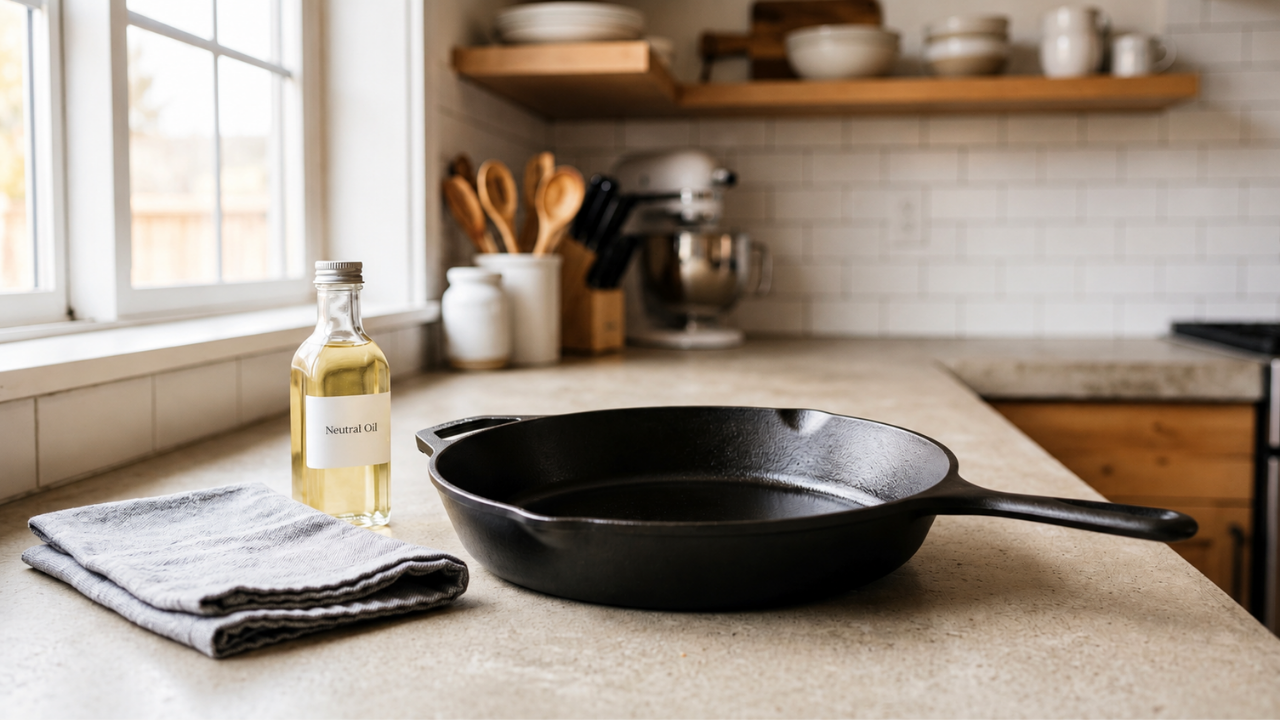
Cast iron is one of the most useful pans in the kitchen because it holds heat well, transfers easily from stovetop to oven, and helps achieve deep browning when used properly. It shows up in everyday cooking, from searing meat and roasting vegetables to baking cornbread and reheating leftovers.
But cast iron does not behave like every other pan. Its surface changes with use, and the way it is cleaned, dried, and stored affects how well it performs the next time you cook with it.
A pan that is cared for properly feels more reliable. Food releases more cleanly, browning becomes easier to control, and the pan becomes less intimidating to use.
Most cast iron problems are not caused by the pan itself. They usually come from moisture left behind, heavy oil buildup, stuck food, or confusion about what the surface needs after cooking.
Once you understand those basics, cast iron care becomes less about strict rules and more about reading the pan.
This article explains how to think about cast iron care in practical kitchen terms. The goal is not to make the pan feel precious. The goal is to keep it ready to cook.
What Seasoning Means on Cast Iron
Seasoning is the part of cast iron care that causes the most confusion. It sounds like flavor, but on cast iron, it means something different.
Seasoning is the thin bonded layer that forms on the surface of cast iron when oil is heated onto the pan. It helps protect the iron from moisture and gives the cooking surface a smoother feel over time.
Chef’s Note
On cast iron, seasoning does not mean salt, spices, or flavor left behind from past meals. It also does not mean a greasy pan. A properly maintained surface should never feel wet, sticky, greasy, coated with loose oil, or covered with old food residue.
| What seasoning is | What seasoning is not |
| A thin bonded oil layer | Loose grease |
| A protective surface | Old food residue |
| Built through heat and use | A thick coating of oil |
| Helpful for release | A replacement for heat control |
| Part of pan maintenance | Flavor seasoning for food |
Foundational Rule
Cast iron performs best when the surface is free of food residue, completely dry, and protected with only a thin oil finish when needed.
Seasoning also does not make cast iron behave exactly like modern nonstick cookware. Eggs, fish, and delicate foods still need proper heat, enough fat, and a clean surface. Seasoning helps, but it does not replace cooking judgment.
When you understand seasoning this way, cast iron becomes easier to manage. You are not trying to preserve old food or build a thick coating. You are maintaining a clean cooking surface, which protects the pan and helps food release more easily.
How Cast Iron Care Affects Cooking Results
Cast iron care matters because the pan’s condition affects how food cooks. Maintenance is not separate from cooking. It changes browning, release, texture, and confidence at the stove.
A clean, dry, well-maintained surface allows food to better contact the pan. Better contact helps browning develop more evenly and makes food easier to release when the timing and heat are right.
This is especially important with foods that depend on surface contact.
- Steak
- Chicken thighs
- Potatoes
- Cornbread
- Seared vegetables
- Burgers
- Pork chops
When the pan surface is ready, the food can come into direct contact with the hot iron. That contact helps moisture cook off, color develop, and texture form.
When the surface is neglected, the cooking changes.
| Pan condition | What can happen during cooking |
| Moisture left on the pan | Rust can form and weaken the surface |
| Stuck food left behind | Old residue can burn during the next use |
| Heavy oil buildup | The surface can become sticky and uneven |
| Dirty cooking surface | Food may stick or brown unevenly |
| Worn or dull patches | The pan may feel less predictable |
That unpredictability affects confidence. Food may stick when it should release. Browning may look patchy. Oil may smoke sooner than expected because old residue is heating up as the pan heats up.
The cook may start blaming the pan when the real issue is the surface condition.
Proper care of cast iron prepares the pan for the next cooking session.
- Cleaning removes what should not be there.
- Drying protects the iron.
- A thin oil finish supports the surface when the pan looks dull or exposed.
The goal is not to make cast iron perfect. The goal is to keep the surface ready. When the pan is in cooking condition, it becomes easier to control heat, judge browning, and trust what is happening in the pan.
Where Cast Iron Shows Up in Real Cooking
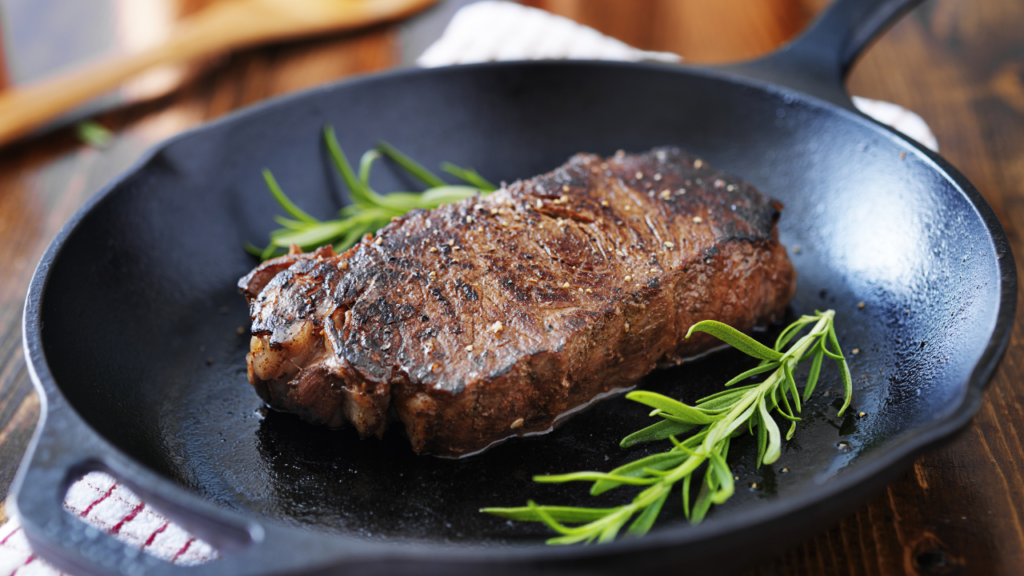
Cast iron is not the right choice for every job, but it is very useful when food benefits from steady heat, strong browning, or a pan that can move from the stovetop to the oven.
| Cooking situation | Why cast iron works well | What to watch for |
| Searing steak, pork chops, burgers, or chicken thighs | Holds heat well and supports deep browning | Preheat the pan and avoid crowding |
| Cooking potatoes | Helps drive off moisture and build crisp edges | Start with a clean surface so old residue does not burn |
| Baking cornbread or skillet breads | Holds heat and supports browned edges | Grease the pan properly and watch the edges |
| Roasting vegetables | Gives firm pan contact and supports browning | Use enough space so the vegetables do not steam |
| Frying eggs | Can work well in a maintained pan | Surface, fat, and temperature matter |
| Reheating pizza or leftovers | Restores surface crispness better than a microwave | Use moderate heat so the bottom does not burn |
The main judgment is simple. Use cast iron when you want browning, heat retention, surface contact, or stovetop-to-oven flexibility.
Choose another pan when the food needs gentle release, rapid temperature changes, or prolonged acidic cooking.
| Choose this pan | When it helps most |
| Cast iron | Browning, searing, roasting, crisping, stovetop to oven cooking |
| Stainless steel | Pan sauces, acidity, fond, responsive stovetop cooking |
| Nonstick | Eggs, delicate fish, foods that need easy release |
| Enameled cast iron | Braises, stews, acidic sauces, longer simmering |
This does not make one pan better than the others. It means each pan has a job. Cast iron is strongest when heated, in contact, and during browning.
Reading the Pan Before, During, and After Cooking
A cast iron pan gives you clues. Learning to read those clues is one of the best ways to make the pan easier to use.
Before cooking, the surface should look clean, feel mostly smooth, and be fully dry. A light sheen is fine. Wet spots, sticky patches, rust marks, excess oil, or stuck-on food indicate the pan needs attention before it is ready for heat.
What to Check Before Cooking
Use a quick check before the pan goes over the heat.
- The pan should look clean, with no stuck-on food or dark crumbs.
- The surface should feel dry, not greasy or tacky.
- A light sheen is fine, but visible oil puddles are too much.
- Orange spots usually mean rust.
- Dull gray patches may mean the seasoning is thin or worn.
- Rough, raised spots often indicate that food was not fully removed after the last use.
What to Watch During Cooking
During cooking, the food and fat will tell you how the pan is behaving.
- Oil smoking quickly may mean the pan is too hot or old residue is burning.
- Food sticking immediately may mean the pan is too cold, too dirty, or insufficiently oiled.
- Patchy browning may mean uneven preheating or surface buildup.
- Food that resists movement may take longer to release.
- Harsh burnt smells may mean residue is heating with the pan.
After cooking, return the pan to a dry, residue-free condition. Food should not harden on the surface, and water should not sit on the iron.
| What you notice | What it usually means | How to respond |
| Sticky surface | Too much oil or oil buildup | Clean the surface and use less oil next time |
| Orange spots | Moisture caused rust | Scrub the rust, dry thoroughly, and oil lightly |
| Dull gray patches | Thin or worn seasoning | Keep the pan dry and maintain with a thin oil finish |
| Food sticking | Surface, heat, fat, or timing issue | Check pan cleanliness, preheat, and let food release naturally |
| Oil smoking too fast | Pan too hot or residue burning | Lower the heat and clean away old residue |
| Water spots | Pan was not dried fully | Towel dry or heat dry before storing |
This habit makes cast iron easier to use by turning maintenance into a matter of kitchen awareness. You are not guessing whether the pan is ready. You are checking the surface, reading the signs, and making small corrections before they affect the food.
Cast Iron Mistakes That Weaken the Surface
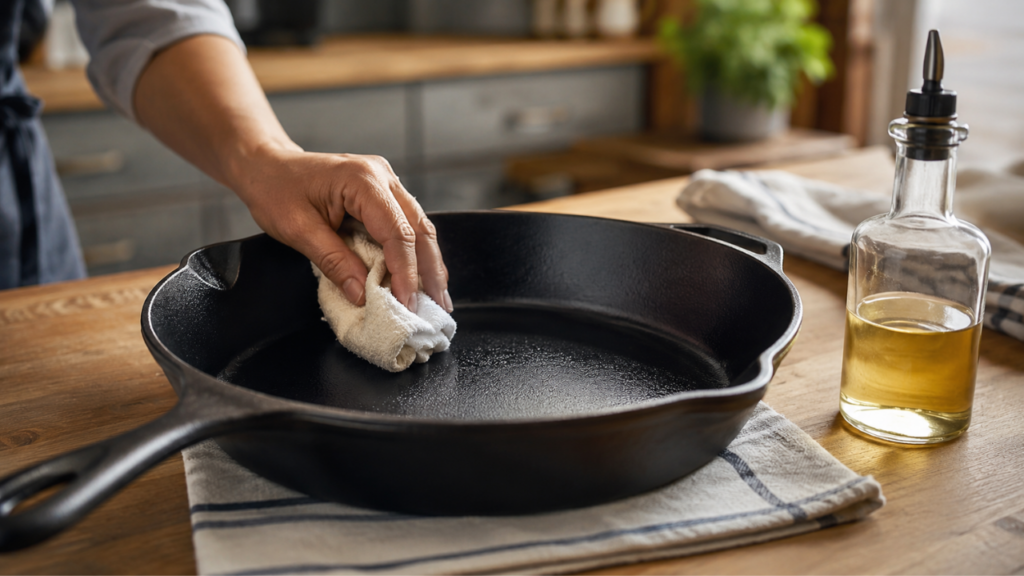
Most cast iron problems come from a few repeated habits. This section focuses on what goes wrong and why.
| Mistake | Why does it cause problems | Better habit |
| Soaking the pan | Gives moisture more time to reach the iron | Clean promptly instead of soaking |
| Leaving the pan wet | Water can lead to rust | Dry fully before storing |
| Using too much oil | Heavy oil can turn sticky | Wipe on a very thin layer only when needed |
| Storing the pan dirty | Old food can burn, smoke, and cause sticking | Store the pan clean and ready to cook |
| Scrubbing without drying | Cleaning removes food, but moisture remains | Dry after every rinse or scrub |
| Treating it like nonstick | Cast iron still needs heat, fat, and timing | Use cooking judgment, not just seasoning |
| Treating it like stainless steel | Stainless steel can tolerate soaking more easily | Keep cast iron drier and more protected |
These mistakes often happen because cast iron gets treated like other cookware.
Warning
Moisture is the single biggest threat to a cast iron surface. Soaking the pan, leaving it wet, or storing it before it is fully dry is the fastest way to invite rust, even on a well-seasoned pan.
Stainless steel soaks more easily. Nonstick usually depends on a manufactured coating. Cast iron is different because its performance depends on the surface you maintain.
A strong cast iron habit is simple: remove residue, remove moisture, and protect only what needs protection.
Cleaning, Drying, and Oiling Compared
Cleaning, drying, and oiling are related, but they are not the same job. Separating them helps you choose the right correction without overworking the pan.
| Care step | What it does | When it matters | What to avoid |
| Cleaning | Removes food, grease, and residue | After cooking, especially when food sticks | Leaving burned bits on the surface |
| Drying | Removes moisture from the iron | Every time water touches the pan | Putting the pan away wet |
| Oiling | Adds a thin protective finish | When the surface looks dull, dry, or exposed | Leaving a wet or greasy layer |
Cleaning comes first. The goal is to remove stuck food, loose crumbs, burned bits, and excess grease. A rinse, brush, scraper, or chainmail scrubber can all be useful depending on how much residue is left behind.
Drying comes next because moisture is what creates rust. A pan that looks clean can still be at risk if water sits on the surface or around the edges. Dry the pan thoroughly with a towel, or briefly heat it until the surface is completely dry.
Oiling is the final step, and it should be light. Oil is not meant to sit in a visible layer. It should be wiped on thinly, then wiped again to prevent the pan from feeling greasy. The surface should have a quiet sheen, not a wet coating.
Routine Cast Iron Care
Routine care is usually sufficient when the pan has normal cooking residue.
- Rinse when the pan has loose residue or light grease.
- Scrub when food is stuck to the surface.
- Dry the pan every time water touches it.
- Oil lightly when the surface looks dull, dry, or exposed.
Routine Care Versus Deeper Restoration
Not every cast-iron issue requires a full reset. Most problems need a simple correction.
| Pan condition | What it likely needs |
| Light food residue | Routine cleaning |
| Water on the surface | Thorough drying |
| Slightly dull surface | Thin oil finish |
| Sticky oil buildup | Cleaning and less oil next time |
| Light rust | Scrub, dry, and oil |
| Heavy rust | Deeper restoration |
| Flaking seasoning | Deeper restoration |
| Rough surface after cleaning | Deeper restoration |
The goal is to choose the correction that matches the condition of the pan. Clean what is dirty. Dry what is wet. Oil only what needs protection. Restore only when the surface has moved beyond the scope of normal maintenance.
When Cast Iron Needs a Different Choice
Good cast iron care also means knowing when cast iron is not the best tool. The pan is durable, but some foods require more judgment.
| Food or cooking situation | Can cast iron work? | Better judgment |
| Brief acidic cooking | Yes | Use a well maintained pan and avoid long contact |
| Long tomato sauces | Not ideal | Use stainless steel or enameled cookware |
| Wine, vinegar, or citrus based sauces | Sometimes | Keep contact brief unless the pan is very well seasoned |
| Delicate fish | Sometimes | Use careful heat and do not move the fish too soon |
| Fried eggs | Yes, with the right surface | Use enough fat and controlled heat |
| Very sticky or delicate egg dishes | Not always the easiest choice | Nonstick may give better release |
| Long braises or simmering liquids | Usually not the best choice | Enameled cast iron or stainless steel is often better |
This does not mean cast iron is fragile. It means the pan has strengths.
Cast iron is strongest for browning, searing, heat retention, oven cooking, crisping, and any food that benefits from firm surface contact. It is less forgiving with long acidic cooking, delicate release, sticky egg dishes, thin fish fillets, and other foods that expose surface problems immediately.
The better question is not only, can cast iron handle this? The better question is, is cast iron helping this food cook better?
If the answer is yes, use it. If the food needs delicate release, fast heat response, or a long acidic simmer, choose the pan that gives you more control.
Quick Takeaways
These are the points to remember before and after cooking with cast iron.
- Cast iron works best when it is clean, dry, and lightly protected.
- Seasoning is a thin bonded surface layer, not leftover oil, grease, or food residue.
- Moisture is the main thing to control because it can lead to rust.
- Too much oil can make the pan sticky instead of better protected.
- A well-maintained pan provides better contact with food, which supports browning, release, and cooking confidence.
Kitchen Tools That Support This Concept
Cast iron care requires few tools. The goal is to keep the pan ready for cooking without making maintenance feel complicated.
Cast Iron Skillet

- Durable Cast Iron Construction: Made from heavy-duty cast iron for long-lasting use and even heat distribution.
- Set of 3 Skillets: Includes 12 inch and 10.25 inch skillets for versatile cooking.
- Compatible with Gas Stovetops: Designed to work seamlessly on gas stovetops for easy cooking.
A cast-iron skillet is the best way to learn how this cookware behaves. It shows you how heat builds, how food browns, and how the surface changes with use.
A good skillet teaches surface contact. When the pan is clean and properly heated, foods like steak, potatoes, chicken thighs, and cornbread can brown more evenly. When the surface is sticky, dirty, or wet, it becomes harder to control the results.
For most home kitchens, one well-maintained skillet is more useful than several neglected pieces. Start with the pan you use most often and learn how it looks and feels when it is ready to cook.
Chainmail Scrubber or Stiff Brush

- 316 stainless steel, Pt No. US D845570 S
- 【Large Size Cast iron scrubber】TWICE LARGER than mashroom style skillet cleaner scrubber help improve the cast iron clea…
- 【Breathable & Quick Drying】Built-in silicone pad gave support when scrubbing a cast iron pan. Firm yet flexible silicone…
A chainmail scrubber or stiff brush helps remove stuck food without relying on soaking. This matters because soaking cast iron gives moisture more time to sit against the pan.
Use these tools when food bits cling to the surface after cooking. The goal is not to scrape the pan unnecessarily. The goal is to remove residue so it does not burn, smoke, or interfere with the next cooking session.
A scraper, brush, or chainmail scrubber should be followed by thorough drying. Cleaning removes the food. Drying protects the iron. Both steps matter.
Neutral Cooking Oil
A neutral cooking oil helps maintain a thin, protective layer on the pan after it has been cleaned and dried. The oil should not add a heavy coating. It should support the surface without making the pan feel greasy.
Use only a small amount, then wipe the pan well. The surface should have a light sheen, with no visible oil on top. If the pan feels sticky later, it’s likely that too much oil was used.
Neutral oils work well because they are practical, mild, and easy to use for routine maintenance. The specific oil matters less than the habit: clean the pan, dry it fully, then apply only what the surface needs.
FAQs
These questions address the most common points of confusion about caring for cast iron. The answers are simple when you connect them to the surface condition.
Can you use soap on cast iron?
Yes. A small amount of mild dish soap is fine for routine cleaning when needed. The more important point is what happens after washing. Rinse the pan well, dry it completely, and avoid leaving water on the surface.
Soap should remove grease and residue, not replace proper care. If the pan is cleaned and dried correctly, a little soap will not ruin a well-maintained surface.
Why does my cast iron feel sticky?
A sticky surface usually means too much oil was left on the pan, or the oil was not wiped thin enough before heating or storage. Oil should not sit in a thick, wet layer on cast iron.
Clean the sticky areas, dry the pan well, and use less oil next time. After oiling, wipe the surface again so it looks lightly conditioned but does not feel greasy.
What should I do if my cast iron rusts?
Rust usually means moisture stayed on the pan too long. Light rust can often be scrubbed away; then the pan should be washed, dried thoroughly, and lightly oiled.
If the rust is heavy, the pan may require more extensive restoration. For routine care, the main correction is simple: remove the rust, dry the pan completely, and protect the surface with a very thin layer of oil.
Do I need to season cast iron after every use?
Not always. If the pan still looks clean, dry, and lightly protected after washing and drying, it may not need a full seasoning process.
What it may need is a very light maintenance layer of oil, especially if the surface looks dull or exposed. The goal is not to build a thick coating every time. The goal is to keep the surface protected and ready for the next use.
Why does food stick to cast iron?
Food can stick for several reasons.
- The pan may not be hot enough.
- The surface may not be clean.
- There may not be enough fat.
- The food may have been moved too soon.
- The surface may have sticky oil buildup or old residue.
A clean surface and proper heat matter as much as seasoning. Let the pan preheat, use enough fat for the food, and give the food time to brown before moving it.
Can I cook acidic foods in cast iron?
Yes, but use judgment. Brief contact with tomatoes, wine, vinegar, or citrus is usually less of a concern in a well-maintained pan. Long acidic simmering can be harder on the seasoning and may affect flavor if the surface is weak.
For long tomato sauces, braises, or highly acidic dishes, stainless steel or enameled cookware is often the better choice.
How should I store cast iron?
Store cast iron clean and completely dry. The surface should not have stuck food, standing moisture, or a heavy layer of oil.
Good storage means the pan is ready for the next use.
- Dry the pan fully before storing.
- Avoid stacking wet cookware.
- Place a towel or paper towel between stacked pans if needed.
- Do not store the pan with food residue or visible oil puddles.
Good storage keeps the pan ready for cooking rather than creating extra work before the next use.
Building Confidence With Cast Iron
Cast iron becomes easier to use when you stop treating care as a list of strict rules and start treating it as part of cooking judgment. The pan gives you information before, during, and after cooking, and the best habit is simply to check it: look for stuck food, dull patches, rust marks, or sticky buildup before you cook, and return it to a dry, residue-free condition once you are done.
When you learn to read the surface, you can cook with more confidence, choose the right pan for the job, and keep cast iron ready for the next meal.
For clearer, practical cooking guidance, join the Kitchen Know How mailing list and keep building the kind of kitchen judgment that transfers from one dish to the next.