
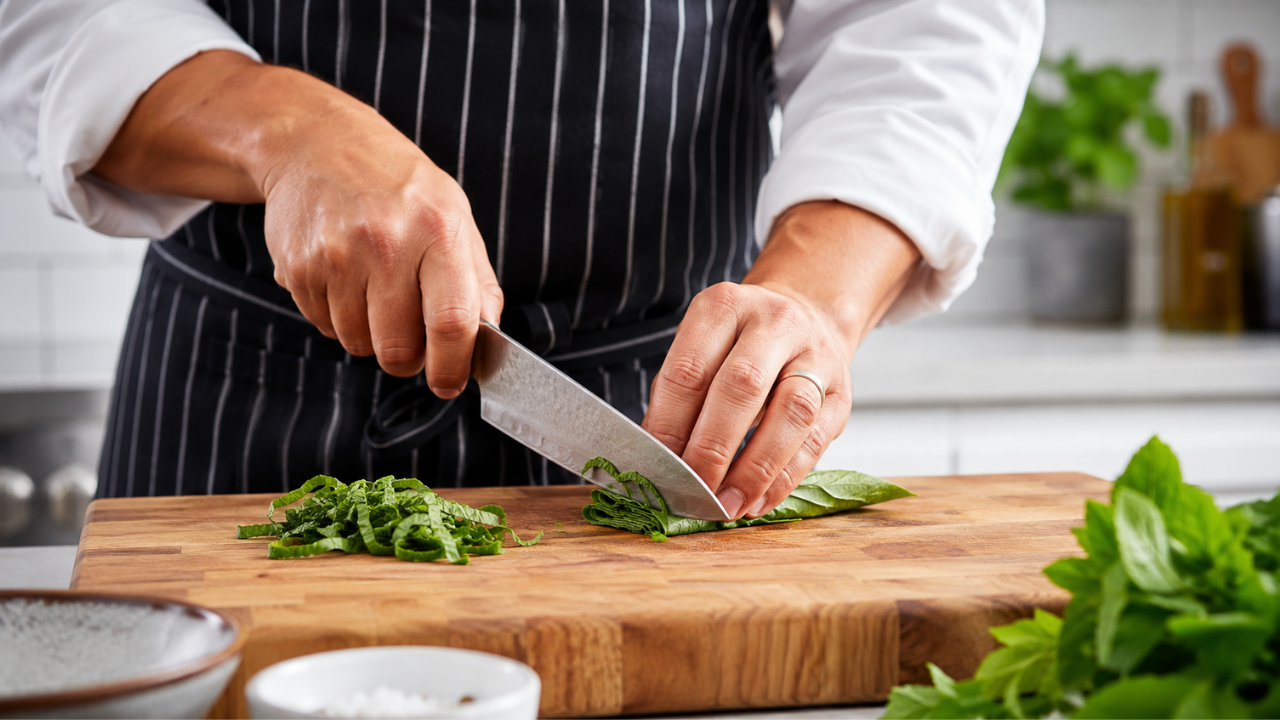
Chiffonade is a simple cut, but it depends on control before the knife ever moves. Stack, roll, slice. That’s the sequence. Get that right, and the rest follows.
In this demonstration, Chef Mark Sandoval shows how to stack, roll, and slice fresh mint and basil into thin ribbons. Pay close attention to what happens before the knife moves. That setup is where the control is built.
What Chef Mark Shows on the Board
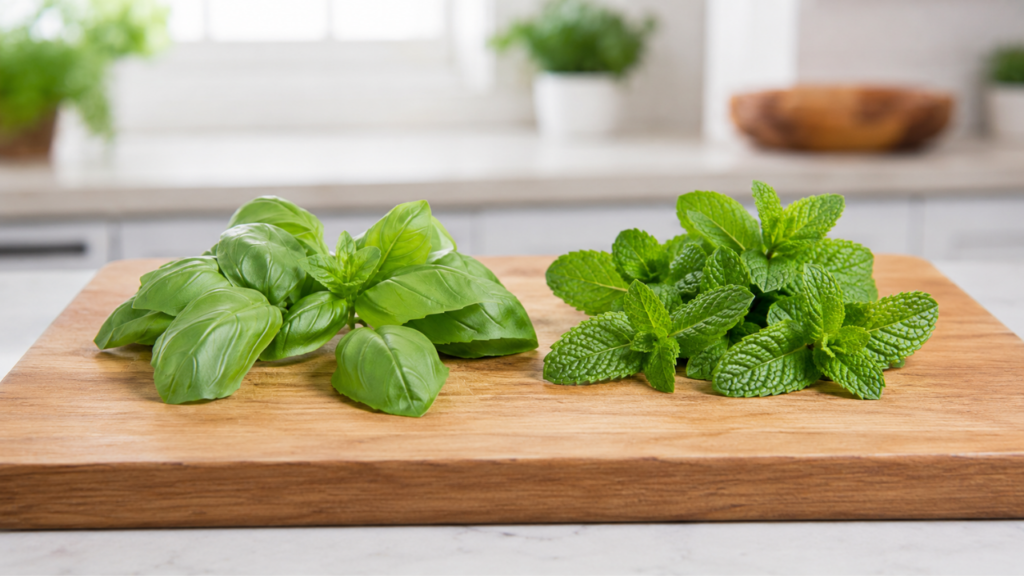
Chef Mark treats mint and basil differently on the board because they behave differently. Mint leaves are smaller and scatter easily, so the gathering step is critical. Basil leaves are larger and create a broader roll, easier to see, but still delicate enough to bruise under heavy pressure.
In both cases, the sequence is the same: organize the leaves, form a compact roll, then slice across it with narrow, light cuts. The finished herbs fall into clean ribbons rather than uneven chopped pieces, and that’s the whole point of the technique.
Foundational Rule: Chiffonade begins before the knife touches the herb. Loose leaves on a board are harder to control and harder to cut cleanly. Stack first, always.
Ingredients Used for This Cut
Chef Mark uses mint and basil to show how the same cut adapts to different leaf sizes. Each herb responds a little differently on the board, but both reveal the same need for control before the knife moves.
- Fresh mint: small leaves that need careful gathering before they can be rolled cleanly.
- Fresh basil: with larger, broader leaves, making the roll easier to form, but the herb is just as delicate.
Together, they demonstrate the same principle across two different leaf sizes: organize first, cut lightly, preserve the herb’s texture.
Tools Used for This Technique

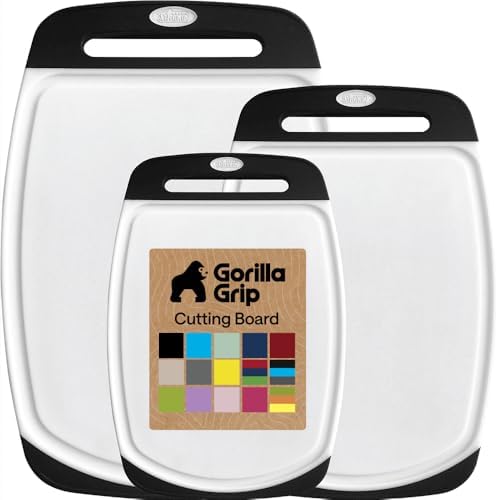
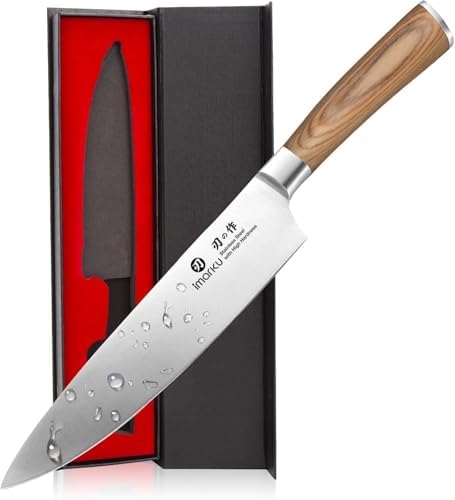
The tools in this clip are simple, but each one supports control during the cut. Watch how the knife, the board, and Chef Mark’s hands work together to keep the herbs organized and the slicing clean.
- Chef’s knife: used with a smooth slicing motion across the rolled herbs.
- Cutting board: provides the stable surface needed for setup and cutting.
- Chef Mark’s hands: just as important as the knife. One hand shapes and holds the roll, the other guides the blade.
Chef’s Note: Watch the hands, not just the knife. The roll is held firmly but gently, tight enough to keep its shape, not so tight as to crush the leaves before the cut begins.
How the Chiffonade Takes Shape
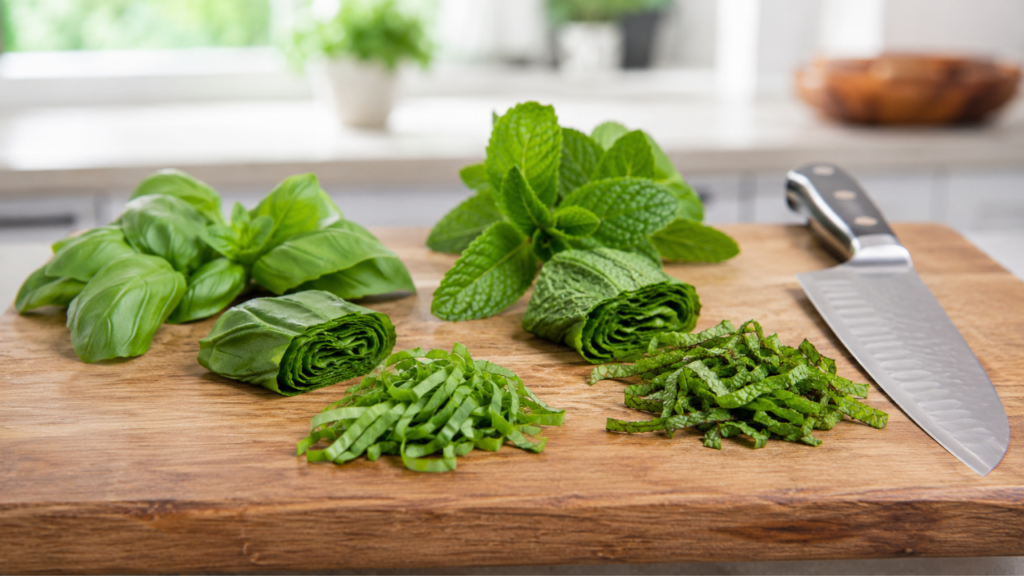
This cut develops in clear phases. Watch how loose leaves become a compact roll, then a clean ribbon cut, with each stage building the control needed for the next.
Phase 1: Gather the Leaves
Chef Mark brings the leaves together before he cuts anything. This is the first and most important control point in the demonstration. Once the leaves are stacked into an organized shape, the knife has a clear, manageable surface to work through. Without this step, loose herbs shift across the board, and the cut becomes inconsistent.
Phase 2: Roll Into a Compact Bundle
With the leaves stacked, Chef Mark rolls them into a tight but gentle cylinder. The roll holds everything in place and prevents the herbs from spreading as the knife moves across. This is especially critical with delicate herbs; any excess movement during cutting results in rough, uneven cuts.
Phase 3: Slice Across the Roll
Chef Mark slices across the roll in narrow, controlled cuts; he does not chop straight down, which would scatter the leaves. The blade moves cleanly through the bundle, and each cut releases thin strips rather than irregular pieces. Pressure stays light throughout: the goal is to cut through the leaves, not crush them into the board.
Warning: Too much downward force bruises mint and basil before the cut is finished. Let the sharpness of the blade do the work, not the weight of your hand.
Phase 4: Stop When the Ribbons Are Formed
Chef Mark stops once the chiffonade is complete. He does not keep chopping after the ribbons form. Overchopping destroys the texture and defeats the purpose of the technique. The finished herbs are light, clean, and distinct, not bruised, mashed, or overworked.
Chef’s Note: The finished ribbons should look like they were barely touched. If they look crushed or uneven, the pressure was too heavy, or the setup was rushed.
Common Mistakes This Technique Helps Correct
- Cutting loose leaves without stacking gives the knife less control, and the pieces become uneven.
- Pressing too hard or applying heavy pressure bruises delicate herbs and flattens the texture before the cut is complete.
- Overchopping, chiffonade creates ribbons, not a fine mince. Once the ribbons form, the cut is finished.
- Let the roll spread during cutting; keep the bundle compact from the first slice to the last.
Where Chiffonade Works Best
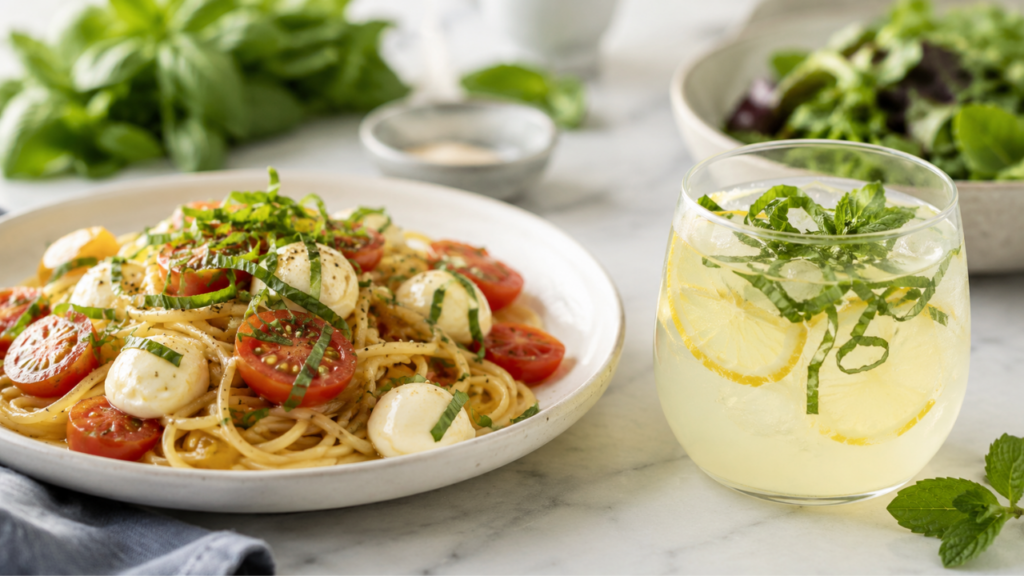
Chiffonade is most important when the herb is meant to remain visible and delicate in the finished dish. It is not the right cut for herbs being mixed deeply into a sauce or cooked down; a rough chop works better there. But when the herb is a finishing element, the ribbon shape keeps it light, fresh, and recognizable.
- Basil: finishing pasta, salads, pizza, bruschetta, or anywhere the herb is placed after cooking.
- Mint: salads, drinks, desserts, or any dish where a clean herb finish matters.
Foundational Rule: Use chiffonade when the herb should remain visible and delicate. For herbs cooked into a dish, a looser chop is more practical.
Related Skills and Further Learning
This demonstration aligns with the knife principles Chef Mark uses in all his cutting demonstrations: a stable setup, organized ingredients, and a clean blade path. These articles and demonstrations extend that foundation:
- Knife control: how knife choice, edge control, and board setup affect the quality of every cut.
- Bell pepper knife control: Chef Mark’s bell pepper demonstration shows the same principle: shape the ingredient first, then cut.
- Onion, shallot, and brunoise cuts: controlled cuts depend on structure, alignment, and rhythm, not speed.
- Herb and flavor articles: Kitchen Know How articles on basil, fresh herbs, and finishing ingredients explain when a delicate ribbon cut matters in a finished dish.
Watch the Control Before the Cut
The main lesson from this demonstration is that chiffonade begins before slicing. Stack the leaves, roll them into a compact bundle, and slice across with light, narrow cuts. That sequence is what turns delicate herbs into clean, usable ribbons without pressure or repeated chopping.
Watch the demonstration again and focus on the moments before the knife moves. That is where the control is built, and where most mistakes are made.
Watch another Chef Mark Sandoval demonstration to keep building your eye for professional knife work.
2 thoughts on “How to Chiffonade Fresh Herbs: Mint and Basil Demonstration”
Comments are closed.