
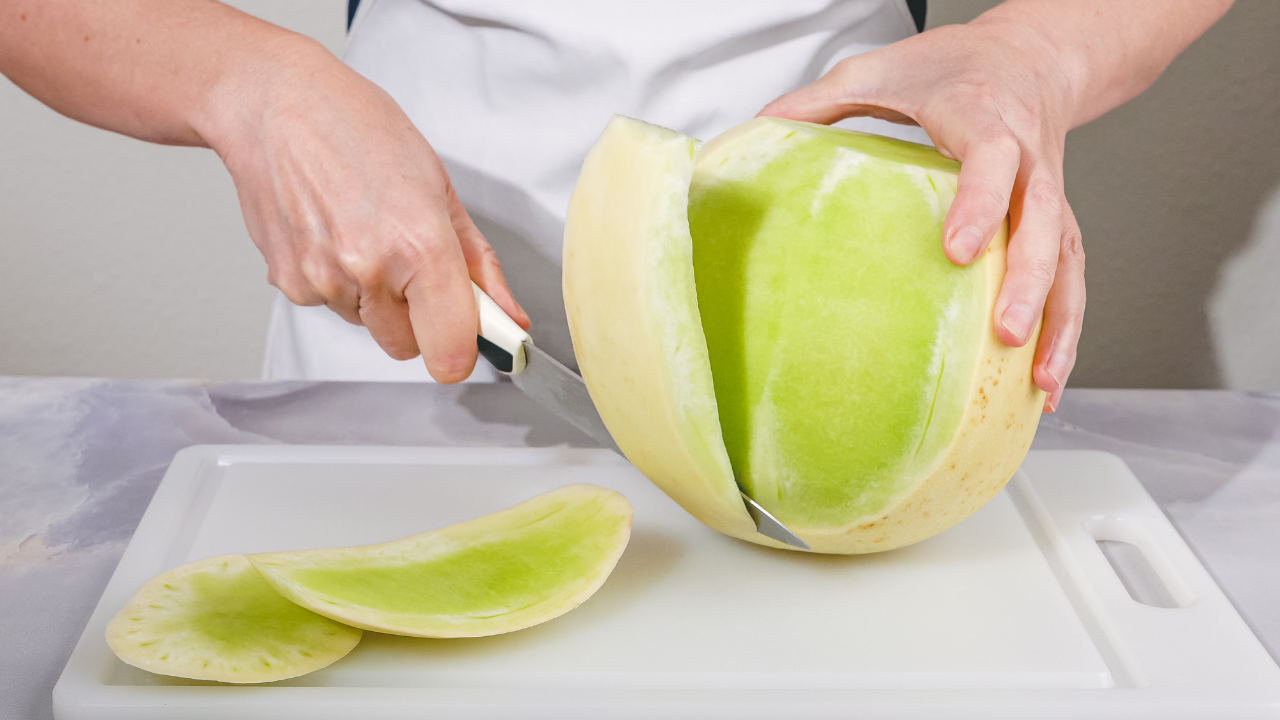
Chef Mark Sandoval demonstrates how to cut a melon by first transforming it into a safer, more controlled shape. The key is not only the final pieces, but how each cut prepares the fruit for the next step.
A melon is difficult to handle because it is round, heavy, and covered with a thick rind. If it moves on the board, guiding the knife becomes harder. Chef Mark’s method focuses on steadying the melon for confident cutting.
Once the melon has a flat surface, the rind can be removed more cleanly, the seed cavity can be handled more easily, and the flesh can be portioned into even pieces.
As you watch the demonstration, pay attention to how the melon changes shape before it gets smaller. The key visible skill is control: creating flat surfaces, following the rind’s curve, cleaning up the peel, and breaking the melon down into manageable sections before making the final cuts.
Watch Chef Mark Sandoval Demonstrate How to Cut a Melon
As you watch, focus on how Chef Mark steadies the melon before cutting. Notice the creation of a flat surface, the downward cuts following the rind, the cleanup cuts after peeling, and the sectioning before the final pieces.
Those early choices make the rest of the cut safer, cleaner, and easier to control.
| Creates a flat surface | The melon becomes steadier on the board |
| Cuts downward along the rind | The blade follows the curve of the fruit |
| Rotates the melon | Each new position gives the knife a cleaner path |
| Makes cleanup cuts | Remaining rind is removed without wasting too much flesh |
| Opens and seeds the melon | The fruit becomes easier to section cleanly |
| Cuts larger sections first | The final pieces become more consistent |
Tools Used in the Demonstration
The tools in this demonstration are simple, but each one supports control at a different stage. The focus is not on special equipment. It is on how the knife, board, and spoon help Chef Mark manage the melon safely and cleanly.
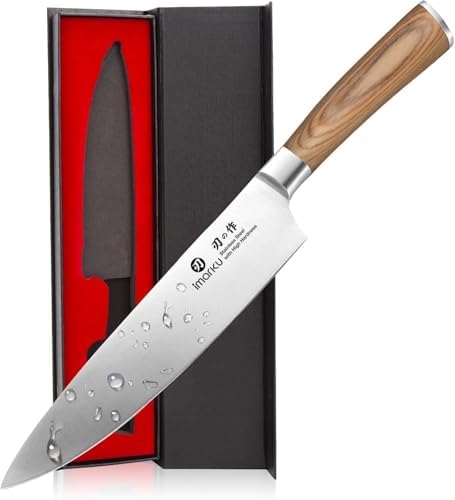
- High-carbon stainless steel blade: It is manufactured from high-quality stainless steel that maintains its functionality…
- Multi-functional knife: The gyutou knife is classified and designed to be multipurpose knife for professional applicatio…
- Ergonomic pakka handle: To make it more professional and minimize any fatigue, finger numbness or aches after holding it…
Chef Knife
The chef’s knife does most of the work in the demonstration. It is used to trim the melon, create a flat base, remove the rind, cut the melon in half, and portion the flesh into smaller pieces.
The Chef’s knife size matters because the melon is large and curved.ef’s knife provides enough blade length for cleaner downward cuts through the rind and more controlled cuts through the flesh.
Cutting Board
The cutting board provides a firm work surface for the melon. This becomes especially important once Chef Mark creates the first flat surface and stands the melon upright.
The board supports the demonstration’s main safety lesson: the fruit should be steady before detailed knife work begins.
Spoon
The spoon is used to remove the seeds from the center cavity after the melon is cut open. This keeps the seed removal clean without damaging too much of the surrounding flesh. It also prepares the melon for cleaner sectioning and final cuts.
Technique Breakdown
The technique works because each stage prepares the melon for the next one. Chef Mark moves from setup to peeling, then from cleaning to sectioning. That sequence is what makes the final cuts easier to control.
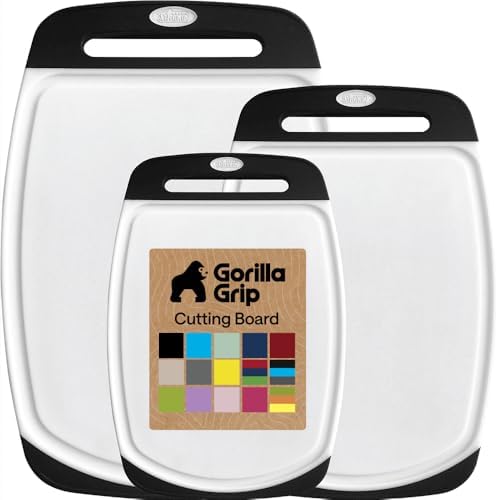
- ULTRA DURABLE STRENGTH: 3rd Party Tested for durability, thick cutting boards have a nonporous surface that won’t splint…
- TOUGH GRIP: cutting boards for kitchen designed with slip resistant handle and rubber border, secure grip helps reduce s…
- LONG LASTING QUALITY: durable cutting board construction resists wear and tear; unlike wood or bamboo boards, ours are d…
Creating a Stable Starting Position
Chef Mark begins by treating the melon as a round ingredient that needs to be controlled before it can be cut cleanly. The first visible phase is about setup. The melon is positioned on the board, then trimmed to create a flat surface.
This is the point to watch closely because the first cut changes how the melon behaves. Once the melon has a flat base, it no longer rolls as easily. That gives the knife a safer path and gives the cook more control over the next cuts.
The key cue is how the melon sits on the board. Before the rind is removed or the fruit is opened, the melon has to be steady enough to work with.
Removing the Rind Along the Curve
The main transformation happens as Chef Mark stands the melon upright and removes the rind with controlled downward cuts. The blade follows the melon’s curve rather than cutting straight through the thick sections.
As the rind comes off, Chef Mark rotates the melon and continues working around the fruit. The pressure remains controlled, and the blade angle adjusts to the melon’s shape. The goal is to remove the tough outer layer while keeping as much clean flesh as possible intact.
The cue to watch is the blade path. The knife follows the melon’s shape, and the cleanup cuts remove any remaining rind without overcutting the fruit.
Cleaning, Sectioning, and Cutting the Flesh
Once the melon is peeled, Chef Mark cuts it open and removes the seeds from the center cavity. This prepares the melon for cleaner sectioning because the inside is now exposed and easier to manage.
From there, the melon is broken down into larger, flatter sections before the final cuts are made. Chef Mark works from larger shapes to smaller ones, resulting in more consistent finished pieces.
The finished melon reflects earlier choices: flat base, clean rind removal, seed cleanup, and sectioning all lead to neater pieces. The focus is not speed, but a clear progression from whole fruit to pieces.
Common Mistakes This Demonstration Helps Correct
This section works best when read alongside the video. Each mistake below is corrected by something Chef Mark visibly does on screen, either through positioning, blade angle, cleanup cuts, or the order of the work.

- 【Stainless Steel Material】The metal spoon set is made of high-quality 18/0 thickened stainless steel, which is built to …
- 【Two-piece Design】Get two essential cooking tools in one set! The solid spoon is perfect for scooping soup, stew, rice, …
- 【Practical Design】The long handle of the metal spoon and slotted spoon with heat-proof design that make the handle more …
| Cutting into the melon while it can still roll | He creates a flat surface first so the melon sits more securely on the board |
| Trying to peel the rind with thick, straight cuts | He follows the curve of the melon so the blade removes the rind without taking away too much flesh |
| Working from an awkward knife angle | He rotates the melon as he cuts, giving the blade a cleaner path around the fruit |
| Stopping after the first peeling pass | He makes smaller cleanup cuts to remove any remaining rind |
| Cutting the flesh before clearing the seed cavity | He removes the seeds first so the melon is easier to section cleanly |
| Rushing straight to final pieces | He breaks the melon into larger, manageable sections before making smaller cuts |
The demonstration shows that cleaner melon cutting comes from correcting the larger setup issues first. Once the melon is steady, peeled cleanly, and cleared of seeds, the final cuts become easier to control.
Where This Skill Transfers and What to Explore Next
The control shown in this melon demonstration applies to other ingredients that are round, heavy, curved, or difficult to hold steady on the board. The exact ingredient may change, but the same visual logic still applies: create control before making smaller cuts.
- Cantaloupe and honeydew: The same flat-base, rind-removal, seed-cleaning, and sectioning logic applies. The size and firmness may vary, but the cutting sequence stays similar.
- Pineapple: The knife also works downward around a curved, tough exterior. As with melon, pineapple cutting becomes cleaner when the blade follows the shape rather than removing thick sections.
- Winter squash: The need for a secure base matters even more because the ingredient is firmer and more resistant. The pressure changes, but the stability lesson remains the same.
- Large citrus or grapefruit: When the goal is clean, peeled fruit, the blade follows the fruit’s curve to remove the outer layer while preserving the flesh underneath.
- Potato cuts: Chef Mark’s demonstration connects well because it also shows how a round ingredient becomes easier to cut when shaped into flatter, more manageable sections.
- Pepper cutting: A pepper has a different structure, but the same idea applies. The ingredient’s shape, seeds, and panels affect the cutting sequence.
A simple wedge cut may work for casual serving or snacking. Chef Mark’s method is better for cleaner presentation, even pieces, and more control over the final shape.
Final Takeaway
Chef Mark’s melon demonstration shows that clean cutting starts before the final pieces are made. The key is to control the fruit’s shape first.
By creating a flat base, following the curve of the rind, cleaning up the peel, removing the seeds, and cutting the melon into manageable sections, each stage makes the next one easier to control. The final pieces are the result of those earlier decisions.
Watch another Chef Mark Sandoval demonstration to keep building knife control through clear, visible technique.