
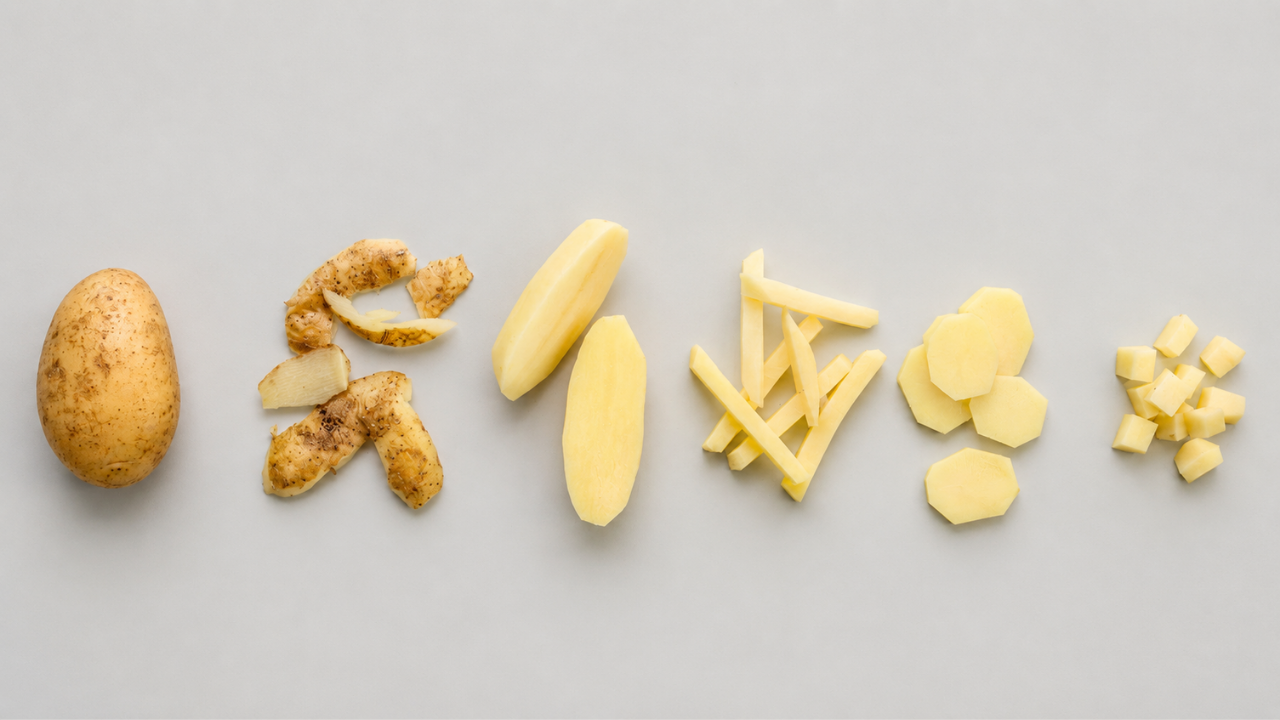
Potato cuts are a useful way to see how knife control begins before the final shape is made.
In this demonstration, Chef Mark Sandoval transforms a round, unstable potato into a controlled shape. The focus is not just on the finished cut, but on how he creates flat surfaces, controls thickness, aligns pieces, and maintains steady knife work throughout the process.
This matters because potatoes are firm and dense, making uneven cuts likely if they roll or shift. Watching closely shows consistency develops in phases: first by stabilizing, then by slicing even planks, then sticks, and finally, dice.
As you watch, identify the early shaping steps. Use these control points to ensure your later cuts are cleaner, safer, and more predictable.
Watch: Chef Mark Sandoval Demonstrates Potato Cuts
Before watching, note how the potato is handled before the final dice appear. Chef Mark does not treat the potato as a single task. He first makes the potato easier to control, then uses each cut to set up the next.
Watch for the transition from a round ingredient to flatter, more stable surfaces. Recognize that change is the foundation for consistent planks, sticks, and dice.
What You Will Notice in This Demonstration
The first thing to notice is that Chef Mark does not rush straight into the final cut.
He starts by making the potato manageable. A whole potato is rounded, firm, and unstable. Before precise cuts, he makes flat surfaces so the potato sits securely.
You will also notice how each cut prepares the next one. The planks set the thickness. The sticks create the width. The final cross-cut turns that earlier structure into dice.
The demonstration’s value is in showing that finished potato pieces are built at every earlier step, not just at the end.
Watch for:
- How the potato becomes more stable as it is trimmed
- How do even planks make the later sticks easier to control
- How the sticks are gathered and aligned before the final cuts
- How Chef Mark keeps the blade path steady instead of forcing the knife
- How consistency depends on setup, not speed
Why the Potato’s Shape Matters
The only ingredient demonstrated is the potato, and its shape and texture are crucial to the technique.
A potato is firm enough for clean knife control, but rounded enough to expose a common problem: it can shift if not stabilized. That is why early trimming matters. Chef Mark is not only preparing potatoes for a specific cut; he is changing the shape to make the knife work more controlled.
The potato starts as a round, firm ingredient. Once a flat surface is created, the rest of the cutting becomes more secure. From there, the final consistency depends on how evenly the potato is shaped before the dice begins.
Tools Chef Mark Uses in the Demonstration
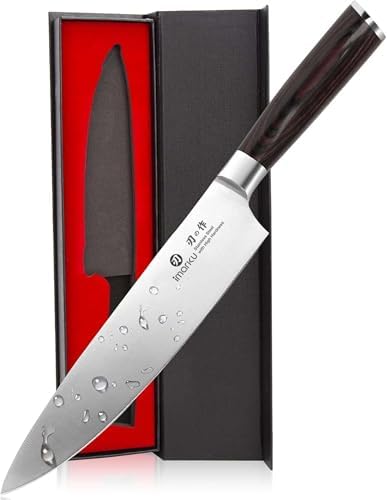
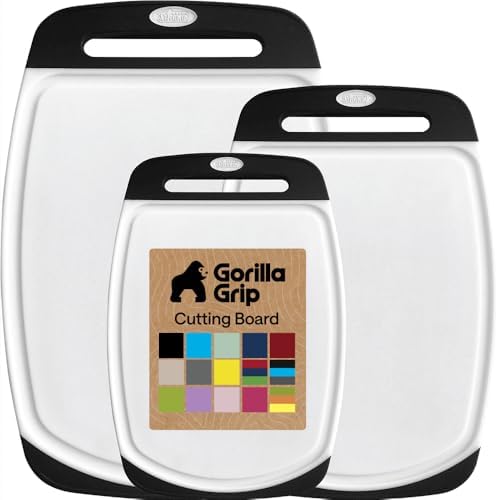
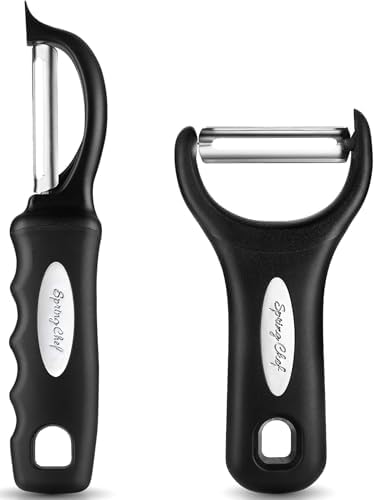
The tools are simple, but each one supports control at a different point in the demonstration.
Chef Mark uses a peeler first to remove the skin cleanly before the knife work begins. This keeps the focus on the potato’s shape and the consistency of the cuts.
The chef’s knife does the main work. Watch how it moves once flat surfaces are created. The knife is not forced through a rolling ingredient, but slices a stabilized potato.
The cutting board matters because it provides a stable surface as the potato is cut from a whole potato into planks, sticks, and dice.
Tools visible in the demonstration:
- Peeler for removing the skin before cutting
- Chef’s knife for trimming, slicing, and dicing
- Cutting board for stability and control
- A bowl for keeping peelings and trimmed pieces contained
Technique Breakdown
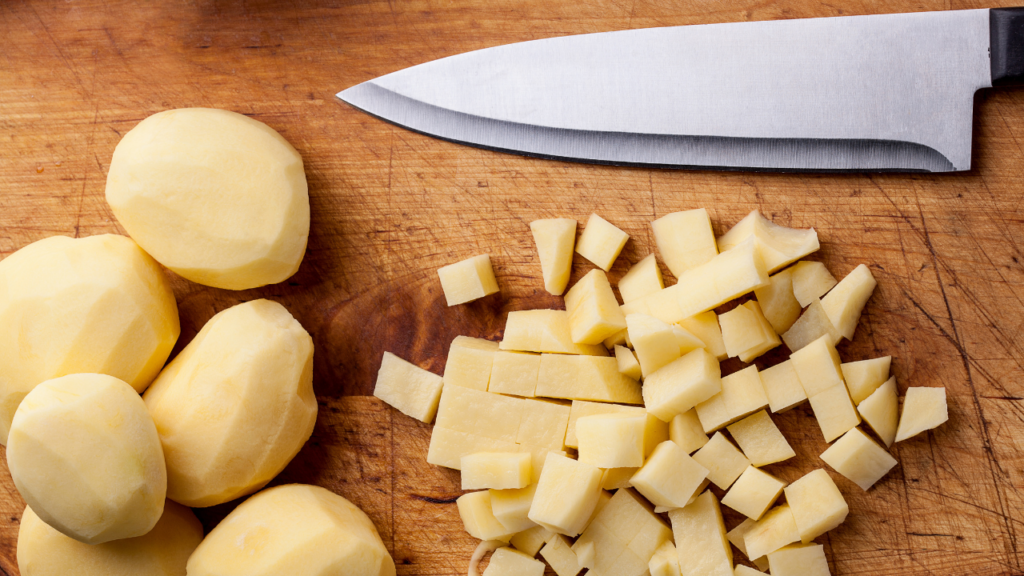
Read this demonstration in phases, not as separate steps. Each phase reshapes the potato, making the next cut easier.
1. Peeling and Clearing the Surface
Chef Mark begins by removing the skin before the knife work starts. The potato is rotated in the hand so the peeler can follow the curve, while the bowl contains peelings and keeps the cutting board clear.
2. Creating the First Flat Surface
The first important knife decision is about stability. Chef Mark trims the potato so it has a flatter side to rest on. Once the potato sits more securely, the following cuts become easier to guide.
3. Squaring the Potato
Reducing the rounded sides makes the potato block-like, giving Chef Mark straighter edges. The goal is not perfection, but a shape that allows cleaner, repeatable cuts.
4. Cutting Even Planks
The potato is sliced lengthwise into planks. These planks set the thickness for the later cuts, so any unevenness here will show up again in the final dice.
5. Turning Planks Into Sticks
The planks are gathered and turned. Chef Mark cuts them into sticks with a steady blade; the width determines the finished piece size.
6. Cutting the Final Dice
The sticks are aligned. Chef Mark makes the final crosscuts to create small, even pieces. The result shows earlier control: stable base, even planks, aligned sticks, and steady knife movement.
Key Professional Adjustments
These refinements make the demonstration cleaner and more controlled. They are not extra steps, but small adjustments keeping the potato steady, cuts even, and knife work predictable.
- Chef Mark creates a flat side before continuing the more precise cuts.
- He trims the potato into a more regular shape so the knife has cleaner lines to follow.
- He controls the plank thickness early because it determines the final size.
- He gathers and aligns the sticks before cutting crosswise.
- He uses steady knife pressure instead of chopping randomly or forcing the blade.
Common Mistakes This Demonstration Helps Correct
This section focuses on mistakes that the video clearly addresses. The point is not to list every potato-cutting mistake, but to show what Chef Mark’s technique helps prevent.
Cutting Before the Potato Is Stable
A round potato can roll or shift under the knife. Chef Mark corrects this by creating a flat surface early, which gives the potato a steadier base before the more controlled cuts begin.
Treating the Final Dice as the Main Cut
The dice is just the last part. Size and consistency are set earlier with planks and sticks. The demo shows that the final cut depends on proper setup.
Letting Pieces Spread Out
Keep planks and sticks gathered and aligned. Spreading them leads to uneven cuts. Watch how Chef Mark keeps cut potatoes organized for the next phase.
Cutting Too Quickly
Speed can make the knife path unstable. The demonstration uses a steady pace, each cut purposeful, yielding cleaner, more consistent potato pieces.
Ignoring Thickness
Uneven planks lead to uneven sticks and dice. Chef Mark controls the thickness early rather than trying to fix it at the end. This is one of the clearest lessons in the demonstration.
Where This Technique Transfers
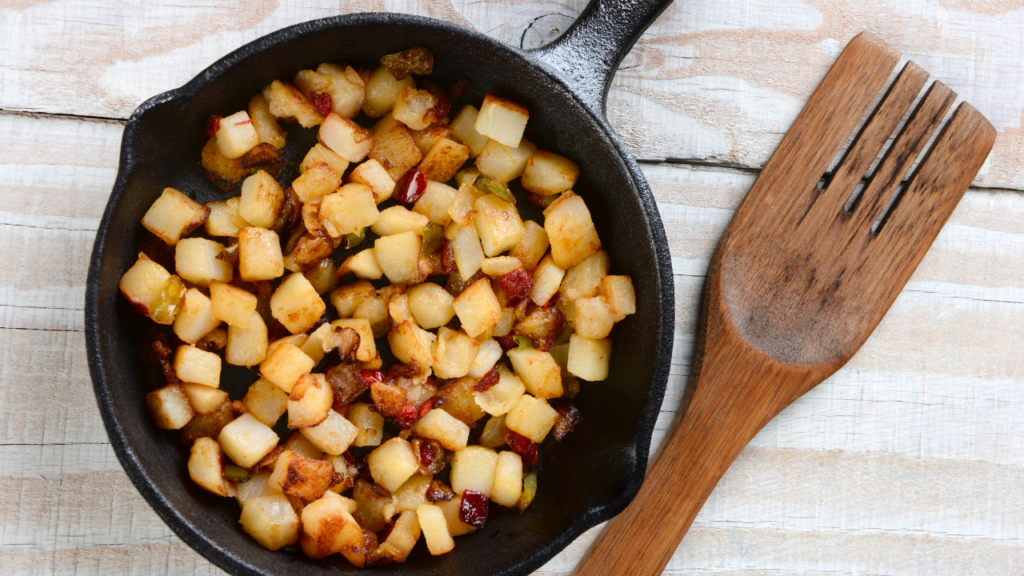
The value of this demonstration goes beyond potatoes. The same control points apply whenever a firm ingredient needs to be shaped before it can be cut evenly.
Chef Mark’s technique shows that consistency starts with structure. Once the ingredient has a flat base, straighter sides, and more even thickness, the final cut becomes easier to control.
| Potato soups and stews | More even cooking and softening |
| Hash and breakfast potatoes | More even browning in the pan |
| Potato salad | Cleaner shape and a more consistent bite |
| Fries or roasted potato sticks | More consistent thickness and cooking time |
| Other firm vegetables | Safer, steadier cutting before precision work |
Not every dish needs a precise dice. Rustic roasted potatoes, mashed potatoes, or blended soups can use looser cuts. The lesson still applies: even when the final shape is less exact, stability and control make the work safer and cleaner.
Related Skills or Further Learning
This potato demonstration connects naturally to other knife work where shape, stability, and alignment affect the final result.
Related Chef Mark Demonstrations
Kitchen Know How Connections
- Knife Cuts Explained
- Choosing the Right Knife
- Cutting Board Control
What This Demonstration Shows
Chef Mark’s potato cuts are a clear reminder that consistent knife work starts before the final dice.
The most important part of the demonstration is not the last cut across the potato sticks. It is the setup that makes that last cut possible. Chef Mark first removes the skin, creates a flatter surface, squares the potato, controls the plank thickness, turns those planks into sticks, and only then cuts the final dice.
That sequence shows that professional knife work depends more on control than on speed. The potato becomes easier to manage because each phase makes the next one more predictable.
For the viewer, the main thing to watch is how the shape changes. A round potato becomes stable. A stable potato becomes planks. The planks become sticks. The sticks become dice. When those earlier choices are controlled, the final pieces look cleaner and cook more evenly.
Watch another Chef Mark Sandoval demonstration.
2 thoughts on “Chef Mark Sandoval Demonstrates Potato Cuts”
Comments are closed.