
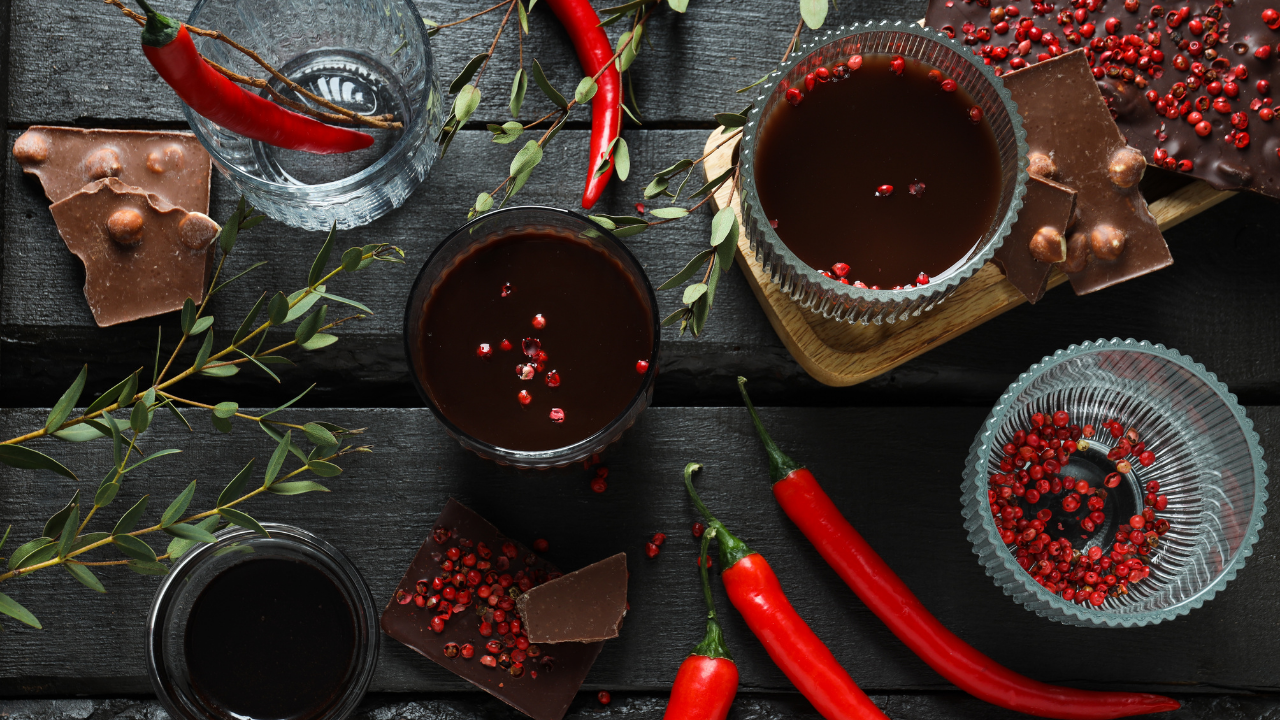
Chocolate and chili may sound like a bold pairing, but they have long worked together in both savory and sweet cooking. When balanced well, chili does not simply make chocolate spicy, and chocolate does not just make chili sweeter. Together, they can create depth, warmth, contrast, and a longer, more layered finish.
Home cooks often encounter this combination in sauces, braises, drinking chocolate, truffles, cookies, and spice-driven cakes. What makes the pairing useful is not novelty. It is the way sweetness, bitterness, richness, aroma, and heat can support one another when handled with control. Understanding that balance makes it much easier to use the pairing with confidence.
Defining Heat, Sweetness, and Flavor Balance in This Pairing
Chocolate and chili each bring more than one sensation to a dish, which is why this pairing can feel complex when handled well and confusing when not.
Chocolate contributes sweetness, but that is only part of its role. It also brings bitterness, fat, and roasted depth. Sweetness softens sharp edges and makes a dish feel fuller. Bitterness adds structure and keeps the flavor from becoming flat or sugary. Fat carries aroma and helps flavor linger. Roasted notes give chocolate its darker, deeper character, which is especially important in savory cooking and in desserts that need more than simple sweetness.
Chili also does more than add heat. Heat is the most obvious part, but chili can also bring fruitiness, brightness, smokiness, and aromatic complexity depending on the variety and form used. Some chilies taste sharp and direct. Others feel warmer, rounder, or slightly sweet before the heat arrives. This matters because the chili’s flavor affects the overall balance just as much as its intensity.
In this pairing, balance does not mean making a dish equally sweet and spicy. That is a common misunderstanding. Good balance means each element supports the others without taking over the whole dish. The chocolate should add depth, roundness, or richness without muting the food. The chili should add lift, warmth, or contrast without turning the dish harsh or one-dimensional.
When the balance is right, sweetness feels more deliberate, bitterness feels useful, and heat feels integrated rather than distracting. The goal is not to make the eater notice two separate ingredients fighting for attention. The goal is to create a flavor that feels layered, controlled, and complete.
What Improves When This Balance Is Handled Well
When chocolate and chili are balanced properly, the flavor feels deeper and more complete. Instead of tasting sweet first and hot second, the dish develops in stages. You may notice richness at the front, warmth through the middle, and gentle heat or a lingering bitterness at the end. That longer finish is often what makes the pairing feel interesting rather than heavy or obvious.
Good balance also gives the flavor more shape. Sweetness can round out harsh edges. Bitterness adds structure and keeps the dish from tasting flat. Chili adds movement and lift, helping prevent chocolate from feeling too dense or overly rich. When these elements support one another, the result feels layered and intentional. The flavors do not blur together. They build on each other.
When the balance is off, the problems show up quickly. Heat that is too aggressive can overpower the chocolate, making the dish feel sharp or one-note. The chocolate’s roasted depth begins to fade, and the finish becomes more about force than flavor. If sweetness is too dominant, it can mute the chili, leaving the dish tasting soft, dull, or overly rounded. Once that happens, the pairing loses the contrast that gives it energy.
Understanding this balance also makes bold ingredients easier to handle. Chocolate and chili can both feel risky to adjust without a clear sense of what each one is doing. Once you understand how sweetness, bitterness, richness, and heat interact, it becomes easier to make changes without losing control of the dish. You are no longer guessing. You are tasting with a clearer purpose, and that leads to better decisions in the kitchen.
Where Chocolate and Chili Show Up Across Real Dishes
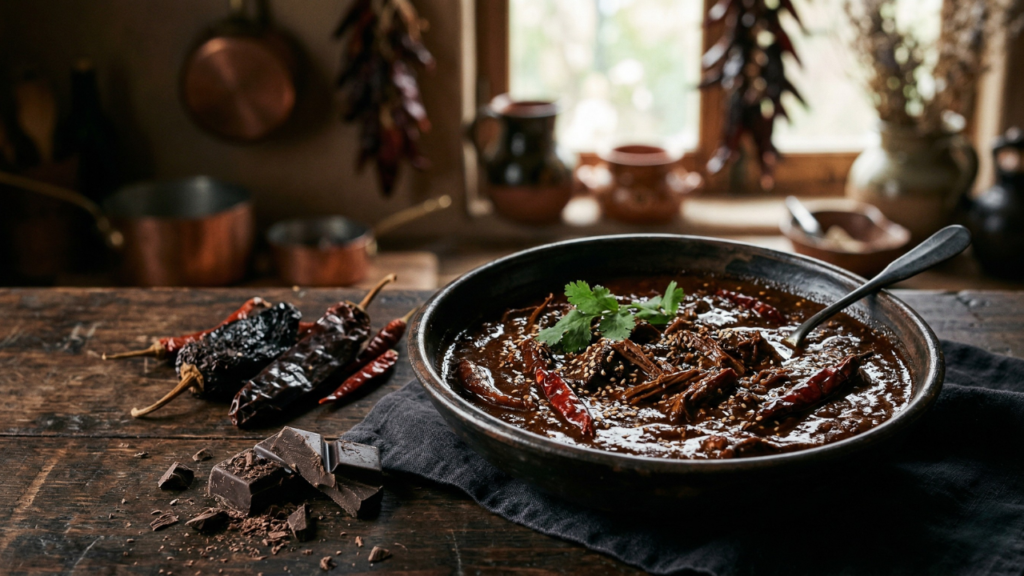
Chocolate and chili appear together in a wider range of dishes than many home cooks realize. What changes from one dish to another is not just sweetness or heat, but the role each ingredient plays in the overall flavor.
| Mole, chili-based braises, dark sauces | Truffles, cookies, spice-driven cakes | Earthy, deep, bitter, warm, layered |
| Warm drinks | Hot chocolate, spiced chocolate drinks | Rich, rounded, warm, lingering |
| Chocolate desserts | Spice-focused dishes | Sweet, warm, slightly bitter, sometimes fruity |
| Spice focused dishes | Rubs, seasoning blends, chili chocolate combinations | Bold, aromatic, more direct in contrast |
What matters most is learning to recognize the flavor pattern. In some dishes, chocolate adds body and bitterness while chili adds warmth and aroma. In others, chocolate leads and chili stays in the background to shape the finish. Recognizing that shift helps home cooks see this pairing as a flexible flavor relationship rather than one fixed idea.
Once you start noticing how chocolate and chili behave across different dishes, it becomes easier to understand why the pairing works in both savory and sweet cooking. You are not memorizing recipes. You are learning to identify a flavor structure that appears in different forms across the kitchen.
Reading the Balance in Your Own Kitchen
Chocolate and chili should be judged as a moving flavor, not a single taste at the front of the mouth. When you taste this pairing, pay attention to what arrives first, what develops in the middle, and what stays behind at the end. A dish can seem balanced at first, then finish too hot, too sweet, or too heavy.
What to watch for while tasting:
- Delayed heat that builds after the first impression.
- Cocoa bitterness that gives structure or starts to feel dry.
- Sweetness that lingers too long and softens the finish.
- Richness that feels full but lacks contrast.
These signals help you read whether the pairing is working clearly or starting to lose shape. Flat richness usually means the chocolate is adding body without enough contrast. Sharp heat suggests the chili is standing out rather than blending into the dish. Muddy flavor often means that sweetness, bitterness, and heat are present but not clearly separated enough for the palate to read them.
The response should be thoughtful rather than automatic. Salt can sharpen the flavor and make the chocolate feel more focused. Acid can brighten the dish and reduce heaviness. Fat can soften aggressive heat and help the flavors feel more integrated. If the pairing feels unbalanced, the answer is often better contrast or less intensity, not simply more sweetness or more spice.
Why This Pairing Commonly Goes Wrong at Home
This pairing often goes wrong when home cooks reduce chocolate to sweetness and chili to heat. Both ingredients do more than that, and the dish loses clarity when either one is treated too simply.
Three common problems cause most of the confusion:
- Too much chili: This often hides the roasted depth and bitterness that make chocolate useful. The dish becomes hotter, but not more interesting.
- Chocolate that is too sweet: Very sweet chocolate can blur a dish’s structure. It softens contrast, making the finish feel heavy or dull.
- Treating all chilies as interchangeable: Chilies vary in both heat and flavor character. One may be fruity, another smoky, another sharp, or another earthy. Swapping them changes the shape of the pairing, not just the spice level.
This pairing works best when both ingredients are understood as structured flavor tools. Chocolate is not just about sweetness, and chili is not just about heat. When cooks reduce them to those two ideas, the dish often loses clarity. The better approach is to think in terms of contrast, finish, and support. That is what keeps the pairing layered instead of overwhelming, muddy, or one-note.
Comparing the Different Roles of Chocolate and Chili
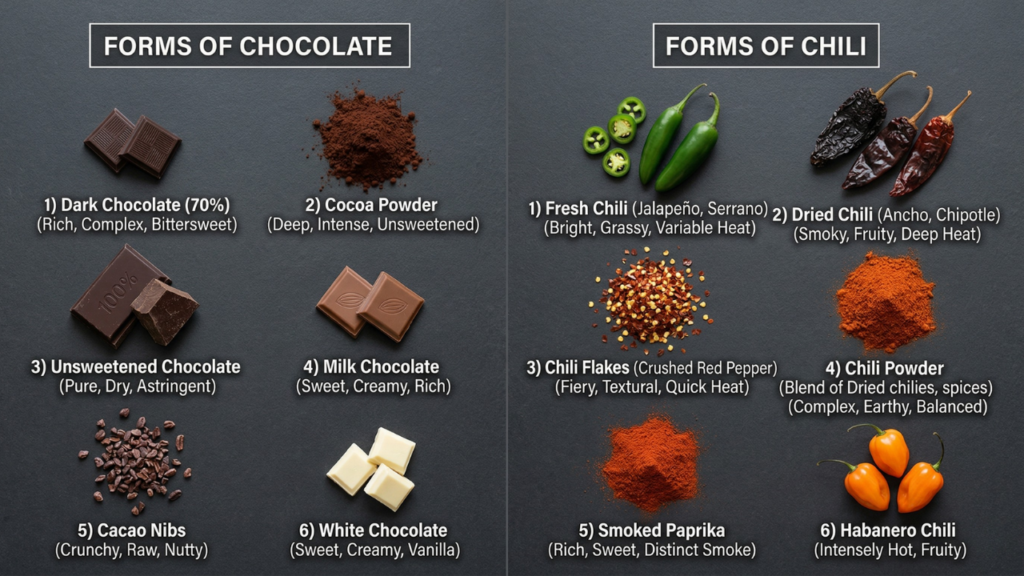
The form of chocolate or chili changes how the pairing behaves in a dish. Flavor control depends not only on how much you use, but on what type you choose. That choice affects sweetness, bitterness, richness, heat delivery, aroma, and the overall shape of the finish.
| Dark chocolate | Depth, bitterness, richness | Can feel too heavy or dry if pushed too far |
| Milk chocolate | Sweetness, softness, roundness | Can blur contrast and weaken structure |
| Cocoa powder | Direct chocolate flavor, less fat | Can feel drier or sharper on the finish |
| Unsweetened chocolate | Bitterness, fat, roasted depth | Needs careful control and support |
| Fresh chili | Brightness, lively heat, fresh character | Can feel exposed or sharp |
| Dried chili | Depth, warmth, earthy or fruity notes | Can shift the flavor darker or more concentrated |
| Chili flakes | Direct, sharper heat | Can stand apart from the dish |
| Chili powder blends | Heat plus blended spice character | Flavor varies widely depending on the blend |
This comparison helps show why chocolate and chili are not fixed ingredients with a single effect. One form may create a softer, rounder result, while another adds more structure or more direct heat. Once you understand that these choices shape the flavor as much as quantity does, the pairing becomes much easier to control.
When the Core Rule Can Shift Slightly
The core principle stays the same in both sweet and savory cooking. Chocolate and chili should support each other through contrast, not compete for attention. What changes is how that contrast is expressed in different dishes.
In sweeter applications, gentler heat is often more effective than obvious spice. The goal is usually warmth, lift, or a longer finish rather than a strong burn. In that setting, chili works best when it sits behind the chocolate and sweetness, giving the flavor more movement without taking over.
Savory dishes can usually handle more bitterness, especially when fat, salt, and longer cooking help support it. In those dishes, darker chocolate can add body and depth without feeling aggressive, as long as the surrounding ingredients keep the bitterness useful and controlled.
These are not exceptions to the rule so much as adjustments in emphasis. A sweet dish may allow softer heat, but it still needs contrast. A savory dish may carry more bitterness, but that bitterness still needs support. The principle does not change. Only the balance point does.
Quick Takeaways for Balancing Chocolate and Chili
- Chocolate brings sweetness, bitterness, fat, and roasted depth.
- Chili brings heat, aroma, and flavor character.
- Balance depends on restraint, not intensity.
- The pairing should feel layered, not confusing.
- Taste for finish and afterheat, not just the first bite.
FAQs About Balancing Chocolate and Chili
These questions cover the points that most often cause confusion when working with chocolate and chili together. They are meant to help home cooks read the pairing more clearly and adjust it with better judgment.
Do chocolate and chili always have to taste spicy?
No. In many dishes, chili is there to create warmth, lengthen the finish, or add contrast rather than deliver a strong burn. The pairing often works best when the heat complements the chocolate rather than dominating it.
Is dark chocolate always the best choice for this pairing?
Not always, but it is often the easiest to control. Dark chocolate usually brings enough bitterness and depth to support chili well. Milk chocolate can work in sweeter applications, but it can also soften the structure too much if the dish already leans sweet.
Can this pairing work in savory dishes without tasting like dessert?
Yes. In savory cooking, chocolate is often used for bitterness, body, richness, and roasted depth rather than obvious sweetness. When handled properly, it makes a dish feel deeper and more layered, not sugary.
Why does my chocolate-and-chili dish taste muddy?
This usually happens when the sweetness, bitterness, and heat are present but not clearly defined. The flavors begin to blur rather than support each other. Too much sweetness, too much heat, or not enough contrast from salt or acid can all cause this.
Why does the heat seem stronger after I swallow?
Chili heat is often delayed. Fat and sweetness can soften the first impression, allowing the heat to build more slowly. That is why this pairing should be judged by the full finish, not just the first bite.
Are all chilies interchangeable if I want the same spice level?
No. Chilies vary in both heat and flavor character. Some are fruity, some smoky, some sharp, and some earthy. Even if two chilies seem similar in intensity, they can shape the final flavor very differently.
What is the best way to judge whether the balance is right?
Taste for sequence and finish. Notice what arrives first, what develops in the middle, and what stays behind. A balanced pairing should feel layered, controlled, and clear rather than overly sweet, sharply hot, or confusing.
Kitchen Tools That Support This Concept
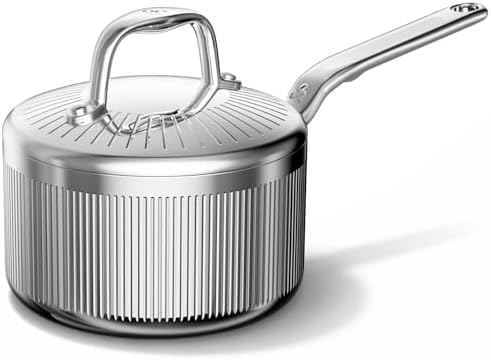


A few basic tools can make it easier to work with chocolate and chili more effectively. The goal is not specialty equipment. It is better heat control, clearer prep, and more consistent flavor decisions.
Heavy Saucepan or Small Sauce Pot: A heavy saucepan helps distribute heat more evenly, which is useful when working with chocolate-based sauces or warm chocolate drinks. It gives you more control and helps prevent scorching.
Cast Iron Skillet or Braiser: A cast-iron skillet or braiser is ideal for savory applications, where chocolate and chili add depth to sauces or braised dishes. Its heat retention helps keep cooking steady and controlled.
Small Prep Bowls or a Spice Grinder: Prep bowls help organize different forms of chocolate and chili before cooking. A spice grinder is useful if you work with dried chilies and want better control over texture and aroma.
Closing the Loop on Heat and Sweetness
Chocolate and chili work best when they are approached as a balance of contrast, control, and tasting awareness. The goal is not to make a dish simply sweeter or spicier. The goal is to create a flavor that feels layered, deliberate, and steady from the first taste to the finish.
As you encounter this pairing in different dishes, pay attention to how sweetness, bitterness, and heat interact. Notice what arrives first, what builds gradually, and what lingers after the bite is gone. That kind of attention makes it easier to understand why one version feels balanced while another feels heavy, sharp, or unclear.
The more clearly you can read those signals, the more confidently you can work with bold ingredients in your own kitchen. For more help building that kind of flavor judgment, explore related Kitchen Know How articles on balance, bitterness, heat, and ingredient control.