
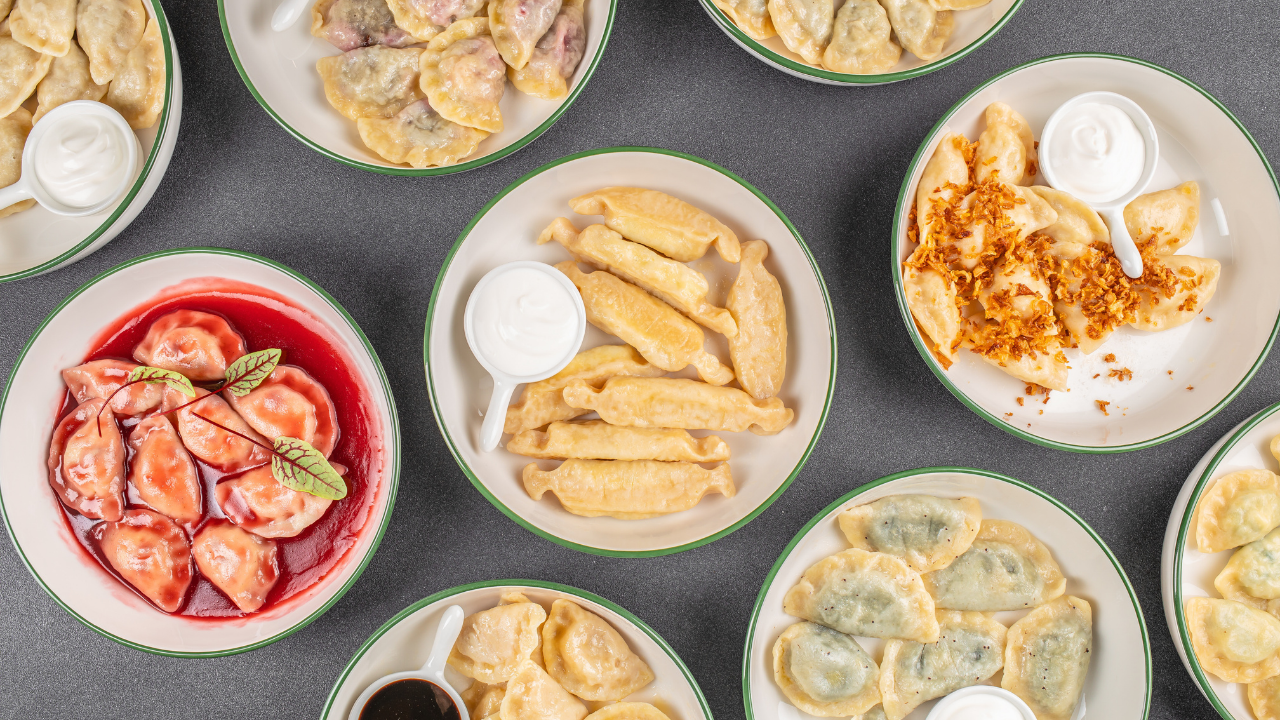
Dumplings appear in cuisines around the world, from Chinese jiaozi and Polish pierogi to Italian gnocchi. Their ingredients, shapes, and cooking methods vary, yet they share a practical idea: transforming simple staple ingredients into satisfying food.
These similarities reflect how cooks adapted available ingredients and preparation methods to local needs and traditions. Some dumpling styles evolved through cultural exchange, while others may have developed similar characteristics along separate culinary paths.
Understanding these connections reveals why some dumplings are wrapped around fillings, others are formed from dough, and why different varieties require different approaches in the kitchen.
How Different Cultures Developed Similar Cooking Solutions
Dumplings are not a single type of food with one universal definition. The term describes a broad family of preparations, including pieces of dough cooked on their own, dough wrapped around fillings, and mixtures shaped into portions before cooking. What qualifies as a dumpling often depends on the culinary tradition.
Across different regions, cooks used familiar ingredients to create foods suited to their needs. Wheat flour could be made into dough for enclosing fillings, while rice flour, potatoes, and other starches offered different possibilities for shaping and cooking. Local vegetables, meats, and seasonings further influenced how these preparations developed.
Cooking methods also contributed to their diversity. Boiling and steaming provided ways to cook dough with moist heat, while pan-frying introduced browning and contrasting textures. Each tradition adapted these methods according to its ingredients, equipment, and preferences.
Similar foods, however, do not necessarily share a single origin. Migration, trade, and cultural exchange helped spread ingredients and cooking knowledge between regions. Comparable cooking needs may also have encouraged similar preparations without direct influence.
This distinction matters when exploring dumpling history. Shared characteristics can reveal common culinary principles, but appearance alone cannot establish a historical connection.
How Local Ingredients Shaped Dumpling Traditions
Locally available ingredients helped shape regional dumpling traditions. Different grains and starches produce doughs with distinct textures and handling characteristics, influencing how dumplings are formed, filled, and cooked.
Wheat flour became central to many dumpling traditions because its gluten-forming proteins allow dough to stretch and hold together. This makes wheat dough particularly useful for wrappers that must enclose fillings without tearing during cooking. Chinese jiaozi and Polish pierogi demonstrate how different cuisines use this property to create filled dumplings.
Other ingredients produce different results. Rice flour is used in various Asian dumplings, where the rice variety, starch composition, and preparation method influence the finished texture. Depending on the formulation, rice-based dumplings may be soft, chewy, or slightly translucent.
Potatoes also became important in several European dumpling traditions. In Italian potato gnocchi, cooked potatoes are combined with flour to create a soft dough. The potatoes contribute moisture and starch, while the amount of flour and how the dough is handled influence the finished texture.
Local food practices also shaped whether dumplings contained fillings. Some traditions developed thin wrappers around vegetables, meats, or other ingredients. Others favored unfilled mixtures that could be shaped and cooked directly.
These differences explain why ingredients matter beyond flavor. The primary starch influences a dumpling’s structure, texture, and ability to hold together during cooking.
Recognizing Dumpling Traditions Across Cuisines
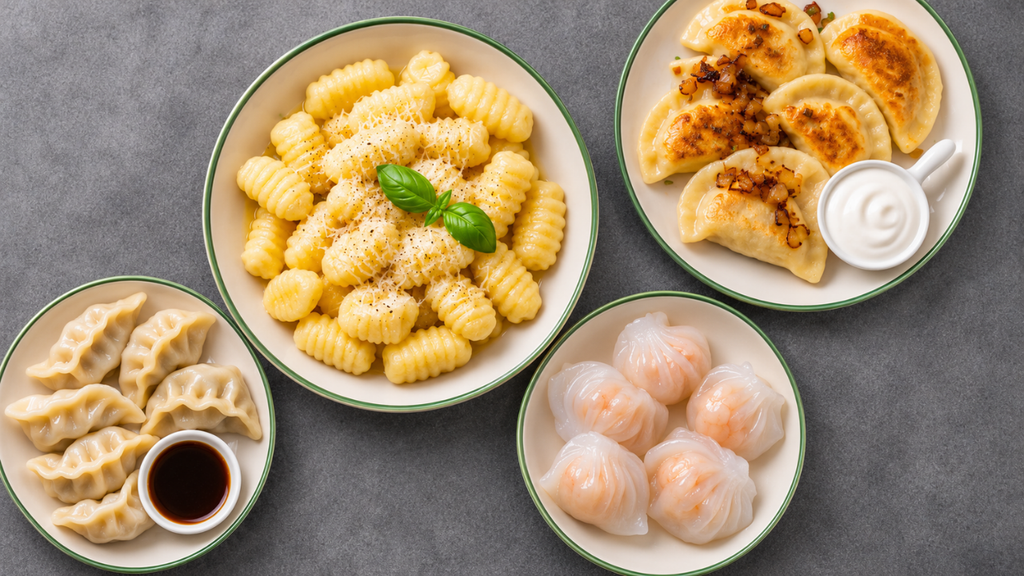
Dumplings vary widely across cuisines, even when they share ingredients or cooking principles. Chinese jiaozi, Polish pierogi, and Italian gnocchi illustrate three distinct approaches to preparing and cooking dough.
Chinese jiaozi typically consist of wheat dough wrappers folded around savory fillings such as pork, cabbage, or other vegetables. They may be boiled, steamed, or pan-fried, with each method producing a different texture. Boiled jiaozi have tender wrappers, while pan-fried versions develop a crisp surface where the dough contacts the pan.
Polish pierogi also use wheat-based dough wrapped around fillings, but their preparation reflects a different culinary tradition. Common fillings include potatoes, cheese, sauerkraut, and meat. Pierogi are generally boiled until the dough is cooked through and may then be sautéed in butter or another fat to develop additional flavor and surface browning.
Italian potato gnocchi demonstrate another approach. Rather than enclosing a filling inside a wrapper, they are commonly made by combining cooked potatoes with flour to form a soft dough. The dough is shaped into small pieces and typically boiled. Well-prepared potato gnocchi have a tender texture that differs from the more resilient wrappers used for jiaozi or pierogi.
Jiaozi and pierogi share the principle of enclosing fillings in dough, while potato gnocchi show how an unfilled mixture can belong to the same broad culinary family.
Recognizing these distinctions makes unfamiliar dumplings easier to understand. Their ingredients and construction offer clues about the texture and cooking method each tradition is intended to produce.
What Dumpling Differences Tell Us About Cooking
Understanding how dumplings are constructed helps explain why different varieties require different cooking methods. Dough composition, thickness, and fillings all influence how a dumpling responds to heat and moisture.
A thin wheat wrapper must be strong enough to hold a filling while remaining tender after cooking. Thicker dough may take longer for heat to reach its center. Potato gnocchi, by contrast, depend on a balance of starch, flour, and moisture to maintain their shape without becoming dense or heavy.
Fillings introduce another consideration. Dumplings containing raw meat must be cooked until the filling reaches a safe internal temperature. A cooked-looking wrapper or browned exterior does not necessarily mean the filling is done.
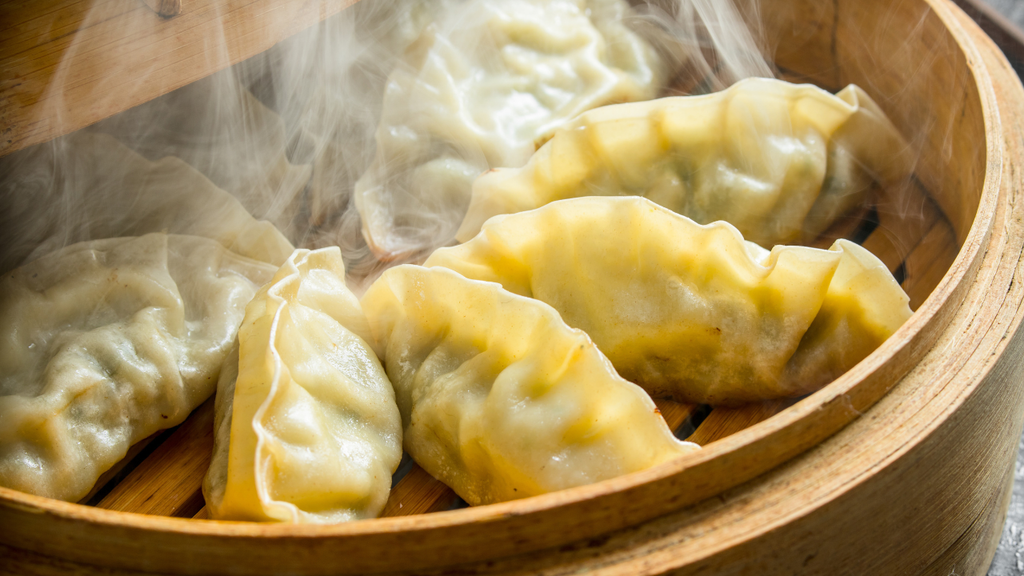
The cooking method also influences texture. Boiling surrounds dumplings with hot water, producing a moist, tender surface. Steaming cooks them with hot vapor without immersing them in water, which can benefit certain delicate preparations. Pan-frying creates direct contact with a hot surface, allowing browning and crispness to develop.
These differences provide useful clues during cooking. A dumpling that begins to break apart may be too delicate for vigorous boiling. A thick wrapper that remains firm may need additional cooking time. The goal is to recognize how the dough and filling respond to heat rather than relying on appearance alone.
For home cooks, this understanding makes it easier to choose an appropriate cooking method, preserve a dumpling’s structure, and achieve its intended texture.
Understanding the Shared Logic Behind Dumplings
Dumpling traditions reflect a combination of practical cooking needs, available ingredients, and cultural influences. Across different regions, cooks found ways to transform familiar grains, starches, and other ingredients into foods suited to their kitchens and preferences.
Some of these traditions developed through migration and cultural exchange, while others may have arrived at similar solutions through different paths. Their shared characteristics do not erase the distinct histories and techniques that define them.
For home cooks, understanding these connections extends beyond culinary history. Knowing what a dumpling is made from, how it is constructed, and how it is traditionally cooked provides a foundation for preparing it successfully.
The next time you encounter an unfamiliar dumpling, look beyond its shape or name. Consider the ingredients and cooking principles behind it. Understanding why a dish developed the way it did can make learning how to cook it more intuitive.
Curious about the reasoning behind other familiar foods? Explore more Kitchen Know How articles to discover how ingredients, techniques, and culinary traditions shape the way we cook.