
You sprinkle turbinado sugar into your cake batter and pull out something gritty. You swap brown sugar for white and wonder why the cookies feel dry and flat. You dust your muffins with powdered sugar, expecting a smooth finish, but end up with a lumpy glaze. Sugar seems like the simplest ingredient in the kitchen until something goes wrong.
The problem is not the sugar itself. The problem is that sugar does far more than sweeten. It controls how a mixture browns, how moisture is held, how crisp or soft the finished texture becomes, and whether it dissolves smoothly or stays noticeable in every bite.
That is why recipes specify granulated sugar, brown sugar, turbinado sugar, demerara sugar, or powdered sugar rather than just sugar. Each one behaves differently in the bowl, in the pan, and on the surface of food.
The right sugar depends on the dish. Sometimes the sugar should disappear into the mixture. Sometimes it should help create tenderness. Sometimes it should leave a crunchy surface or add deeper color and flavor. Choosing sugar is a question of texture, moisture, color, and control.
What Granulated, Turbinado, Demerara, Brown, and Powdered Sugar Mean
Different sugars are not defined only by how sweet they taste. They are defined by crystal size, texture, refinement, and the amount of molasses remaining or added back.
Those details determine how each sugar behaves.
Some sugars dissolve quickly. Some stay coarse and crunchy. Some hold moisture. Some help create darker colors. Some are meant to disappear into a mixture, while others are meant to stay visible on the surface.
Granulated Sugar
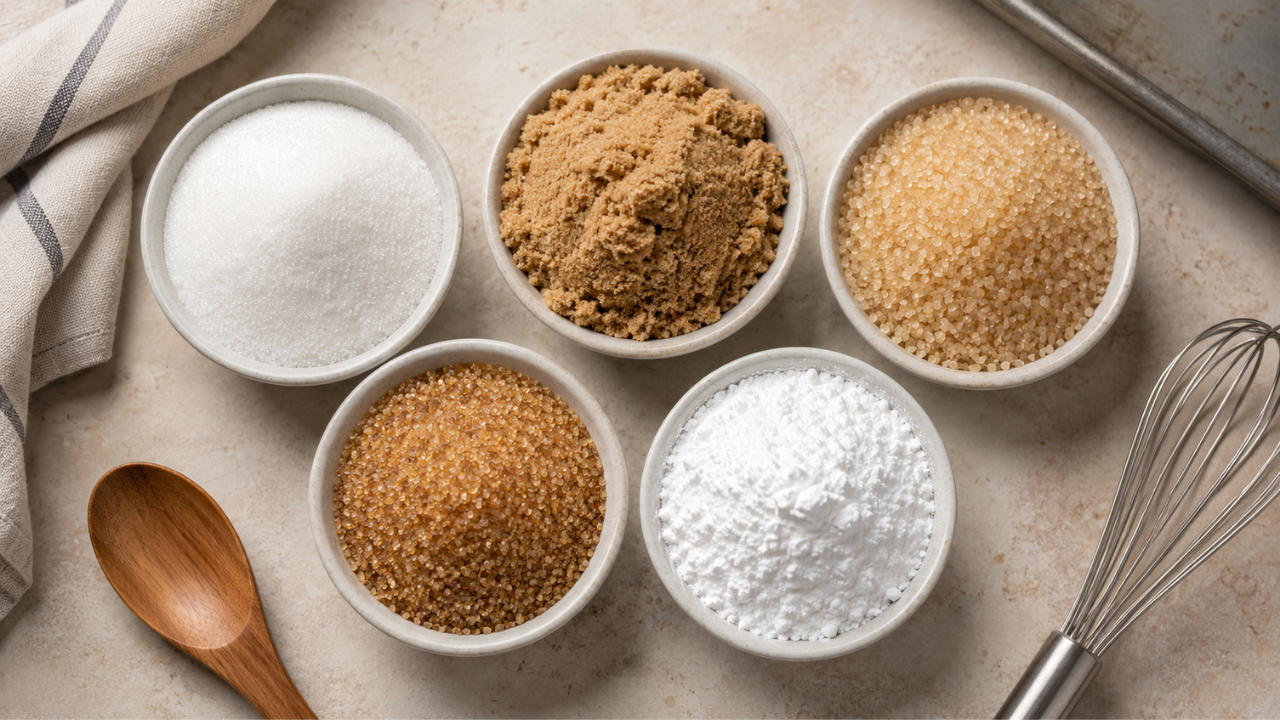
Granulated sugar is the standard white sugar used in most home kitchens.
It has clean sweetness, even crystals, and very little flavor beyond sweetness. That makes it predictable in batters, doughs, custards, sauces, and drinks.
Use it when you want sweetness without adding extra moisture, color, or strong flavor.
Turbinado Sugar
Turbinado sugar is a coarse, golden cane sugar with a light molasses flavor.
Its crystals are larger than granulated sugar, so it does not dissolve as quickly. That dry, crunchy texture is useful when the sugar should stay noticeable.
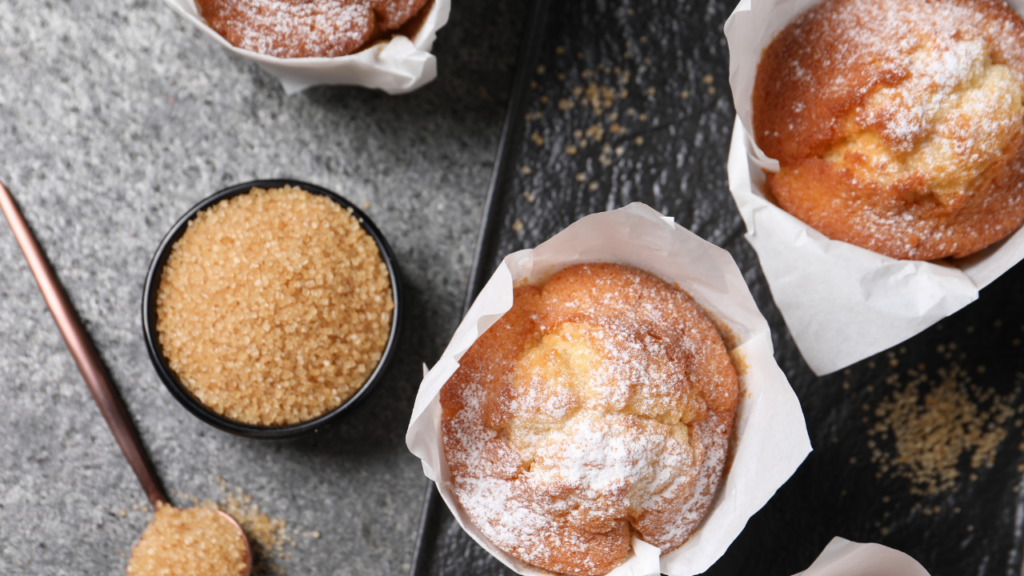
Use it on the surface of muffins, quick breads, cookies, fruit desserts, or drinks. Be more careful when a recipe needs sugar to dissolve fully into a smooth batter or delicate mixture.
Demerara Sugar
Demerara sugar is another coarse cane sugar with large golden crystals and a deeper molasses note.
It is similar to turbinado, but the crystals are often larger and crunchier. The flavor can feel more toasty, caramel-like, or lightly earthy.
Use it when texture matters, especially for crisp surfaces, finishing crunch, or a more noticeable sugar presence.
Brown Sugar
Brown sugar contains molasses, which changes both flavor and moisture.
Light brown sugar has a milder molasses flavor. Dark brown sugar has a stronger molasses flavor, deeper color, and more moisture.
Use brown sugar when the dish benefits from softness, chew, darker color, or deeper flavor. It is common in cookies, cakes, sauces, glazes, and marinades because it changes how food holds moisture.
Powdered Sugar
Powdered sugar is finely ground sugar. It usually includes a small amount of starch to help prevent clumping.
Because it is so fine, it dissolves quickly, creating a smooth texture.
Use it for frostings, glazes, whipped cream, dusting, and delicate finishing. It is not a direct replacement for granulated sugar in most baking because it can change structure, thickness, and how a mixture holds together.
FOUNDATIONAL RULE: Sugar choice should match the job the sugar needs to do. Use a sugar that dissolves well when the mixture needs to be smooth. Use sugar with molasses when the dish needs more moisture, darker color, or deeper flavor. Use coarse sugar when the surface should stay crunchy or visible. Use powdered sugar when the goal is smoothness, dusting, or quick dissolving.
How Sugar Choice Affects Texture, Browning, and Moisture
Sugar changes how food feels, its color, and its ability to hold moisture. That is why a cookie, cake, glaze, topping, or sauce can change when you switch from one sugar to another. The difference may show up as graininess, softness, chew, browning, spread, or surface texture.
Crystal Size Changes How Sugar Dissolves
Crystal size affects how quickly sugar blends into a mixture.
Granulated sugar dissolves predictably in many batters, doughs, custards, and sauces. Powdered sugar dissolves faster because it is ground very fine. Turbinado and demerara dissolve more slowly because their crystals are larger.
That difference matters because undissolved sugar can leave a grainy texture.
Coarse sugar on top of a muffin or fruit dessert can add a pleasant crunch. The same sugar inside a smooth batter may feel gritty if it does not fully dissolve.
Sugar Affects Creaming and Structure
In baking, sugar can help create structure before the food goes into the oven.
When sugar is creamed with butter, the crystals help create tiny spaces in the fat. Those spaces affect lightness, spread, and texture.
Granulated sugar works well for this because the crystals are firm and consistent.
Brown sugar behaves differently because it contains molasses, which adds moisture. It tends to create a softer, denser, chewier texture.
Powdered sugar does not work the same way as granulated sugar in creaming. Its fine texture and added starch can change how the mixture thickens and holds together.
Molasses Changes Moisture and Chew
Brown sugar contains molasses, which helps retain moisture.
That moisture can make baked goods softer, chewier, and less crisp than they would be with granulated sugar. It also brings deeper flavor and darker color.
This is why brown sugar often works well in cookies, crumb toppings, glazes, sauces, and marinades.
If you replace brown sugar with granulated sugar, the result may taste cleaner, but it can also feel drier, lighter, or less chewy.
Sugar Influences Browning
Sugar affects how food colors as it cooks.
Granulated sugar gives clean, even browning. Brown sugar can make food darker because of its molasses content. Coarse sugars can create a more textured surface when they stay on top of food.
That can be useful when you want color, crust, or contrast.
It can also cause problems if the sugar does not fit the dish. A darker sugar may brown faster than expected. Coarse sugar may remain crunchy when the recipe calls for a smooth surface. A sugar that does not dissolve well can leave an uneven texture.
What To Watch For
| What you notice | What it may mean |
| Grainy texture | The sugar crystals did not dissolve enough |
| Softer or chewier texture | The sugar may contain more molasses moisture |
| Drier texture | The sugar may not be adding enough moisture |
| Darker color | The sugar may contain more molasses |
| Crunchy surface | Coarse sugar stayed visible instead of dissolving |
| Uneven texture | The sugar may not match the mixture |
Sugar choice affects more than taste. It helps determine whether the finished food is smooth, crisp, chewy, soft, dark, pale, delicate, or textured.
Where Different Sugars Show Up in Everyday Cooking
Sugar choice becomes easier when you connect each type to the places where it performs best. The goal is not to memorize every sugar on the shelf. The goal is to recognize what the food needs.
- Is the sugar supposed to dissolve?
- Is it supposed to hold moisture?
- Is it supposed to brown?
- Is it supposed to stay crunchy?
- Is it supposed to create a smooth finish?
Once you understand that, the choice becomes more practical.
| Sugar type | Where it commonly appears | Why does it work there |
| Granulated sugar | Cakes, cookies, muffins, custards, sauces, fruit fillings, syrups, drinks | It gives clean sweetness, dissolves predictably, and does not add strong extra flavor |
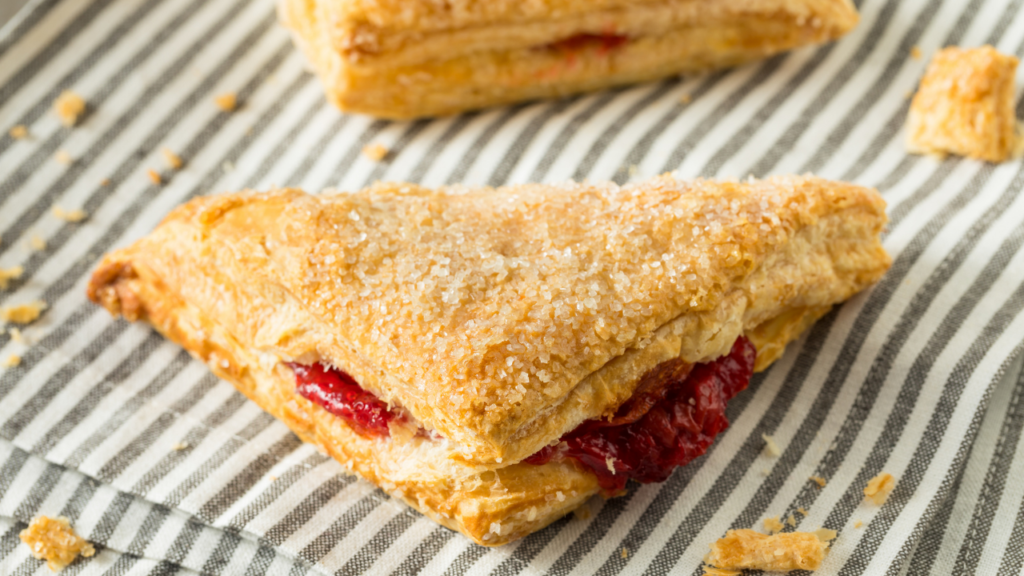
| Turbinado sugar | Muffin tops, quick breads, cookies, fruit desserts, coffee, tea, cocktails | It stays visible, adds crunch, and brings a light caramel note |
| Demerara sugar | Scones, crisps, pastry, coffee, cocktails, finishing sugar | Its larger crystals give a stronger crunch and a deeper caramel flavor |
| Light brown sugar | Cookies, cakes, crumb toppings, glazes, sauces | It adds moisture, softness, chew, and mild molasses flavor |
| Dark brown sugar | Spice cakes, rich cookies, barbecue sauces, marinades, darker glazes | It adds a stronger molasses flavor, deeper color, and more moisture |
| Powdered sugar | Frostings, glazes, whipped cream, dusting, icings, delicate sweets | It blends smoothly and creates a fine, soft finish |
What This Pattern Teaches
- Granulated sugar is the everyday choice when you need clean sweetness and reliable dissolving.
- Turbinado and demerara are useful when texture should stay noticeable, especially on the surface.
- Brown sugar belongs where moisture, softness, chew, and deeper flavor help the dish.
- Powdered sugar belongs where smoothness matters.
- The more clearly you can name the job, the easier the sugar choice becomes.
How to Choose the Right Sugar in Your Kitchen
Choosing sugar starts with one question: what does the sugar need to do in this dish?
Sometimes sugar needs to dissolve completely. Sometimes it needs to stay crunchy on the surface. Sometimes it needs to hold moisture and keep the finished texture softer. Once you understand the job, the choice becomes more controlled.
Choose by Function
- Choose granulated sugar when you need clean sweetness, predictable dissolving, and reliable structure.
- Choose brown sugar when you want moisture, softness, chew, darker color, and deeper flavor.
- Choose turbinado or demerara when you want visible crystals, surface crunch, and a light caramel note.
- Choose powdered sugar when you need smoothness, fine texture, quick dissolving, or a delicate finish.
Read the Texture Cues
The food will often show you when the sugar choice is not right. Use these signals to diagnose and adjust:
- A sandy texture in a batter, glaze, or sauce indicates the sugar did not dissolve sufficiently.
- Cookies spreading more than expected may mean the sugar is adding more moisture or dissolving differently than planned.
- A baked good that feels dry or tastes flat may need more moisture or depth, which brown sugar can provide.
- A rough surface when it should be smooth suggests the crystals were too large.
- A flavor that tastes too dark or heavy suggests too much molasses for the dish.
PRO TIP: Before substituting sugar, ask what the sugar needs to do. If it is mostly sweetening, a substitution may be fine. If it is controlling texture, moisture, structure, or surface finish, the substitution needs more caution.
Mistakes That Come From Treating Sugars as Interchangeable
Sugar substitutions can work, but they are not automatic.
The common mistake is assuming sweetness is the only thing that matters. In many dishes, sugar also controls texture, moisture, color, structure, and surface finish.
Using Coarse Sugar Where the Mixture Needs Smoothness
Turbinado and demerara have larger crystals than granulated sugar.
That texture is useful on the surface of food, but it can cause problems inside smooth batters, doughs, custards, glazes, and frostings.
What can go wrong:
- The mixture feels sandy.
- The surface looks uneven.
- The sugar does not dissolve fully.
- The finished texture feels rough instead of smooth.
Better choice:
Use granulated sugar when it needs to dissolve in the mixture. Use turbinado or demerara when the sugar is meant to stay visible, crunchy, or textured on the surface.
Using Powdered Sugar When Structure Matters
- 【SEAL STEEL RING & LONG SIZE HANDLE】Made from durable, sturdy polished, food-grade premium high performance stainless st…
- 【SAVE TIME & NO WASTED FOOD】Anaeat strainers are made from extra fine mesh. This especially help to fast sifting through…
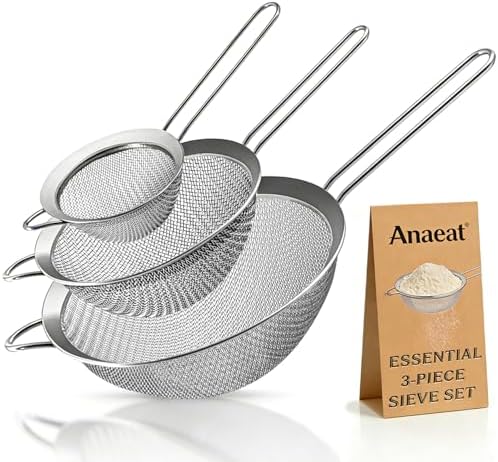
- 【3 Perfect Size For All Straining Task】Anaeat stainless steel sieve set with 3 diameters (3.15″+5.5″+7.87″) , you will b…
Powdered sugar is useful when smoothness matters, but it does not behave like granulated sugar.
Because it is ground very fine and usually contains a small amount of starch, it changes how mixtures thicken, blend, and hold together.
What can go wrong:
- Creamed mixtures do not aerate the same way.
- Batters or doughs may thicken differently.
- The texture may become softer or less structured than expected.
Better choice:
Use powdered sugar for frostings, glazes, whipped cream, dusting, and delicate finishes. Use granulated sugar when the recipe depends on structure, creaming, or proper bulk.
Replacing Brown Sugar With White Sugar Without Adjusting Expectations
Brown sugar contains molasses, which adds moisture, deeper flavor, and darker color.
Granulated sugar delivers cleaner sweetness, but it lacks the moisture or molasses depth.
What can go wrong:
- Cookies may feel drier.
- Baked goods may taste flatter.
- The color may be lighter than expected.
- The texture may lose its chewiness.
Better choice:
Use brown sugar when moisture, softness, chew, and deeper flavor matter. Use granulated sugar for cleaner sweetness, lighter color, and crisper results.
Assuming Raw Style Sugars Are Always Better
Turbinado and demerara can look more natural or less processed, but that does not make them better for every use.
Their main kitchen value is texture and light molasses flavor.
What can go wrong:
- Smooth batters can feel gritty.
- Fine-textured cakes can feel less refined.
- Custards, glazes, or frostings may not become fully smooth.
Better choice:
Choose by function, not by appearance. Use raw-style sugars when their larger crystals improve the finished product. Use finer sugars for smoother texture and even dissolution.
Comparing Common Sugars by Kitchen Function
A sugar comparison is most useful when it connects the sugar to its role in the kitchen. The main differences to watch are crystal size, moisture, flavor, and where the sugar works best.
| Sugar Type | Texture | Flavor | Best Use | Be Careful When |
| Granulated sugar | Even crystals | Clean sweetness | General baking, sauces, custards, syrups, drinks | Replacing brown sugar where chew or moisture is needed |
| Turbinado sugar | Coarse and dry | Mild caramel | Toppings, drinks, finishing sugar | Mixing into smooth batters or delicate mixtures |
| Demerara sugar | Coarse and crunchy | Deeper caramel, lightly molasses-like | Crunchy surfaces, coffee, cocktails, fruit crisps | Using where sugar must dissolve fully |
| Light brown sugar | Moist and packable | Mild molasses | Cookies, cakes, crumb toppings, glazes, sauces | Using where a lighter color or crisper texture is needed |
| Dark brown sugar | Moist and packable | Stronger molasses | Rich cookies, spice cakes, marinades, darker glazes | Using where the flavor should stay light |
| Powdered sugar | Very fine and soft | Clean sweetness, soft finish | Frostings, glazes, whipped cream, dusting | Using where structure, creaming, or bulk matters |
Raw Style Sugars Are Not the Same as Brown Sugar
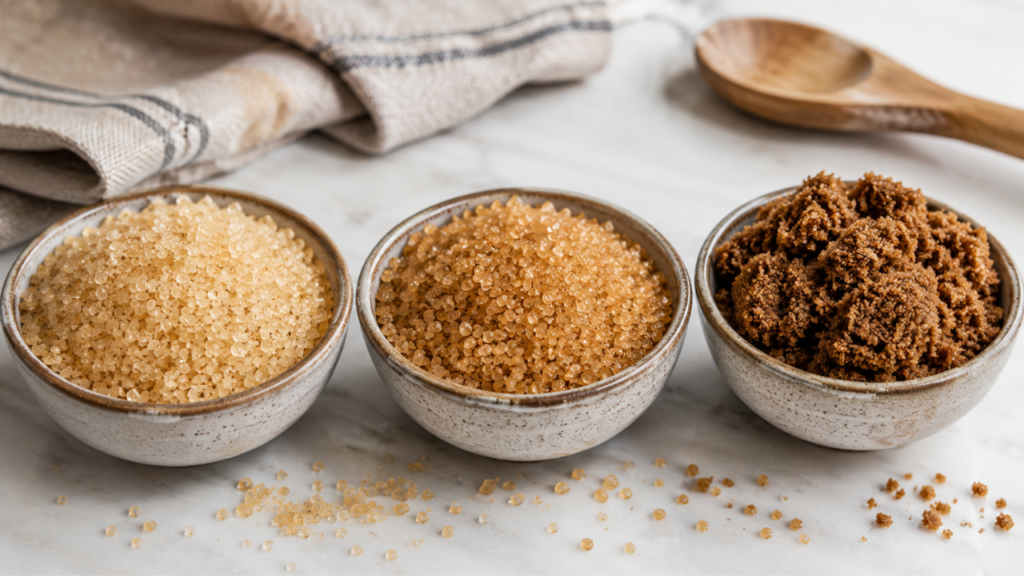
Turbinado and demerara are sometimes confused with brown sugar because they are golden or light brown. They do not behave the same way. Turbinado and demerara are coarse, dry sugars with larger crystals. Their main value is texture. They add crunch, visible sparkle, and light caramel flavor.
Brown sugar is moist because it contains molasses. Its main values are moisture, softness, chewiness, deeper flavor, and darker color. A coarse golden sugar makes a topping crunchy. Brown sugar makes a cookie softer and chewier. They may look related on the shelf, but they solve different kitchen problems.
Inside the Mixture Compared With On the Surface
When sugar is used inside a batter, dough, custard, sauce, or glaze, it usually needs to blend into the food. In those cases, sugar affects structure, moisture, dissolving, and texture. When sugar is used on the surface, it does not always need to dissolve. In those cases, sugar affects crunch, appearance, browning, and finish.
If the sugar needs to dissolve, choose one that dissolves well. If it needs to stay present, choose a sugar with the right texture. If it needs to soften the food, choose a sugar with a high moisture content. If it needs to create a smooth finish, choose a sugar fine enough to blend without grit.
When Sugar Substitutions Can Still Work
Sugar substitutions are not always wrong. They just need to be judged by function. A small swap is easier when sugar is being used mostly for sweetness. A swap requires more care when sugar affects texture, moisture, browning, structure, or how smoothly the mixture comes together.
Substitution Risk by Situation
| Situation | Substitution Risk | Why It Matters |
| Coffee, tea, oatmeal, yogurt, or simple fruit topping | Low | Sugar mostly adds sweetness |
| Muffin, scone, cookie, or fruit crisp topping | Low | Texture is welcome on the surface |
| Simple sauce or glaze | Medium | Sugar needs to dissolve and affect body |
| Cookie dough | Medium to High | Spread, chew, moisture, and texture can change |
| Cake batter | Medium to High | Dissolving, structure, and crumb can change |
| Frosting or icing | High | Smoothness and texture matter |
| Custard, candy, or meringue | High | Sugar behavior is central to the result |
When a Sugar Swap Is Usually Low Risk
Sugar substitutions are usually easier when sugar is used primarily for sweetness. This includes drinks, simple sauces, fruit toppings, oatmeal, yogurt, coffee, tea, and other foods in which the sugar dissolves into a sufficient amount of liquid or sits on the surface without affecting the structure. In these cases, the main change is usually flavor.
Granulated sugar gives clean sweetness. Brown sugar adds molasses flavor. Turbinado and demerara add a light caramel note and a little texture. Powdered sugar can work when smooth dissolving matters, especially in cold mixtures or quick glazes.
When a Sugar Swap Needs More Caution
Sugar substitutions require more care when the sugar helps build the dish’s texture. This matters in cakes, cookies, delicate batters, frostings, custards, candies, meringues, and any mixture where sugar affects dissolving, creaming, moisture, spread, or structure.
Coarse sugar may not dissolve completely. A moist sugar may make the result softer or stickier. Fine sugar may change how the mixture thickens. A darker sugar may change the color and flavor more than expected. In these cases, the sugar is part of the technique. Changing it changes more than sweetness.
Quick Takeaways
- Sugar does more than sweeten. It affects texture, moisture, browning, structure, and finish.
- Crystal size determines how quickly sugar dissolves and whether the texture feels smooth, sandy, or crunchy.
- Molasses content adds moisture, darker color, deeper flavor, and a softer or chewier texture.
- Coarse sugars such as turbinado and demerara are often better on the surface than inside smooth batters.
- Brown sugar is the right choice when softness, chewiness, and deeper flavor are among the goals.
- Powdered sugar is best when the finished texture needs to be smooth, fine, or delicate.
- The right sugar is the one that fits the dish.
FAQs
These are the questions that come up most often when home cooks start paying closer attention to sugar. The answers below cut straight to the heart of what matters in the kitchen.
Can I substitute turbinado sugar for granulated sugar?
Sometimes, but not always. Turbinado crystals are larger and do not dissolve as evenly, which works fine in drinks or simple toppings but can leave a grainy texture inside smooth batters, custards, or frostings. Use turbinado when crunch and light caramel flavor are welcome. Use granulated sugar when smoothness and structure matter.
What is the difference between turbinado and demerara sugar?
Both are coarse cane sugars with a light molasses flavor, and both work well as finishing sugars or crunchy toppings. Demerara tends to have larger, crunchier crystals and a slightly deeper caramel note. In most home kitchen uses, they are interchangeable.
Why does brown sugar make baked goods softer?
Brown sugar contains molasses, and molasses holds moisture. That extra moisture makes cookies softer and chewier, gives cakes a deeper flavor, and adds body to sauces and glazes. It is not just a flavor choice. It actively changes how the finished food feels.
Is powdered sugar the same as granulated sugar that’s been ground finer?
Not exactly. Powdered sugar contains a small amount of starch to prevent clumping, which alters its thickening behavior and its behavior in mixtures. It is the right choice for frostings, glazes, and dusting, but it is not a direct swap for granulated sugar in baking because it does not cream or provide the same structure.
Which sugar is best for crunchy toppings?
Turbinado and demerara are the best choices. Their larger crystals stay visible and crunchy on the surface of muffins, scones, cookies, and fruit crisps. Brown sugar is too moist to stay crisp, and powdered sugar creates a soft finish rather than crunch.
Can I use raw sugar in cookies?
You can, but expect a different result. Sprinkled on top before baking, raw sugar adds crunch and a light caramel note. When raw-style sugars are mixed into the dough, they may not dissolve as evenly as granulated sugar, which can create a slightly rough or sandy texture. For a smooth, predictable result, granulated or brown sugar is more reliable inside the dough.
Why do some sugars make food darker?
Molasses content is the reason. Brown sugar, especially dark brown sugar, noticeably darkens baked goods, glazes, and sauces. Turbinado and demerara can also create a more golden surface on toppings. When you want a lighter color, granulated sugar is the cleaner choice.
Kitchen Tools That Help With Sugar Texture and Storage

- 【Kitchen Organization】24 pcs airtight food storage containers with lids are stackable and transparent design, saving val…
- 【Multiple Size】Kitchen storage container set comes in 4 different sizes, from large to small, 6 Tall Containers (2.5qt /…
- 【Excellent Sealing】Dry food storage containers is designed with high-quality silicone seals and 4 reinforced latches to …

- 𝗘𝗳𝗳𝗼𝗿𝘁𝗹𝗲𝘀𝘀 𝗪𝗲𝗶𝗴𝗵𝗶𝗻𝗴: Supports 5 units (oz/lb:oz/fl’oz/g/mL), tare function, and includes 2 AAA batteries for hassle-free…
- 𝗣𝗿𝗲𝗰𝗶𝘀𝗲 𝗥𝗲𝘀𝘂𝗹𝘁𝘀: Accurately weighs up to 11 lb/5 kg with 1 g increments
- 𝗦𝗶𝗺𝗽𝗹𝗲 & 𝗖𝗼𝗺𝗽𝗮𝗰𝘁: The small and sleek scale is a perfect fit for most kitchens, occupying little space and easily storab…
Sugar choice matters, but how sugar is measured and stored also affects the result.
Kitchen Scale
A kitchen scale helps when comparing sugars with different crystal sizes. Coarse sugars, brown sugar, powdered sugar, and granulated sugar do not always fill a measuring cup the same way. Measuring by weight gives more control, especially in baking, where sugar affects structure, spread, and moisture.
Airtight Storage Containers
Airtight containers help keep sugar in the condition it is meant to be in. Brown sugar needs protection from drying out. Coarse sugars, such as turbinado and demerara, should remain dry and free-flowing. Powdered sugar should be stored in an airtight container to prevent moisture from clumping it. Good storage helps the sugar behave more predictably when you use it.
Fine Mesh Sieve
A fine mesh sieve is useful for powdered sugar. It breaks up clumps before dusting, glazing, or mixing into frostings, creating a smoother finish and preventing dry pockets of sugar from appearing in the final texture.
Choosing Sugar With Better Judgment
Sugar is not only a sweetener. It is an ingredient that changes texture, moisture, color, structure, and finish. That is why the type of sugar matters. Granulated sugar gives clean sweetness and reliable dissolving. Brown sugar brings moisture, chew, and deeper flavor. Turbinado and demerara add crunch and surface texture. Powdered sugar creates smoothness and a delicate finish.
The better habit is to consider what the sugar is needed for before reaching for a substitute. If the sugar needs to dissolve, choose a finer sugar. If it needs to stay crunchy, choose a coarse sugar. If it needs to hold moisture, choose a sugar with molasses. If it needs to create a smooth finish, choose powdered sugar.
Once you understand the role of the sugar, substitutions become easier to judge, and recipes become easier to read.
JOIN THE LIST: Get the Essential Kitchen Cheat Sheets free when you join the Kitchen Know How newsletter. Clear technique guides delivered straight to your inbox.