
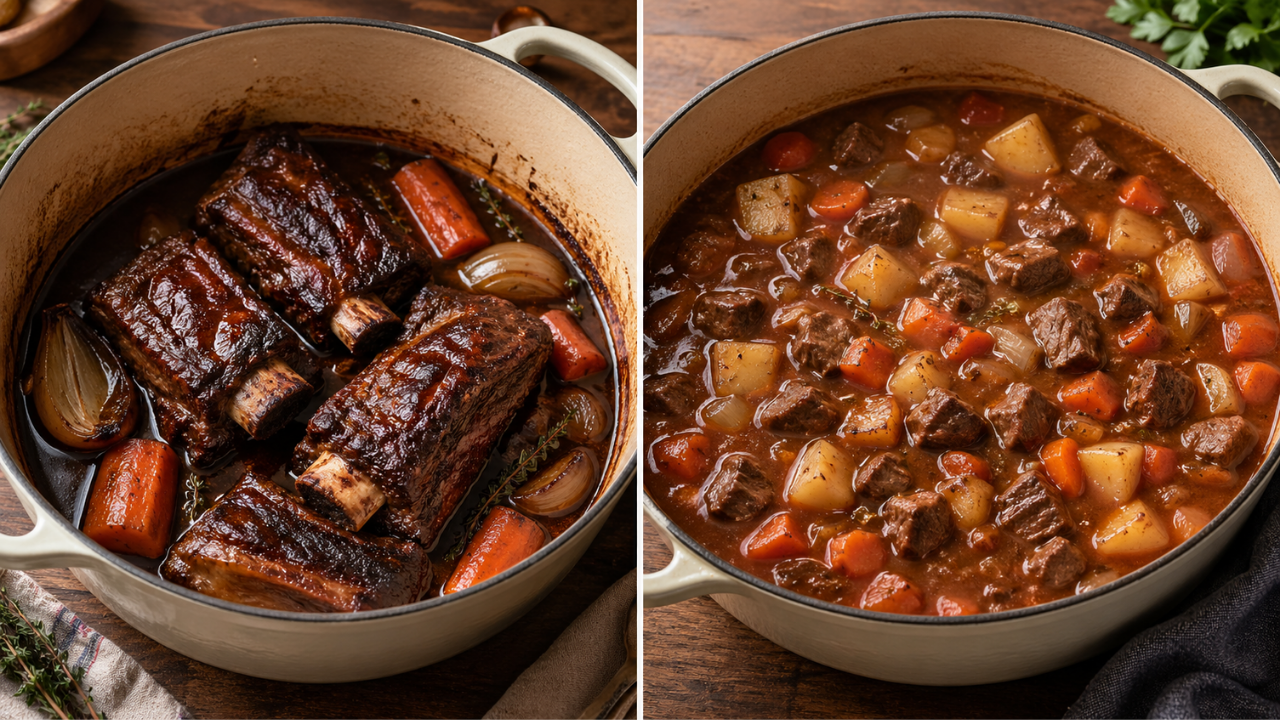
Braising and stewing both use gentle heat, moisture, and time to tenderize food. They are especially useful for tougher cuts of meat, dense vegetables, beans, and dishes that require slow, steady cooking rather than quick, high heat.
The difference is not just a technical detail. It changes how the finished dish feels. A braise usually keeps the main ingredient more intact, with liquid used to support tenderness and build sauce. A stew usually brings smaller pieces of food and liquid together into one complete dish.
This matters because choosing the wrong method can change the result. Too much liquid can make a braise feel loose. Overly large pieces can cause a stew to cook unevenly. Heat that is too aggressive can dry out meat before it becomes tender.
Once you understand the difference, braising and stewing become easier to judge. You can look at the size of the ingredient, the amount of liquid, and the texture you want, then choose the method that supports the dish.
How Braising and Stewing Are Different
Braising and stewing are similar methods, but each is structured differently in the pot.
Braising usually starts with larger pieces of food. A whole piece of meat, bone-in chicken thighs, short ribs, pork shoulder, cabbage wedges, or large vegetables may be cooked gently with a modest amount of liquid. The liquid usually does not completely cover the food. It supports the cooking, adds moisture, and helps create a sauce as the ingredient slowly becomes tender.
Stewing usually starts with smaller pieces. Meat, poultry, vegetables, beans, or legumes are cut or portioned so they cook surrounded by liquid. In a stew, the liquid is not just there to support the cooking; it is part of the dish. It becomes part of the dish itself, carrying flavor between the ingredients and forming the sauce or broth.
The easiest way to separate the two is to look at their sizes and liquid levels.
- In a braise, the main ingredient stays more defined.
- In a stew, the ingredients and liquid become more integrated.
That difference affects how the dish cooks, how it is served, and the final texture. A braised short rib should remain recognizable as a piece of meat. A beef stew should feel like a unified spoonable dish, with tender pieces, vegetables, and sauce working together.
Why the Method Changes the Final Dish
Braising and stewing do not produce the same result because the food sits in the pot differently.
In a braise, the main ingredient is usually larger and only partially submerged in liquid. As it cooks slowly, the heat and moisture soften connective tissue, making the ingredient tender without losing its shape. The liquid supports the cooking, but the food still remains the center of the dish.
This is why a braised short rib, lamb shank, chicken thigh, or cabbage wedge should still look and feel like a distinct piece of food. It should be tender, but not dissolved into the sauce.
In a stew, the ingredients are smaller and more fully submerged in the liquid. As they cook, the liquid moves flavor between the meat, vegetables, aromatics, and seasonings. The sauce or broth becomes part of the dish, not just something served underneath it.
This is why a stew should feel unified. Each bite should have tender pieces, flavorful liquid, and ingredients that make sense together. The goal is not one large centerpiece. The goal is balance across the whole pot.
When the method does not match the goal, the dish becomes harder to control.
| The braise tastes thin | Too much liquid was added | Use less liquid next time or reduce the sauce gently |
| The stew cooks unevenly | The pieces are not close in size | Cut ingredients more evenly |
| The meat feels dry or tight | The heat is too aggressive | Lower the heat and cook gently |
| The vegetables collapse | They cooked too long or were cut too small | Add delicate vegetables later or cut them larger |
The method shapes the final dish by controlling three elements at once: tenderness, structure, and sauce. Braising protects the identity of the main ingredient. Stewing brings the ingredients and liquid together into one complete dish.
Where You See Braising and Stewing in Real Cooking
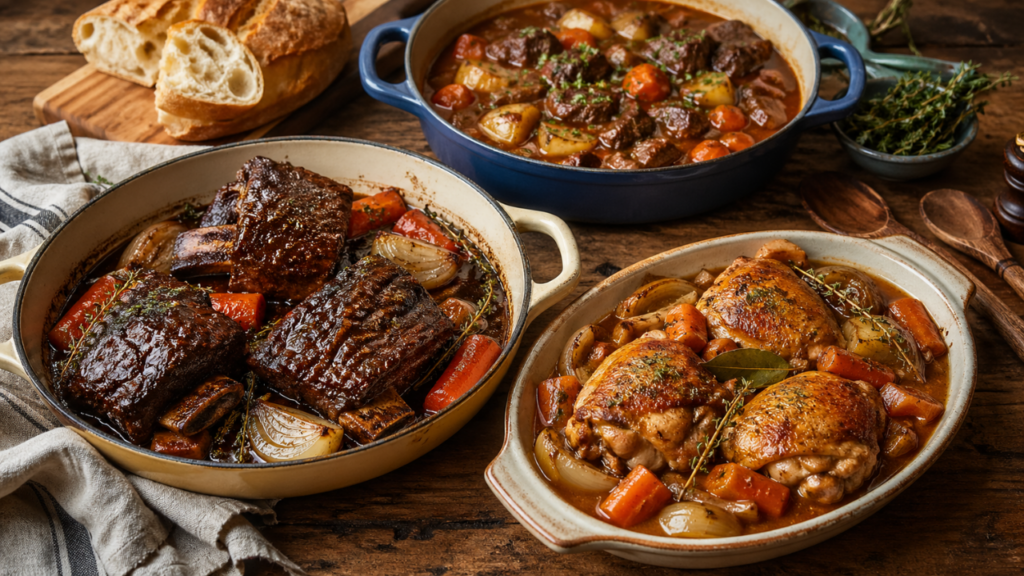
There is no need to memorize every dish by category. It is more effective to recognize the pattern.
Braising often appears in dishes built around one larger main ingredient. Short ribs, pot roast, osso buco, lamb shanks, pork shoulder, braised chicken thighs, and cabbage wedges all follow the same basic idea. The food stays mostly intact while a smaller amount of liquid helps it cook gently and become tender.
The final dish usually has a clear centerpiece. The sauce supports that centerpiece rather than replacing it.
Stewing appears more often in dishes where smaller pieces cook together in liquid. Beef stew, lamb stew, chicken stew, chili, curry, bean stews, and vegetable stews all depend on the ingredients sharing the same cooking liquid. The pieces soften together, the liquid takes on flavor, and the dish becomes something you serve by the spoonful.
This pattern is present in many cuisines.
| Braising | Short ribs, pot roast, osso buco, lamb shanks, braised chicken thighs, cabbage wedges | The main ingredient stays intact and defined |
| Stewing | Beef stew, lamb stew, chicken stew, chili, curry, bean stew, vegetable stew | Smaller pieces and liquid become one complete dish |
A French beef stew, an Irish lamb stew, a Hungarian goulash, an Indian curry, a Moroccan tagine, a Mexican chile-based stew, or a simple vegetable stew may use different seasonings, but the structure is similar. Smaller pieces cook in a flavorful liquid until the ingredients and sauce feel connected.
Braises also cross cuisines. Italian osso buco, French braised short ribs, American pot roast, Chinese red-cooked pork, Mexican braised meats, and Mediterranean braised vegetables all use controlled moisture and time to tenderize larger pieces while keeping their shape.
The names change from one cuisine to another, but the cooking logic stays the same.
- When the dish has one main piece that should stay defined, think braising.
- When the dish depends on many smaller pieces cooking together in liquid, think stewing.
How to Choose Between Braising and Stewing
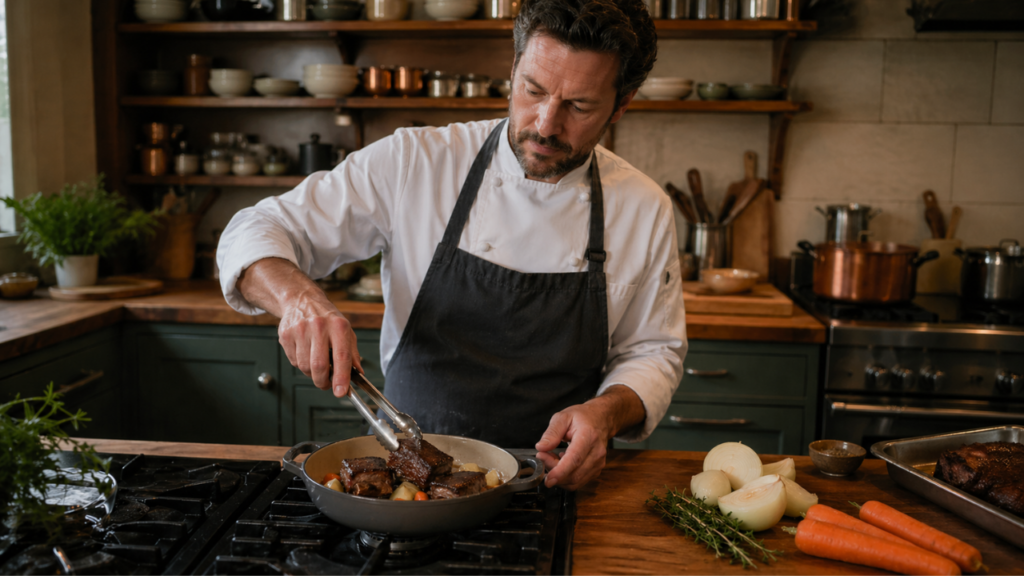
Start with the ingredient, not the pot.
If the ingredient is large, tough, or meant to stay in one recognizable piece, braising usually makes more sense. Short ribs, pork shoulder, lamb shanks, bone-in chicken thighs, and large vegetable wedges benefit from slow cooking with less liquid. The goal is tenderness without losing the shape of the main ingredient.
If the ingredients are already cut into smaller pieces, stewing usually makes more sense. Cubed meat, chopped vegetables, beans, lentils, and mixed ingredients need enough liquid to cook evenly together. The goal is a unified dish where the pieces, liquid, and sauce feel connected.
The next question is texture.
Choose braising when you want the main ingredient to feel tender but still distinct. Choose stewing when you want a spoonable dish with tender pieces throughout the liquid.
Then look at how much sauce you want.
A braise usually gives you a smaller amount of more concentrated liquid. That liquid may be spooned over the main ingredient or reduced into a sauce. A stew usually gives you more liquid because the sauce or broth is part of every bite.
What to Watch For in the Pot
| The ingredients may be overcooked | The heat is steady and controlled | Maintain the simmer |
| Hard boiling | The heat is too aggressive | Lower the heat |
| Fork tenderness | The connective tissue has softened | Continue only until the texture is right |
| Thin liquid | The sauce has not developed enough body | Cook gently, uncovered, for part of the time |
| Pieces falling apart | Cook gently, uncovered for part of the time | Lower the heat or stop cooking |
If the dish seems dry, add a small amount of liquid and lower the heat. Dryness often means the heat is too high, the pot is uncovered for too long, or there wasn’t enough liquid for the cooking time.
If the dish seems watery, continue cooking gently, uncovered for part of the time, to reduce excess moisture. Do not raise the heat aggressively. A hard boil may reduce liquid faster, but it can toughen meat and break down vegetables.
If the food still feels firm, give it more time at a gentle simmer. Tough cuts do not become tender on a strict clock. They become tender when heat, moisture, and time have done enough work.
If the ingredients are breaking down, lower the heat and stop stirring aggressively. In a stew, this may also mean some pieces were cut too small or added too early. In a braise, it may mean the ingredient has cooked past the point of clean tenderness.
Choosing between braising and stewing is really about deciding what kind of finished dish you want before you start cooking. Braising protects the main ingredient. Stewing brings the whole pot together.
Mistakes That Make Braises and Stews Fall Short
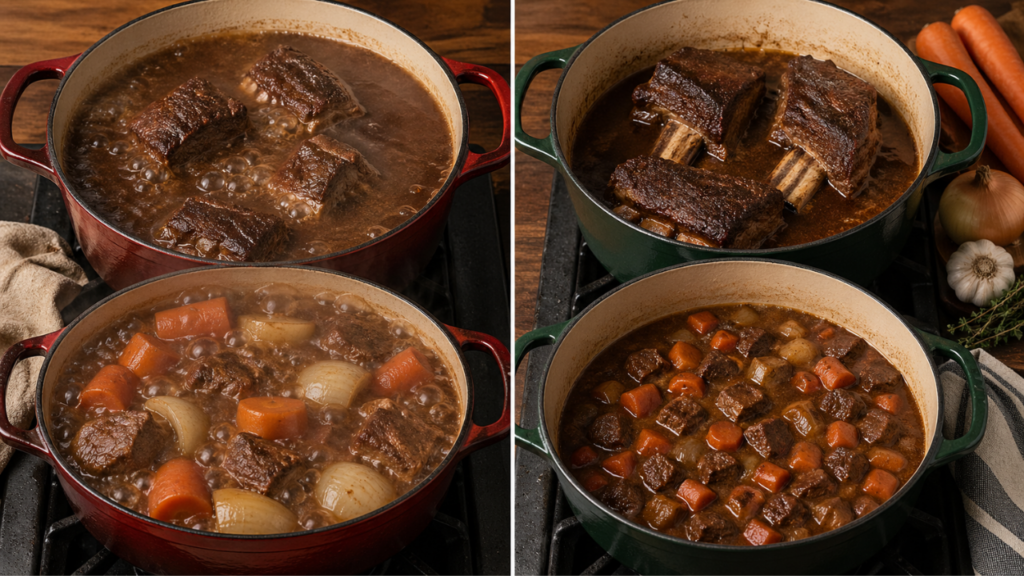
Most braising and stewing problems stem from losing control of the liquid, the size, or the heat. The methods are forgiving, but they still need the right structure.
One common braising mistake is adding too much liquid. A braise does not usually need to be fully covered. When the liquid comes too high, the main ingredient loses definition, and the sauce can taste diluted. Instead of a concentrated braise, the dish starts to feel like a loose stew.
The correction is simple: use enough liquid to support the cooking, not drown the ingredient. The liquid should help create steam, moisture, and sauce while still allowing the main piece to remain the focus.
Another common mistake is cutting stew ingredients unevenly. If some pieces are large and others are small, they will not become tender at the same time. Small pieces may break down before larger pieces are ready. Large pieces may stay firm while the rest of the stew is already soft.
For stews, consistency matters. The pieces do not need to be perfect, but they should be close enough in size that they cook at the same pace. This gives the final dish a more even texture from spoonful to spoonful.
Heat is the other major issue. Braises and stews should cook gently. A hard boil may look active, but it is usually too aggressive for long cooking. Boiling can tighten meat fibers before connective tissue has time to soften. It can also knock vegetables around the pot until they lose their shape.
A gentle simmer is more controlled. The liquid should move slowly, with small bubbles breaking the surface. That steady heat gives tough cuts time to become tender and helps vegetables soften without falling apart too quickly.
Quick Corrections
- If a braise tastes thin, check the liquid level.
- If a stew cooks unevenly, check the cut size.
- If the meat feels tight, check the heat.
- If vegetables are falling apart, reduce stirring and lower the simmer.
- If the sauce lacks body, reduce gently instead of boiling hard.
Braising and stewing are slow methods, but they are not passive methods. The cook still has to manage the pot. Liquid level, ingredient size, and heat intensity are what keep the final dish balanced.
Braising vs. Stewing at a Glance
Braising and stewing overlap because both use moisture, gentle heat, and time. The difference lies in how the food is arranged in the pot and in what the finished dish is meant to become.
| Food size | Larger pieces or whole portions | Smaller pieces or bite size ingredients |
| Liquid level | Partial liquid, usually not fully covering the food | More liquid, usually surrounding the ingredients |
| Cooking goal | Tenderize the main ingredient while keeping it defined | Cook ingredients together into one unified dish |
| Final texture | Tender, but still structured | Tender throughout and often spoonable |
| Sauce style | Smaller pieces or bite-sized ingredients | Sauce or broth is part of the dish |
| A smaller amount of concentrated braising liquid or sauce | Short ribs, pot roast, osso buco, lamb shanks, braised chicken thighs, cabbage wedges | Beef stew, lamb stew, chicken stew, chili, curry, bean stew, vegetable stew |
Use this table as a guide, not a strict boundary. Some dishes sit between braising and stewing, especially when the liquid level, ingredient size, or serving style changes.
If the goal is to keep one main ingredient tender, intact, and clearly defined, braising is usually the better choice.
If the goal is to bring smaller ingredients and liquid together into a complete spoonable dish, stewing is usually the better choice.
When the Rules Can Bend
Braising and stewing are clear concepts, but real dishes do not always fit perfectly into one category. Some sit in the middle because of ingredient size, liquid level, or the way the dish is served.
A pot of bone-in chicken thighs may look like a braise if the pieces stay whole and the liquid sits below the surface of the meat. But if the same chicken is cut smaller and cooked with vegetables in more liquid, it moves closer to a stew.
Dense vegetables can also shift depending on how they are cut. Large cabbage wedges, halved fennel bulbs, or thick squash slices can be braised because they retain their structure. Smaller vegetable pieces cooked fully in liquid behave more like a stew.
Beans and legumes are another exception. They are small, but they need enough liquid to cook evenly. Some bean dishes feel like stews because the liquid becomes part of the final dish. Others are cooked down until the liquid thickens and the beans become more concentrated.
Poultry also requires judgment. Chicken thighs can handle longer, more moist cooking better than chicken breast. Bone-in pieces usually hold their shape better, while boneless pieces can dry out or shred if cooked too long.
The point is not to force every dish into one label. The method should serve the result you want.
- If the ingredient needs to stay intact, protect its structure.
- If the liquid needs to become part of every bite, build the dish like a stew. If the sauce feels thin, reduce it gently.
- If the food is tender but starting to fall apart, stop cooking before the structure is lost.
Braising and stewing are not just names. They are decisions about tenderness, structure, and sauce quality.
Quick Takeaways
- Braising usually works best with larger pieces of food and a smaller amount of liquid.
- Stewing usually works best with smaller pieces of food cooked in more liquid.
- Both methods rely on gentle heat, moisture, and enough time for tough ingredients to become tender.
- Braising keeps the main ingredient more defined, while stewing brings the ingredients and liquid together.
- Choose the method based on ingredient size, desired tenderness, liquid level, and final texture.
FAQs
Is braising the same as stewing?
No. Braising and stewing are related, but they are not the same method.
- Braising usually uses larger pieces of food and less liquid. The food stays more defined as it becomes tender.
- Stewing usually uses smaller pieces of food cooked in more liquid. The ingredients and liquid come together into a more unified dish.
Does braising require the food to be browned first?
Not always, but browning is often useful. Browning adds deeper flavor and better color before the liquid is added. It also helps build fond on the bottom of the pot, which can strengthen the sauce once the pan is deglazed. Some lighter braises skip browning when the goal is a cleaner, gentler flavor. The choice depends on the dish.
Can you braise vegetables?
Yes. Dense or sturdy vegetables can be braised very well. Cabbage wedges, fennel, leeks, carrots, onions, endive, and hearty greens can all benefit from gentle cooking with a small amount of liquid. Vegetable braising works best when the goal is tenderness while keeping some shape and structure.
Why does stew meat sometimes turn tough?
Stew meat often turns tough when the heat is too aggressive or the cooking time is too short.
- A hard boil can tighten the meat before the connective tissue has enough time to soften. Tough cuts need gentle heat and enough time to become tender.
- If the stew meat feels firm, it often needs more time at a low simmer rather than a higher heat.
Should the braising liquid cover the meat?
Usually, no. In a braise, the liquid typically comes partway up the food rather than completely covering it. This allows the liquid to create moisture and sauce while the main ingredient stays more defined. If the meat is fully covered, the dish may behave more like a stew or a simmered dish.
Can a stew be cooked too long?
Yes. A stew needs time, but it can still overcook. Meat may eventually shred apart, vegetables can collapse, and the sauce can become muddy or heavy. The goal is tenderness with enough structure left in the ingredients. Once the meat is tender and the vegetables are soft but still recognizable, the stew should be watched closely.
What is the best pot for braising or stewing?
A heavy pot with a tight-fitting lid is usually best.
- A Dutch oven is especially useful because it retains heat evenly, reduces hot spots, and works well on the stovetop or in the oven.
- For stews, a heavy-bottomed pot also works well as long as it allows the liquid to simmer gently without scorching.
Kitchen Tools That Support This Concept


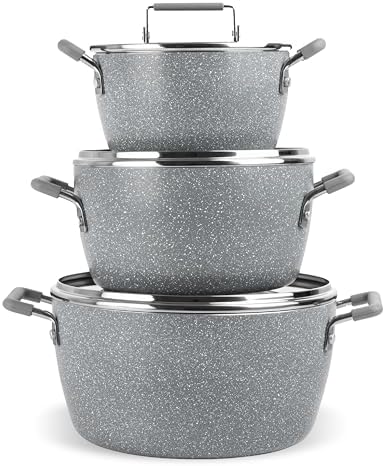
Braising and stewing do not require complicated equipment, but the right pot makes both methods easier to control. The goal is steady heat, enough room for the ingredients, and a cooking surface that does not scorch easily.
| Dutch oven | Braising larger pieces of meat, poultry, or vegetables | Holds steady heat and helps manage moisture during long cooking |
| Heavy-bottomed pot | Stews with meat, vegetables, beans, or legumes | Supports a gentle simmer and reduces scorching at the bottom |
| Wooden spoon or silicone spatula | Checking sauce body and preventing sticking | Helps you feel how the liquid is changing as the dish cooks |
A Dutch oven is one of the most useful tools for braising. Its heavy construction evenly distributes heat, and the lid helps manage moisture during long cooking. This is especially helpful when cooking larger pieces, such as short ribs, pork shoulder, lamb shanks, chicken thighs, or sturdy vegetables.
For stews, a heavy-bottomed pot is often enough. The thicker base helps the liquid simmer gently without hot spots at the bottom. That matters because stews usually contain smaller pieces of meat, vegetables, beans, or legumes that need to cook through evenly in the liquid.
A wooden spoon or silicone spatula is useful for stirring the pot as it cooks. You can scrape the bottom gently, check whether anything is sticking, and feel how the sauce is changing. If the liquid moves thinly like water, it may need more time. If it coats the spoon lightly, the sauce has started to build body.
The tool does not decide whether the dish is a braise or a stew. The method does. But a steady pot and a simple spoon make it easier to manage heat, moisture, and sauce texture while the food becomes tender.
Choosing the Method With Confidence
Braising and stewing are closely related, but they are not interchangeable. The difference comes down to ingredient size, liquid level, and the texture you want at the end.
Use braising when the main ingredient should stay tender, structured, and clearly defined. Use stewing when smaller pieces need to cook together in a liquid and become one complete dish.
Once you understand that difference, these methods become easier to control. You can judge the pot by how the liquid moves, how the ingredients hold their shape, and how the sauce develops over time.
Start by choosing the method that matches the result you want. From there, gentle heat, enough moisture, and patience will do most of the work.
Explore related Kitchen Know How articles to deepen your technique and cook with clearer control.