
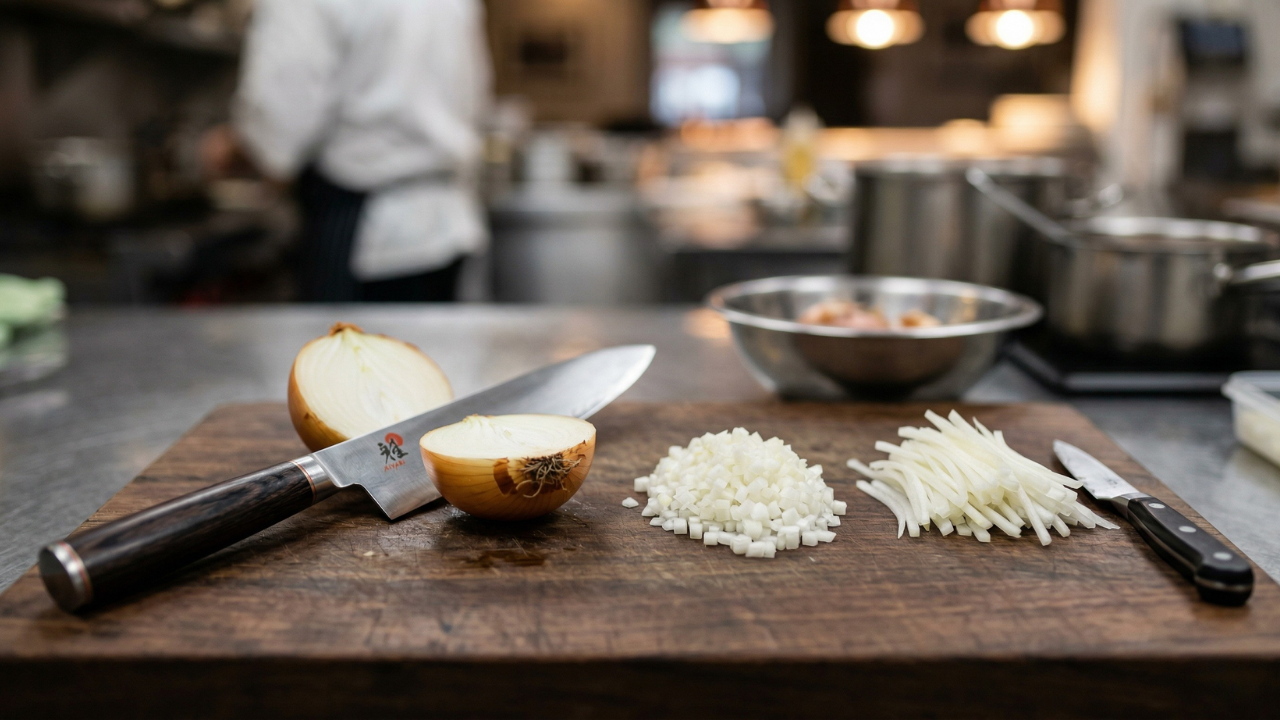
Chef Mark demonstrates two foundational onion cuts that appear constantly in serious cooking: julienne and brunoise.
What matters here is not simply cutting the onion into different sizes. It is learning how shape, alignment, and knife control determine the final result. In this demonstration, each cut is shown independently, allowing the viewer to observe the distinct precision, structure, and finish each one requires.
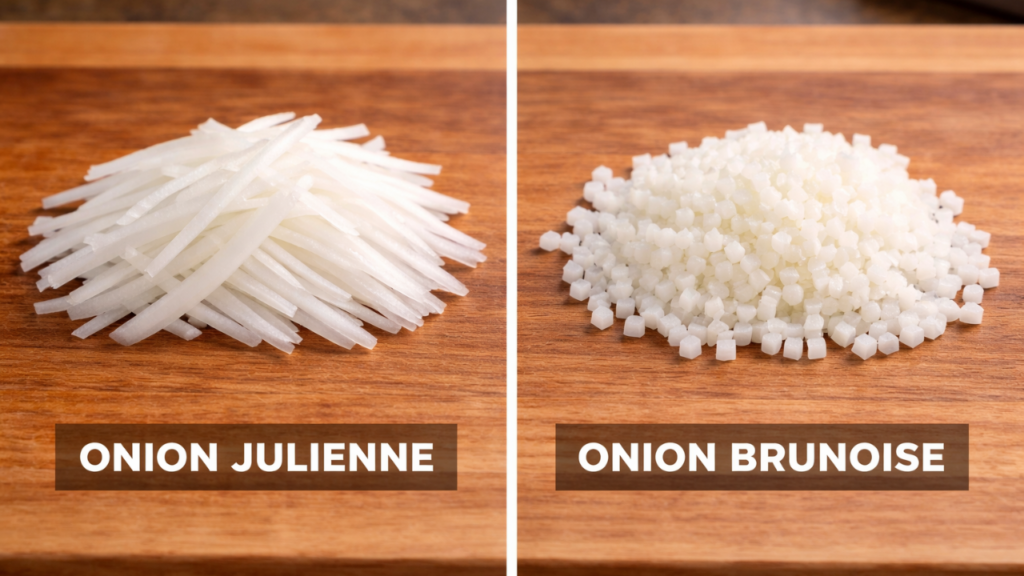
This matters in real cooking because cut size changes how the onion behaves in the pan, how evenly it cooks, and how clearly it appears in the finished dish. A well-formed julienne gives you controlled strands with definition. A clean brunoise creates a finer texture that blends more quietly into a preparation.
For many home cooks, the gap is not effort. It is judgment. They cut without fully reading the onion’s structure, lose consistency as spacing drifts, or rely on speed before control is established. This demonstration helps close that gap by showing what to notice as clean knife work takes shape.
Watch: Chef Mark Sandoval Demonstrates Onion Julienne and Brunoise
Watch how each cut is demonstrated independently, with attention to alignment, blade path, and the level of precision each shape requires.
Shallot Brunoise Variation
Watch Chef Mark demonstrate how the same brunoise structure applies to shallots, where the smaller size and more delicate layers require even tighter knife control.
What You Will Learn
In this demonstration, you will observe onion julienne and onion brunoise as two separate knife cuts, each with its own structure, purpose, and level of refinement.
The focus is not on cutting faster. It is on seeing how control creates consistency. Chef Mark shows how alignment, spacing, and blade path shape the final result, and how pressure affects precision as each cut becomes more exact.
You will also learn which visual cues matter most during each cut. That includes the onion position, the knife’s travel through the layers, and the uniformity that gives the finished cut its clarity.
Just as important, this section shows how the onion’s structure influences execution. Reading resistance, moisture, and shape leads to cleaner cuts, better texture, and more reliable results in real cooking.
By the end of the demonstration, the viewer should better understand not only what onion julienne and brunoise look like, but also what to notice while they are being performed well.
Ingredient Overview
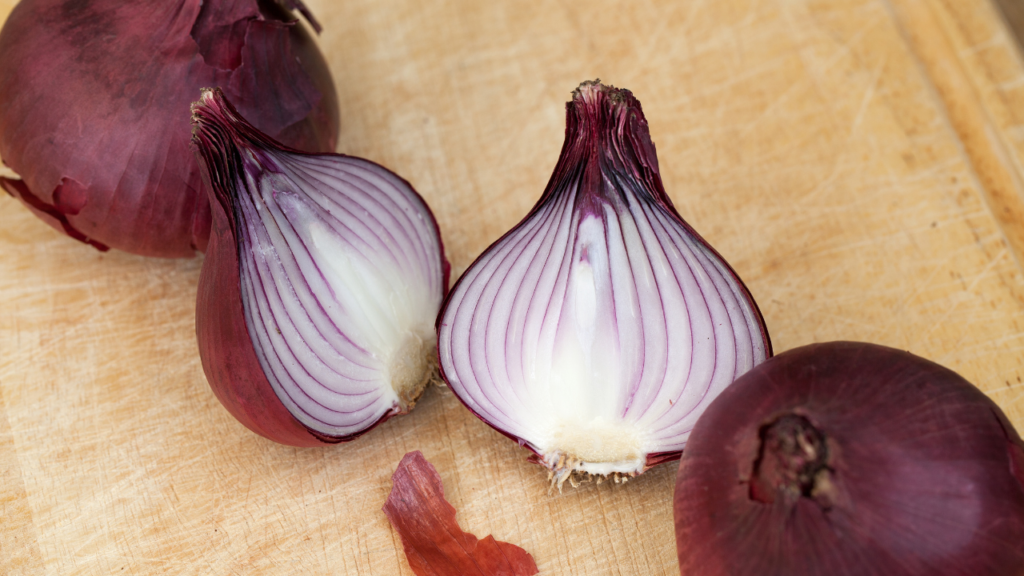
The onion is the only primary ingredient in this demonstration, which makes its condition especially important. Because the focus is on knife control and visual precision, the onion needs enough firmness and structural integrity to hold its shape cleanly under the blade.
Freshness matters because an onion with good tension cuts more clearly and stays more stable on the board. When the layers are firm and intact, the knife can travel more accurately, and the final shape remains more consistent. An older onion, or one that has begun to soften, can collapse more easily, release excess moisture, and make precise cutting less clean.
Internal structure also plays a major role. Onions are built in layers, and those layers affect how the blade moves, how resistance changes during the cut, and how easily the final shape stays uniform. A well-structured onion provides clearer visual lines and more predictable separation, helping the cook maintain control throughout the demonstration.
Quality affects more than appearance. It changes stability, moisture release, and cutting clarity. A firm onion is easier to position, read, and cut consistently. Excess moisture or a weakened structure can blur the cut, increase slipping, and dull the finished result.
Size and density also influence how the onion behaves. A larger onion may offer more working room, while a denser onion may give slightly different resistance under the blade. Even so, the visual system remains the same. The cook still reads alignment, structure, spacing, and resistance in order to produce a clean, controlled cut.
Tools You Will Need
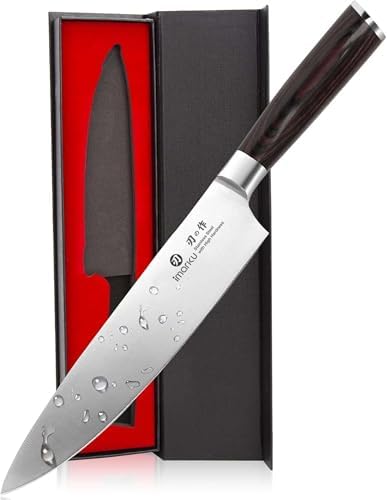
The primary tool in this demonstration is a chef’s knife. It provides the length, control, and versatility needed to perform both onion julienne and onion brunoise with clarity and precision. Because these cuts depend on clean blade travel and consistent spacing, the knife must feel stable in the hand and move confidently through the onion without forcing the cut. This is not simply about having a sharp blade. It is about having a knife that allows the cook to guide the cut with control from start to finish.
A stable cutting board is just as important. Good knife work depends on a surface that stays secure and supports clean, predictable movement. If the board shifts even slightly, maintaining alignment becomes harder, and fine control begins to break down. A solid board helps the cook stay balanced, keeps the ingredients properly positioned, and allows the knife to move more accurately.
A kitchen towel placed under the board is optional, but highly useful. Even a well-made board can slide on a smooth surface during repeated cutting. A folded towel underneath creates friction and helps lock the board in place. This small adjustment improves safety and gives the cook a more dependable working surface, especially during finer cuts where stability matters more.
Together, these tools support the demonstration’s central goal: controlled, consistent knife work. The knife shapes the cut, the board supports the motion, and the towel helps keep the entire setup steady enough for precise execution.


What to Watch For in the Demonstration
Watch how Chef Mark positions the onion to keep it stable throughout each cut. Control begins with how the ingredient sits on the board, how it is supported by the guiding hand, and how clearly the cutting line is established before the blade moves.
Pay close attention to resistance as the knife passes through the onion. The feel of the cut changes with size, density, and shape, and those changes influence how much pressure the knife can apply cleanly. This is one of the clearest signs that the cook is reading the ingredient rather than forcing it.
Notice also how hand placement, spacing, and blade path become more exact as the cut demands greater precision. Small adjustments in control help maintain uniform shape and prevent the cut from becoming uneven or crushed.
The value of this section lies not only in seeing the finished result, but also in recognizing the visual and physical cues that guide the cut as it happens.
Technique Breakdown
This section breaks the demonstration into clear observational phases so the viewer can follow how control, alignment, and precision shape each cut as it unfolds.
Onion Julienne
- Stability is the first point of focus. The onion must be positioned so that it supports a clean, repeatable cut before the knife begins to move.
- Attention then shifts to spacing and line control. The viewer should notice whether the blade continues to produce narrow, even strands with a consistent finish.
- This phase shows how structure affects the final result. When alignment stays true, and the blade travels cleanly, the julienne remains defined rather than ragged or crushed.
Onion Brunoise
- The onion brunoise demonstration requires a finer level of control because the target shape is smaller and more exact. Small inconsistencies become easier to see.
- The viewer should watch how compact and controlled the cut remains as precision becomes more important. A proper brunoise is a deliberate fine dice, not simply a smaller chopped onion.
- This phase highlights how the final shape depends on disciplined execution. The more refined the cut, the less room there is for drift, excess force, or loose spacing.
Control and Refinement
- Across both demonstrations, the central lesson is that good knife work comes from maintaining control throughout the cut.
- Chef Mark preserves shape, alignment, and consistency as the knife moves rather than correcting after the cut begins to break down.
- For the viewer, the value lies in seeing how consistency is maintained from start to finish through stable setup, clean blade movement, and sustained control.
Key Chef Adjustments
| Adjusting hand pressure | Alignment begins to drift, and the cut no longer follows a clean visual path | Pressure must match the ingredient. Too much force crushes the layers and weakens the clarity of the cut |
| Re-centering the cut line | The cut demands finer precision, or the spacing becomes harder to maintain | Small shifts early in the cut can lead to uneven shape and loss of consistency |
| Slowing the knife rhythm | The structure starts to weaken, or the ingredient no longer sits securely on the board | A slower rhythm helps protect uniformity and keeps the knife movement deliberate |
| Repositioning the onion | The structure starts to weaken or the ingredient no longer sits securely on the board | Resetting the onion restores balance and makes the next cut cleaner and safer |
| The onion feels less stable, or the blade begins to meet uneven resistance | The remaining shape no longer supports a clean, controlled finish | Knowing when to stop protects the quality of the cut instead of forcing a poor result |
This section highlights the small corrections that keep knife work clean and professional. Chef Mark is not cutting on autopilot. He is reading stability, alignment, and resistance as he works, then making small adjustments before inconsistency takes over.
These adjustments matter because onion julienne and onion brunoise depend on shape control from beginning to end. When the cook responds early, the cut stays cleaner, more uniform, and more useful in real cooking. When those signals are ignored, the result often becomes uneven, crushed, or visually imprecise.
Common Mistakes and Professional Corrections
| Uneven julienne | Slow down and protect the structure before trying to increase pace | Re-establish a stable position and keep the cut line visually consistent |
| Crushed onion texture | Too much downward force is used instead of letting the blade travel cleanly | Reduce pressure and allow the knife to move through the layers with more control |
| Ragged brunoise | The dice loses clarity because spacing and blade path become inconsistent | Tighten alignment and maintain a more deliberate rhythm throughout the cut |
| Loss of control | Speed takes over before the shape is fully supported | The onion shifts during the cut, or the remaining piece no longer supports precision |
| Spacing drifts, or the onion is not set up securely from the start | The onion shifts during the cut or the remaining piece no longer supports precision | Reposition the onion or stop the cut before the shape breaks down |
These mistakes are common because many home cooks focus on finishing the cut instead of reading what the onion is allowing. Chef Mark’s correction is not dramatic. It comes from noticing instability, misalignment, or excess force early enough to adjust before the deterioration begins.
That is what makes the correction professional. The goal is not to rescue a poor cut at the end. It is to recognize the missed signal early, reset control, and preserve a cleaner final result.
When to Use This Technique
Understanding when to use onion julienne and brunoise helps the cook make better decisions before the knife ever touches the board. These cuts are not interchangeable. Each one creates a different visual effect, texture, and cooking behavior in the final dish.
Use onion julienne when
- You want defined onion strands that remain visible in the finished preparation.
- The dish benefits from even cooking with a more noticeable onion presence
- You want the onion to soften while still keeping some shape and structure.
- A cleaner, more elongated cut enhances the dish’s overall look.
Use onion brunoise when
- You want a smaller, more integrated onion texture.
- The onion needs to blend more quietly into the dish rather than stand out visually.
- A refined preparation benefits from a more uniform and compact cut
- You want the onion to distribute more evenly throughout the mixture.
Choose a larger cut when
- The dish benefits from a more visible onion presence.
- A slower breakdown is more useful than a fine, controlled finish.
- Texture should feel more rustic or less refined.
- The onion is meant to play a more obvious structural role in the dish.
Clean Knife Work Starts with Better Observation
In this demonstration, Chef Mark shows that onion julienne and onion brunoise are not simply smaller or larger versions of the same idea. Each one demands its own level of control, spacing, and visual precision. What the viewer gains is not just a clearer picture of the finished shapes, but also a better understanding of what supports those shapes as the knife moves.
That is what makes the demonstration useful in real cooking. Better knife work comes from noticing stability, alignment, resistance, and the point where precision begins to matter more. When those signals are read clearly, the cut stays cleaner, more consistent, and more effective in the final dish.
The larger lesson is that technique improves when observation improves. Watching closely helps the cook move beyond imitation and begin developing stronger judgment at the board. Over time, that awareness leads to cleaner execution and more confidence with foundational knife work.
Watch another Chef Mark Sandoval demonstration to continue refining your knife precision.
1 thought on “Chef Mark Demonstrates Onion Julienne and Brunoise”
Comments are closed.