
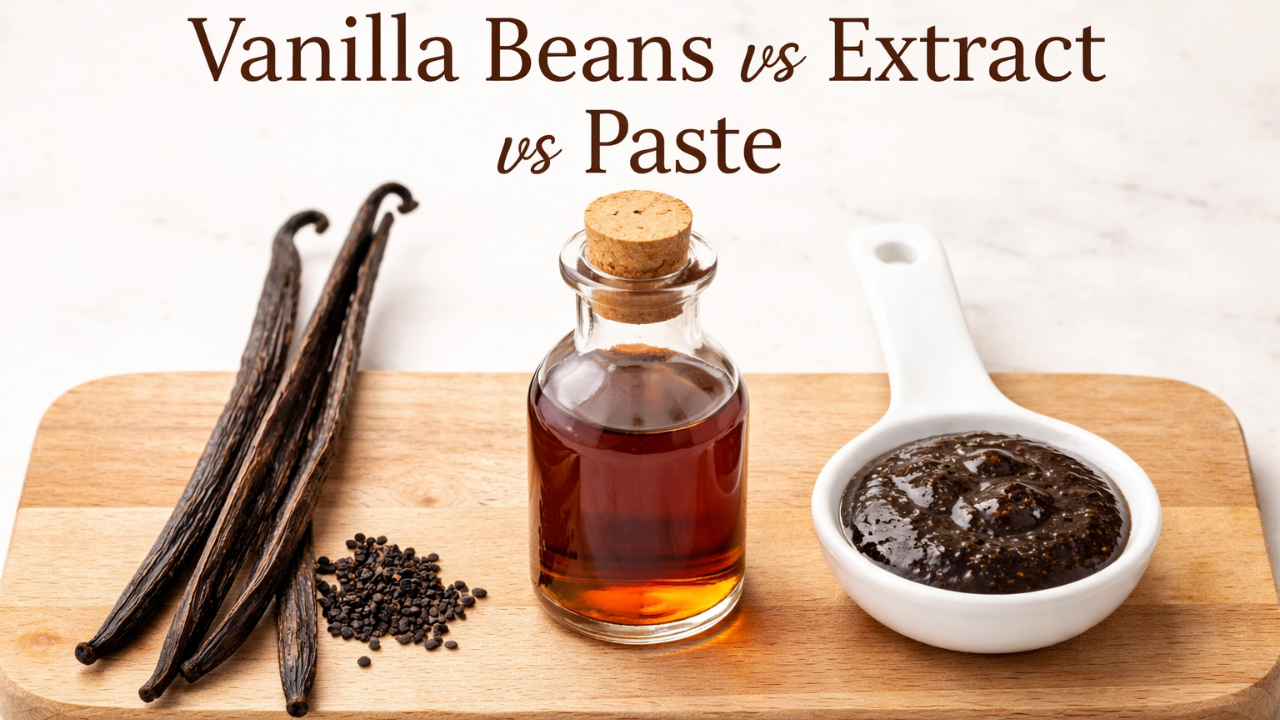
Vanilla is one of the most widely used flavoring ingredients in baking and desserts, yet many cooks are unsure how its different forms behave in the kitchen. Recipes may call for vanilla beans, vanilla extract, or vanilla paste, and these options are often treated as interchangeable. In reality, each form has a different flavor intensity, aroma, and visual characteristics.
Understanding the difference helps cooks choose the right form for the job rather than guessing or blindly substituting. The choice affects flavor clarity, visual presentation, and how vanilla integrates into a dish.
Home cooks frequently face this decision when baking, making custards, ice cream, sauces, and pastries. Recognizing how each form behaves lets you select the version that yields the final result, rather than simply following the recipe.
A clear understanding turns vanilla from a generic flavoring into a deliberate ingredient.
What Vanilla Beans, Extract, and Paste Actually Are
Vanilla originates from the cured seed pods of the orchid species Vanilla planifolia. These long, dark pods contain thousands of tiny seeds along with aromatic oils that create the familiar vanilla aroma used in desserts and baking.
Although the starting ingredient is the same plant, the three forms used in kitchens represent different ways of delivering that flavor. Each form changes how vanilla is released into food, how evenly it spreads through mixtures, and whether the finished dish shows visible vanilla seeds.
Understanding what each form actually contains removes much of the confusion around substitution and helps cooks choose the version that supports the final result.
Vanilla Beans
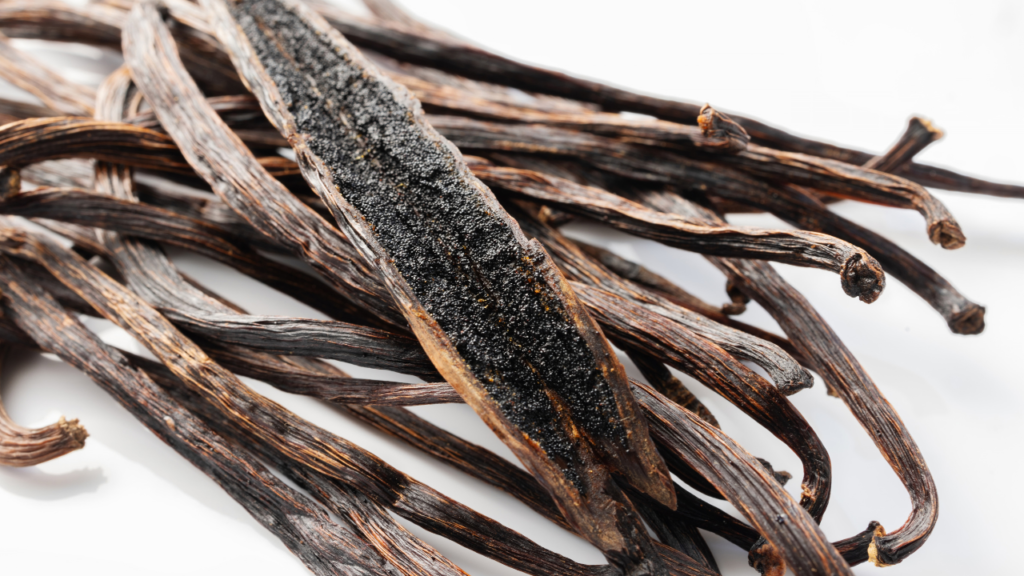
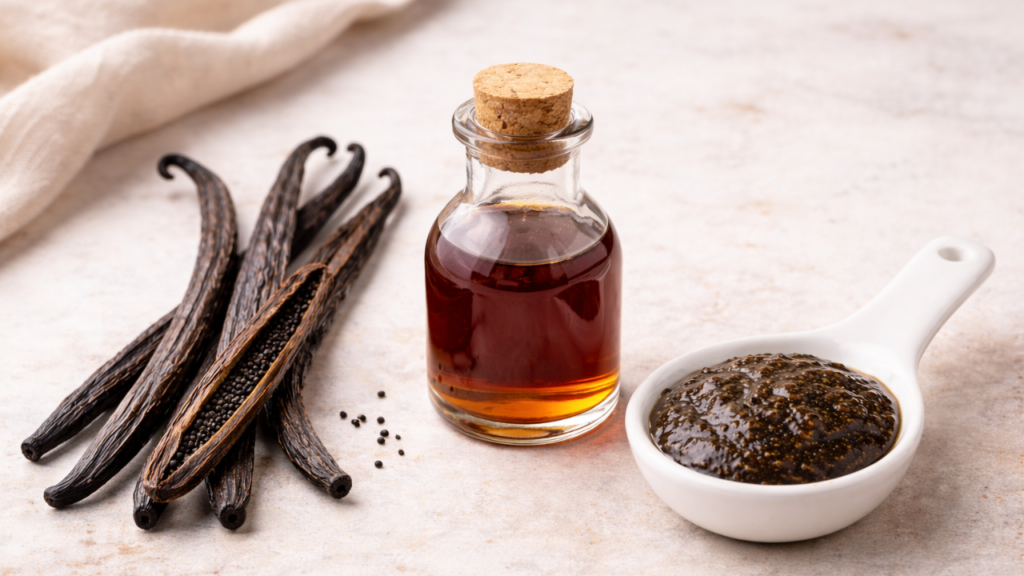
Vanilla beans are the whole cured pods of the vanilla orchid. After harvesting, the pods undergo a curing process that develops the characteristic aroma associated with vanilla.
Inside the pod are thousands of tiny black seeds suspended in aromatic oils. These seeds are scraped from the interior of the pod and used directly in preparations where both flavor and appearance matter. The pod itself still carries aroma and can infuse flavor when steeped in warm liquids.
Whole beans provide the most complete vanilla expression because they contain the full spectrum of natural aromatic compounds.
From a practical cooking perspective, beans offer three contributions:
- Aroma depth from the natural oils within the pod
- Flavor complexity that develops during steeping
- Visual identity through the tiny black vanilla seeds
Because of these qualities, beans are commonly used in custards, creams, ice creams, and sauces where vanilla is the central flavor.
Vanilla Extract
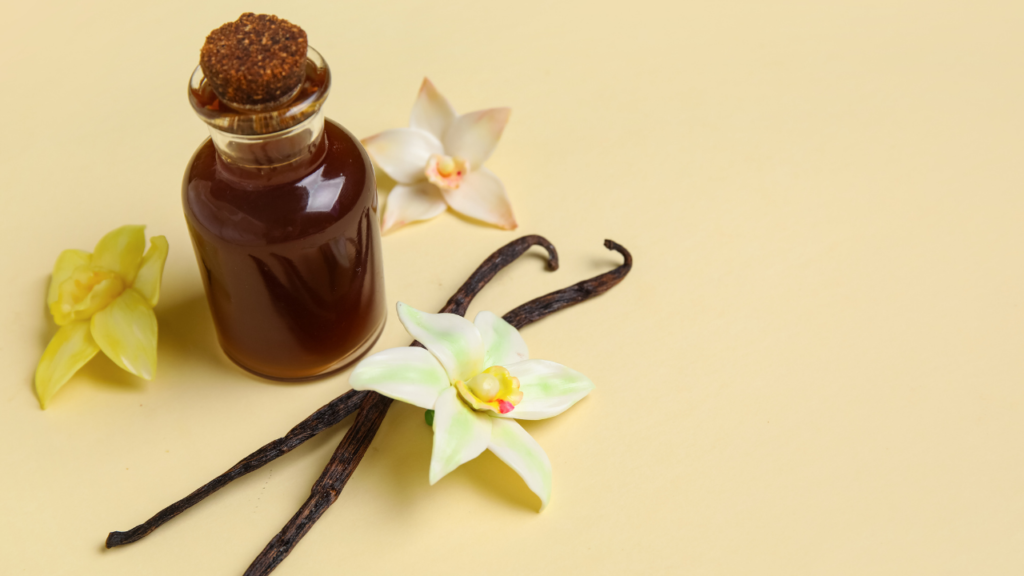
Vanilla extract is produced by soaking chopped vanilla beans in a mixture of alcohol and water. Over time, the alcohol pulls aromatic compounds from the beans, creating a concentrated liquid flavoring.
This process dissolves the vanilla flavor compounds into the liquid, allowing them to disperse quickly and evenly when mixed into batters, doughs, or sauces.
Extract offers several practical advantages in everyday cooking:
- Easy dispersion through batters and mixtures
- Consistent flavor strength from bottle to bottle
- Convenient measurement and storage
Because it blends quickly, the extract works well in baked goods where vanilla supports other ingredients rather than standing alone. The flavor profile is recognizable and balanced, though slightly less layered than whole beans.
Vanilla Paste
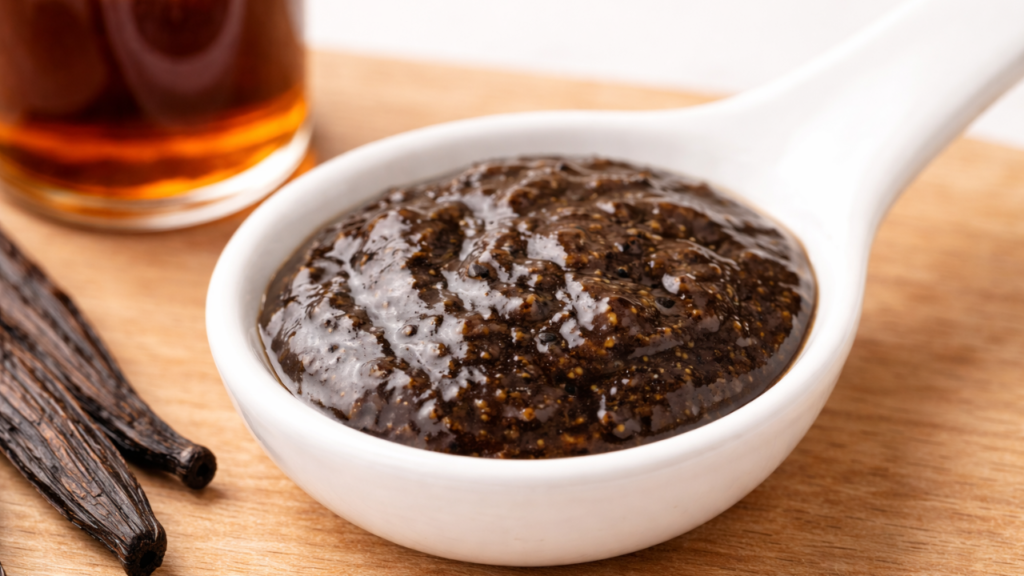
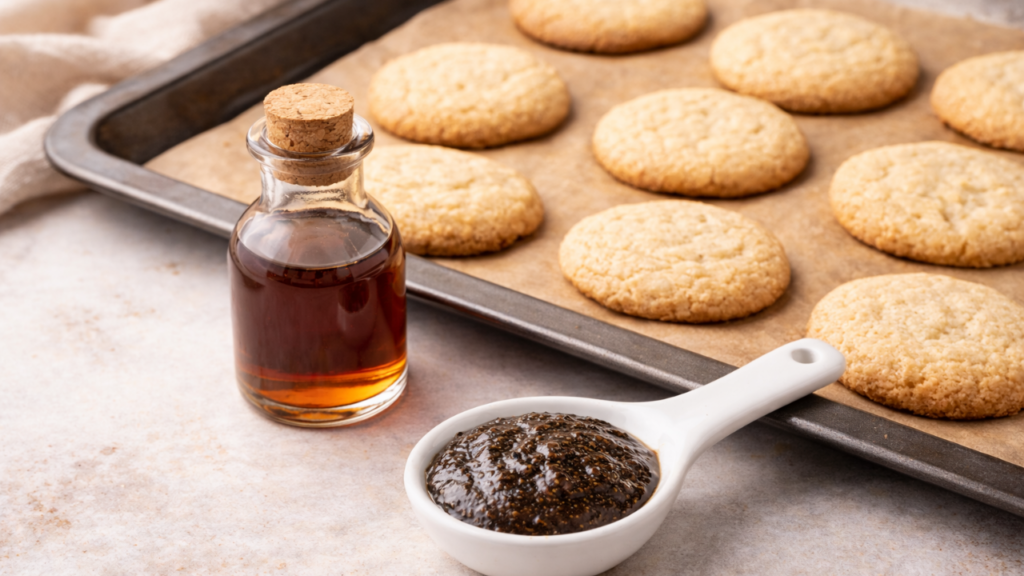
Vanilla paste combines the convenience of extract with the visual appeal of whole vanilla beans.
It is typically made from vanilla extract blended with concentrated vanilla components and suspended vanilla bean seeds. The mixture is thick and spoonable, allowing cooks to add vanilla flavor while also introducing the distinctive black specks associated with vanilla beans.
In practical cooking terms, paste provides:
- Strong vanilla flavor similar to extract
- Visible vanilla seeds for presentation
- Ease of use without splitting whole pods
This makes it useful in desserts where visual detail matters, such as frostings, ice creams, custards, and pastry fillings.
Structural Differences at a Glance
| Vanilla Beans | Whole cured pod with seeds and oils | Seeds and pod release aroma during steeping | Visible black seeds |
| Vanilla Extract | Alcohol based infusion of vanilla beans | Dissolved flavor disperses through liquids and batters | No visible seeds |
| Vanilla Paste | Extract with concentrated vanilla and suspended seeds | Spoonable mixture distributes flavor and seeds | Visible seeds |
The Foundational Rule
Each form delivers vanilla differently.
- Vanilla beans provide the fullest aroma and visible seeds.
- Vanilla extract provides evenly dispersed vanilla flavor.
- Vanilla paste provides an extract-style flavor with the appearance of real vanilla beans.
Recognizing these structural differences allows cooks to choose the form that best supports the role vanilla plays in the dish, rather than treating it as an identical ingredient.
How the Form of Vanilla Changes Flavor, Aroma, and Appearance
Understanding the form of vanilla directly affects three outcomes in cooking: aroma intensity, flavor distribution, and visual presentation. Even though the ingredient comes from the same plant, the way vanilla is prepared affects how it behaves once it enters a dish.
Recognizing these differences allows cooks to control how vanilla expresses itself rather than relying on habit or substitution.
Aroma Intensity
Vanilla beans provide the most layered aroma because they contain the full range of natural aromatic compounds within the pod and seeds.
When a bean is split and steeped in warm liquid, both the seeds and the oils in the pod gradually release fragrance. This slow release builds complexity over time, which is why beans are often used in preparations where vanilla needs to stand on its own.
Custards, pastry creams, ice cream bases, and delicate sauces benefit from this layered aroma because the vanilla is not competing with many other strong ingredients.
Extract produces a recognizable vanilla aroma, but the flavor profile is more streamlined. Since the aromatic compounds are already dissolved in alcohol, the flavor integrates quickly and evenly rather than developing slowly during cooking.
Paste behaves similarly to extract in terms of aroma release, though the suspended seeds add a visual signal that many cooks associate with a stronger vanilla flavor.
Flavor Distribution
The form of vanilla also determines how evenly the flavor spreads through a mixture.
Liquid Vanilla extract distributes almost instantly because it blends easily with other liquids. This makes it particularly effective in batters, doughs, and mixtures where even flavor distribution is important.
Whole beans release flavor differently. The seeds disperse through the dish, but much of the aroma develops through infusion. That means the surrounding liquid must have enough time and warmth to pull flavor from the pod.
Vanilla paste falls between these two behaviors. It disperses easily like an extract, while the seeds distribute visually throughout the mixture. From a practical standpoint:
- Extract favors even flavor distribution in large mixtures.
- Beans favor depth of flavor through infusion.
- Paste balances ease of mixing with visual detail.
Visual Presentation
Vanilla also contributes to the visual identity of many desserts.
The tiny black specks from vanilla seeds are widely recognized as a sign of real vanilla. These seeds appear when whole beans or vanilla paste are used.
This visual detail matters in many preparations where appearance reinforces flavor expectations. Ice cream, pastry cream, and custards often showcase these specks in their finished look.
Extract provides flavor but leaves no visible trace. In dishes where the appearance of vanilla contributes to presentation, this absence can make the dessert appear less refined, even if the flavor is present.
Why Misunderstanding the Form Creates Problems
Misunderstanding these differences often leads to disappointing results.
A dessert designed to showcase vanilla may taste flat if the cook expects the extract to provide the same aromatic depth as a whole bean. At the same time, a baker may spend extra effort to add a vanilla bean to a heavily flavored batter, where the difference becomes difficult to notice.
Common issues include:
- Expecting the extract to deliver the same layered aroma as beans
- Using beans in mixtures where their complexity becomes hidden
- Choosing extract when vanilla seeds are part of the dish’s identity
When you understand how each form behaves, you can match each ingredient to the role it plays in the finished dish. This awareness turns vanilla from a generic flavoring into a deliberate design choice in the kitchen.
Where You See Each Form Used Across Real Dishes
Different culinary traditions and pastry styles rely on different forms of vanilla depending on the desired outcome. The choice usually reflects how strongly vanilla should stand out, how the flavor will be distributed, and whether visible vanilla seeds contribute to presentation.
Over time, clear patterns emerge across professional kitchens and pastry traditions.
Dishes That Favor Whole Vanilla Beans
Vanilla beans are commonly used in dishes where vanilla is the primary flavor, and the cook wants the fullest aroma. These preparations often involve warm liquids that allow the bean to slowly release its aromatic oils.
Common examples include:
- Pastry cream
- Ice cream bases
- Custards and crème brûlée
- Panna cotta
- Vanilla sauces and dessert creams
In these preparations, the bean’s seeds provide visual identity while the pod contributes a deeper aroma through infusion. This is why many classical pastry preparations rely on whole beans rather than extract.
Dishes That Favor Vanilla Extract
Vanilla extract appears most frequently in baked goods and mixtures where vanilla supports other flavors rather than dominating them. Because the extract is already dissolved in liquid, it spreads evenly through batter-based preparations.
Examples include:
- Cakes and cupcakes
- Cookies
- Pancakes and waffles
- Brownies
- Sweet quick breads
In these foods, vanilla plays a supporting role, enhancing butter, sugar, chocolate, or spices rather than serving as the central flavor. Extract provides a reliable flavor without additional preparation.
Dishes That Favor Vanilla Paste
Vanilla paste is used when cooks want the visual presence of vanilla beans without having to prepare whole pods. It often appears in desserts where presentation matters, but convenience is also important.
Examples include:
- Frostings and buttercreams
- Ice creams
- Cheesecake fillings
- Custards where visible vanilla seeds reinforce the flavor
Paste is frequently used in modern pastry kitchens and bakeries where consistency and speed are important while still maintaining the visual signal of real vanilla.
Recognizing the Pattern
Looking across these dishes reveals a useful rule.
- Beans appear where vanilla is the star flavor.
- Extract appears where vanilla supports other ingredients.
- Paste appears where visual vanilla identity matters, but convenience is needed.
Recognizing these patterns helps cooks understand why a recipe calls for one form instead of another.
Choosing the Right Vanilla in Your Own Kitchen
When deciding which form of vanilla to use, focus on the role vanilla plays in the dish rather than the ingredient itself. The goal is not simply to add vanilla, but to choose the form that supports the flavor structure and appearance of the finished preparation.
Start by identifying how strongly vanilla should express itself. Watch for these decision signals:
- Is vanilla the primary flavor or a background note
- Does the finished dish benefit from visible vanilla seeds
- Does the mixture require even flavor distribution
- Is the preparation careful or strongly flavored
- Will the vanilla be infused into liquid or mixed into batter
These questions help determine whether the dish needs the depth of whole beans, the convenience of extract, or the visual presence of vanilla paste. Good cooks treat vanilla as a structural flavor rather than a background ingredient.
If you like having quick reminders nearby while cooking, the Essential Kitchen Cheat Sheets provide simple visual references for ingredient behavior and other foundational kitchen cues.
Practical Ingredient Signals
Certain preparation styles naturally favor specific forms of vanilla.
- Custards, creams, and ice cream bases benefit from the depth of whole beans because the warm liquid allows the pod to release its aromatic oils.
- Baked batters typically work well with extract because the liquid disperses evenly through large mixtures.
- Desserts where visual detail matters often benefit from paste or beans because the visible seeds reinforce the presence of real vanilla.
When the form matches the preparation style, the flavor integrates more naturally.
Sensory Cues to Watch While Cooking
Vanilla also reveals itself through subtle sensory signals. Notice:
- The aroma rising from warm custards or cream bases
- The distribution of seeds in mixtures when beans or paste are used
- Whether the vanilla fragrance remains noticeable after baki
If the aroma disappears completely, the vanilla may have been diluted by stronger ingredients such as chocolate, caramel, or spices.
When Vanilla Flavor Feels Weak
If a dish tastes flat even when vanilla is present, the issue is usually structural rather than a matter of quantity. Common causes include:
- Vanilla competing with stronger flavors
- Extract being used where bean complexity is needed
- Vanilla being added too early in a long cooking process
In these situations, switching to a different form of vanilla often yields better results than simply increasing the amount.
Good cooks treat vanilla as a structural flavor rather than a background ingredient. Choosing the right form allows the flavor to support the dish rather than disappear into it.
If you like having quick visual reminders nearby while cooking, the Essential Kitchen Cheat Sheets provide simple references for ingredient behavior and other foundational kitchen cues.
Common Vanilla Misunderstandings That Affect Results
Many kitchen frustrations around vanilla come from small but predictable misunderstandings. Because the three forms are derived from the same ingredient, it is easy to assume they behave similarly in cooking.
In practice, each form releases flavor differently. When cooks treat them as identical, the result may be a weaker aroma, uneven flavor distribution, or a finished dessert that differs from expectations.
The following misconceptions appear frequently in home kitchens.
| All vanilla forms are interchangeable | Flavor strength, aroma development, and visual appearance differ between forms | Choose the form based on the role vanilla plays in the dish |
| Extract always tastes weaker | Extract disperses evenly but lacks the layered aromatic oils found in whole beans | Use beans when vanilla is the primary flavor |
| Vanilla paste is only decorative | Paste contains real vanilla extract and suspended bean seeds | Use paste when you want both flavor and visible vanilla seeds |
| Vanilla seeds alone carry the flavor | Much of the aroma comes from the oils in the pod itself | Allow the pod to steep in liquid when using whole beans |
Correcting these assumptions helps cooks make more intentional choices instead of relying on habit.
Comparing the Three Forms Side by Side
Each form of vanilla delivers flavor differently. The differences become most apparent when you compare how the ingredient behaves across three areas that matter during cooking: flavor development, visual appearance, and ease of use.
| Vanilla Beans | Deepest and most layered aroma from seeds and pod oils | Visible black vanilla seeds | Requires splitting the pod and scraping seeds |
| Vanilla Extract | Balanced vanilla flavor that disperses evenly | No visible seeds | Easiest to measure and mix into batters and liquids |
| Vanilla Paste | Strong vanilla flavor with suspended bean seeds | Visible seeds similar to whole beans | Spoonable and easy to incorporate |
This comparison highlights the trade-offs between flavor depth, visual presentation, and convenience. Once cooks recognize these differences, choosing the appropriate form becomes much more straightforward.
Situations Where Substitutions Work
While the three forms of vanilla behave differently, substitutions can sometimes work depending on how the ingredient functions within the dish. The key question is whether vanilla plays a supporting role or serves as the primary flavor.
When Extract Can Replace Beans
Vanilla extract can often replace whole beans in baked goods where vanilla supports other dominant ingredients.
In cakes, cookies, and brownies, vanilla typically enhances butter, sugar, chocolate, or spices rather than defining the entire flavor profile. Because the extract disperses evenly through the batter, it provides a consistent vanilla flavor without requiring additional preparation.
In these situations, replacing beans with extract rarely changes the final result in a noticeable way.
When Paste Can Replace Beans
Vanilla paste is often used when cooks want the visual appearance of vanilla seeds but prefer the convenience of a ready-to-use ingredient. It works well in desserts where visible vanilla specks contribute to presentation, such as:
- Ice cream
- Custards
- Frostings
- Pastry fillings
Paste provides both flavor and visual identity without splitting and scraping a whole bean.
When Beans Make the Biggest Difference
Whole vanilla beans become most valuable when vanilla is the centerpiece flavor or when the dish relies on infusion to develop aroma.
This is especially true in preparations based on dairy or cream, where the pod can gradually release aromatic oils as the mixture warms.
In these situations, replacing beans with extract may still produce a pleasant dessert, but the flavor will usually be less layered.
The Guiding Principle
Substitutions work best when the structural role of vanilla remains the same.
- If vanilla is supporting other flavors, the extract usually performs well.
- If vanilla defines the dish, beans provide the most complete aroma.
- If appearance matters as much as flavor, paste offers a practical middle ground.
Understanding that role allows cooks to make intelligent substitutions without weakening the final dish.
Quick Takeaways
- Vanilla beans provide the most complete aroma and visible seeds.
- Vanilla extract disperses easily and supports flavor in baked goods.
- Vanilla paste combines the flavor of extract with visible vanilla seeds.
- Choose the form based on the role vanilla plays in the dish.
- Understanding the difference improves both flavor and presentation.
FAQs
Is vanilla paste stronger than vanilla extract?
Vanilla paste often tastes slightly stronger because it contains concentrated vanilla components and real seeds. However, both deliver similar flavor roles in many recipes.
Do vanilla beans always taste better?
Not always. Beans shine when vanilla is the main flavor. In many baked goods, the difference is less noticeable.
Why do some desserts show black specks of vanilla?
Those specks are the seeds from vanilla beans or paste. They signal real vanilla and add visual appeal.
Can vanilla extract be heated during cooking?
Yes. While alcohol carries aroma, the flavor compounds remain even when heated in batters, sauces, or custards.
Is vanilla paste just extract with seeds added?
The paste contains an extract, concentrated vanilla, and suspended seeds, which give it a thicker texture and a stronger visual presence.
Why do some recipes specifically call for vanilla beans instead of extract?
Some recipes rely on the deeper aroma that develops when a whole vanilla bean infuses into warm liquid. Custards, creams, and ice cream bases often use beans because the pod releases additional aromatic oils during steeping.
Should the vanilla pod be discarded after scraping the seeds?
Not immediately. The pod still contains aromatic oils and can continue releasing flavor when steeped in liquid. Many cooks add the pod to warm milk, cream, or syrup and remove it later once the aroma has developed.
Continue Building Ingredient and Flavor Awareness
Understanding how ingredients behave in the kitchen improves decision-making across many dishes. These related Kitchen Know How lessons explore other foundational ingredients and flavor-building techniques.
- Anchovies Explained: Why This Small Fish Creates Big Flavor
Learn how anchovies dissolve into sauces and dressings, adding depth, salt balance, and savory complexity. - Tomato and Basil: Why This Classic Pairing Works
Explore how aroma compounds and cooking temperature affect one of the most recognizable flavor pairings in cooking. - Deglazing Explained: How Pan Fond Builds Rich Sauces
See how browned bits left in the pan become the foundation for sauces and concentrated flavor.
Kitchen Tools That Support Working With Vanilla
Understanding the differences between vanilla beans, extract, and paste is the first step. A few simple tools also make it easier to handle these ingredients cleanly and consistently in the kitchen.
These tools do not change the flavor of vanilla, but they help you work with the ingredient more precisely and reduce waste when preparing beans or incorporating vanilla into mixtures.
Paring Knife

- STAYS SHARP LONGER: Professional, satin-finished blade boasts precision cutting and is finely honed for long-lasting sha…
- THE LAST KNIFE YOU’LL EVER NEED TO BUY: German Engineered Knife Informed by over 100 Years of Mastery. HENCKELS knives a…
- DURABLE AND BALANCED: Forged bolster construction offers durability and balance and a seamless transition from blade to …
- SET INCLUDES: 3-inch Paring Knife and 4-inch Paring Knife.
A small paring knife makes it easier to split a vanilla bean cleanly without crushing the pod.
The narrow blade allows you to open the bean lengthwise, exposing the seeds while keeping the pod intact. This helps preserve the aromatic oils that contribute to the bean’s flavor.
Controlled cuts also make scraping the seeds easier, allowing you to collect the seeds without tearing the pod or losing the aromatic interior.
Small Silicone Spatula

- Premium 100% Food Grade Silicone: The silicone spatula set is made of healthy and friendly material, resistant to high t…
- One-Piece for Easy to Clean: With the unique Seamless One Piece Design, there is no crevices for food to stuck in, the h…
- Best Balance of Flexible and Sturdy: Too stiff or too soft? Nobody wants that! SO we experimented over and over again to…
A narrow silicone spatula helps collect vanilla seeds or paste from bowls, cutting boards, and containers.
Because vanilla seeds are small and sticky, they can easily remain on surfaces if scraped with a spoon. A flexible spatula helps gather the seeds and distribute them evenly into custards, creams, or batters.
This improves flavor distribution and ensures that the vanilla you use ends up in the dish rather than left behind on the tools.
Understanding Vanilla Leads to Better Dessert Decisions
Vanilla may appear simple, but the form you choose affects how the flavor develops, how the aroma spreads through a dish, and how the finished dessert looks.
Whole beans deliver the deepest aroma through infusion. Extract disperses quickly and supports flavor in baked mixtures. Vanilla paste offers the visual identity of beans with the convenience of a spoonable ingredient.
When you recognize these differences, vanilla stops being a generic flavoring and becomes a deliberate ingredient choice. That awareness leads to more balanced desserts and more confident cooking decisions.
If you want to continue strengthening your ingredient knowledge, explore more Kitchen Know How articles and keep building the skills that carry over to many dishes.