
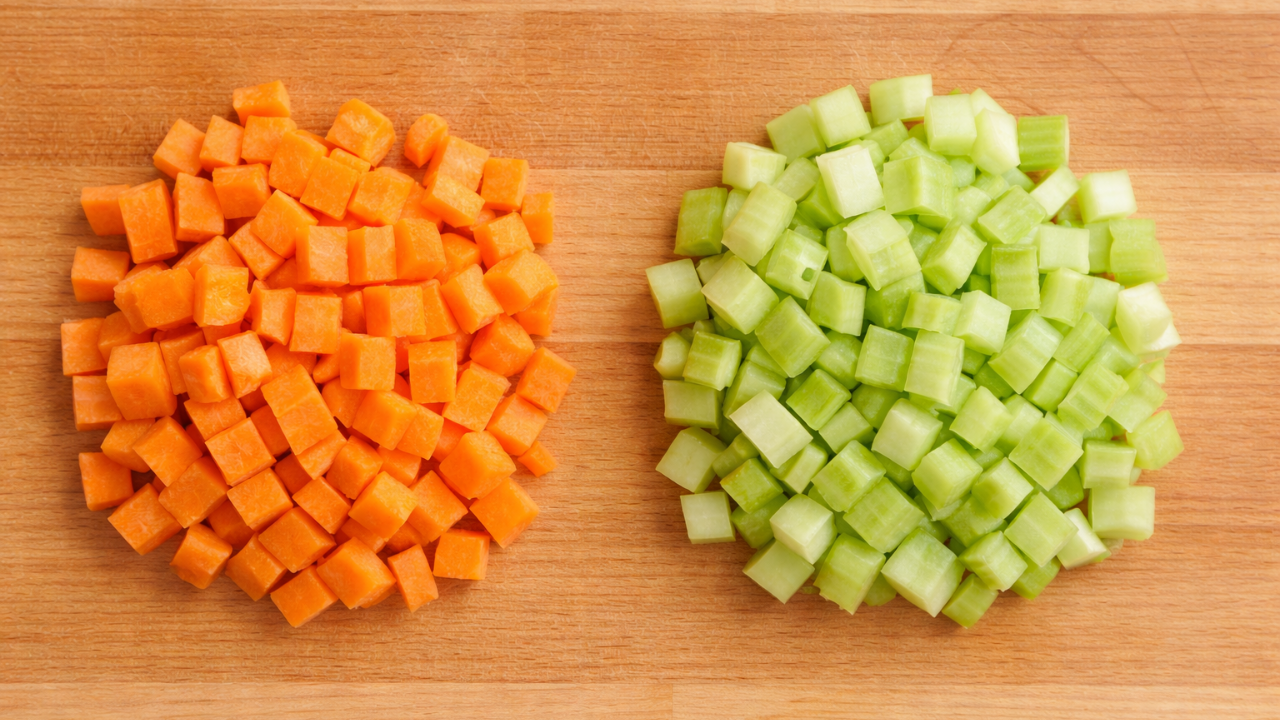
Small dice is one of the most important foundational knife techniques in professional cooking. The size of a vegetable cut directly affects how it cooks, how it absorbs flavor, and how refined the final dish feels. When pieces are uniform, heat distributes evenly, and texture becomes predictable.
In this demonstration, Chef Mark applies the same small-dice system to carrots and celery with a chef’s knife. The focus is not speed. It is structure, alignment, and control. You will see how squaring the vegetable, maintaining consistent plank thickness, and keeping the blade vertical determine the final result long before the vegetables ever reach a pan.
For serious home cooks, this closes a common execution gap. Many cuts look similar at first glance, but small variations in thickness create uneven cooking and inconsistent texture. Watching how a professional maintains stability, pressure, and alignment builds the awareness needed to produce clean, repeatable results every time.
Watch: Chef Mark Sandoval Demonstrates Small Dice (Carrots & Celery)
In this demonstration, Chef Mark shows how structure and blade control determine consistency long before heat is applied.
What You’ll Learn
In this demonstration, focus on how structure and alignment determine the final cut long before speed becomes a factor.
- What defines a professional small dice and why size consistency matters
- How to square and stabilize cylindrical vegetables before cutting
- Which visual cues confirm uniform plank and stick thickness
- How blade alignment and pressure influence clean, even results
Ingredients Overview
These ingredients share a similar cutting system but differ slightly in structure and density.
- Carrots — firm density and cylindrical shape require squaring to prevent rolling and maintain consistent plank thickness.
- Celery ribs — curved structure with natural rib lines require alignment before slicing to maintain even sticks
Tools You’ll Need
Small dice depend on stability, alignment, and clean blade movement. These tools support consistent execution.
- Chef’s knife — primary cutting tool for structure and control
- Cutting board — stable and dry surface
- Bench scraper (optional) — for safe transfer
- Damp towel (optional) — placed under the board to prevent movement
What to Watch For in the Demonstration
As you watch, focus on structure and subtle adjustments rather than speed.
- How Chef Mark squares the vegetable before slicing — Notice how removing rounded edges prevents rolling and establishes control before any fine cuts begin.
- How plank thickness determines final dice size — Each plank sets the measurement for every cut that follows. Consistency here controls the entire result.
- How the sticks align before the final cut — The sticks are gathered and squared again before dicing. Alignment determines uniformity.
- How the knife travels vertically rather than rocking excessively — The blade lifts and drops with control, producing clean edges rather than crushed surfaces.
- How resistance differs between carrot and celery — Carrots require firmer pressure. Celery yields more easily. Watch how the hand adapts subtly.
- How uniform pieces accumulate on the board — Consistency becomes visually obvious as the pile grows. Irregular cuts stand out immediately.
Technique Breakdown
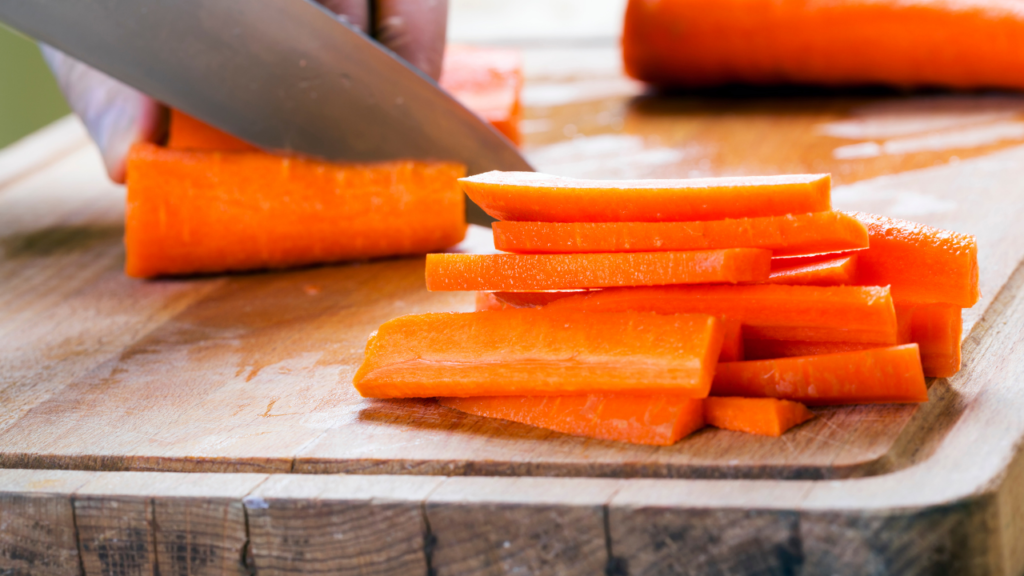
Small dice is built in stages. Each cut establishes the next measurement, and precision early determines consistency at the end. Watch how structure develops progressively rather than all at once.
Stability Before Precision
The vegetable is trimmed and squared first. Rounded edges are removed to prevent rolling. Control is established before smaller cuts begin.
Form Creates Measurement
Planks determine thickness. Sticks inherit that thickness. The final dice reflects the accuracy of the earlier cuts. Each stage builds on the previous one.
Controlled Blade Travel
The knife moves with vertical precision rather than exaggerated rocking. Clean downward cuts create sharp edges and prevent tearing.
Adaptation to Ingredient Structure
Carrots require firmer pressure due to density. Celery requires lighter engagement to avoid crushing fibers. The system remains consistent, but force adapts.
Uniform Final Cut
Before the final pass, sticks are aligned and squared again. The result is a consistent, professional small dice that will cook evenly.
Key Chef Adjustments
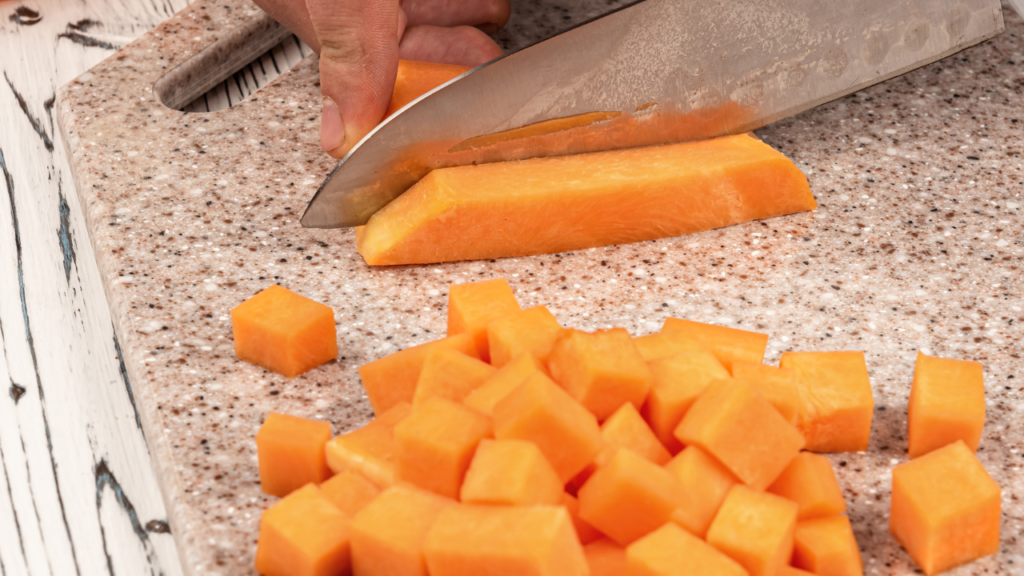
Small dice becomes professional when subtle corrections happen in real time. These adjustments protect consistency and control.
| Chef Adjustment | What It Prevents | Why It Matters |
| Squaring before speed | Rolling and uneven plank cuts | Stability ensures every cut that follows is accurate |
| Crushing celery or forcing the blade through a carrot | Irregular stick width and uneven dice | Thickness determines final size and cooking consistency |
| Adjusting pressure for density differences | Re-stacking and squaring ensure repeatable results | Proper force protects texture and creates clean edges |
| Keeping the blade vertical | Angled cuts and tapered pieces | Vertical travel produces uniform cubes with defined edges |
| Watching alignment before the final pass | Mixed-size dice and visual inconsistency | Re-stacking and squaring ensures repeatable results |
These refinements are small, but they separate mechanical cutting from controlled knife work.
Common Mistakes & Professional Corrections
Most inconsistencies in small dice come from skipping structure or rushing alignment. These are the most common breakdowns — and the mindset shifts that correct them.
| Mistake | What Causes It | Professional Correction |
| Cutting without squaring first | Attempting fine cuts on a rounded surface | Remove instability first. Stability precedes precision. |
| Inconsistent plank thickness | Estimating by eye instead of matching surfaces | Use the previous cut as your reference point. Each surface sets the next measurement. |
| Crushing celery fibers | Excess downward force or dull blade engagement | Let the knife do the work. Reduce pressure and maintain vertical control. |
| Uneven dice size | Failing to realign sticks before the final pass | Re-stack and square the sticks before dicing. Alignment determines uniformity. |
The correction is rarely about speed. It is about slowing down just enough to protect the structure.
When to Use This Technique
Small dice is used when control, even cooking, and refined texture matter. The size is deliberate. It influences how quickly vegetables soften, how evenly they distribute throughout the dish, and how visible they remain in the finished dish.
Mirepoix and soffritto foundations
Small dice allows vegetables to cook at the same rate, releasing flavor evenly into soups, sauces, and braises. Uniform size prevents some pieces from softening too quickly while others remain undercooked.
Soups and stews requiring even cooking
When vegetables remain in the final dish, consistent size ensures balanced texture in every spoonful. Irregular cuts create inconsistent doneness and visual imbalance.
Sauces needing a refined vegetable texture
In pan sauces or reduced preparations, small-diced ingredients integrate cleanly without dominating the texture. The pieces soften evenly and contribute structure without appearing coarse.
Dishes where visual consistency matters
Salads, composed plates, and vegetable garnishes benefit from uniformity. Clean edges and consistent dimensions signal control before the first bite.
When to choose a larger dice instead
Use a larger cut when you want texture contrast or a more rustic presentation. Bigger pieces hold their shape longer and create a more pronounced bite. The size of the cut should always match the role the ingredient plays in the dish.
Small dice is not about making everything smaller. It is about choosing precision when precision improves the result.
Related Recipes or Skills
Continue refining control and decision-making with these related lessons:
- Mirepoix foundation techniques
- Rough chop vs small dice comparison
- Knife control fundamentals
- Heat control in sautéing
Tools Used in This Demonstration
These are the essential tools that support clean, controlled knife work. Consistency begins with stability and a properly maintained blade.


Refine Your Control
Small dice is not defined by how fast the knife moves, but by how consistently each stage builds on the previous one. Stability, alignment, and controlled pressure determine the final result long before the vegetables reach heat.
When your cuts are uniform, cooking becomes predictable. Texture improves. Flavor distributes evenly. The difference is subtle, but it is visible.
Watch another Chef Mark Sandoval demonstration to continue sharpening your knife control and refining your execution.