Many cooking frustrations begin long before the heat touches the pan. They begin with language.
A recipe may look simple on the surface: a list of ingredients followed by a sequence of instructions. But those instructions often rely on a set of culinary terms that carry very specific meanings. Words like sauté, deglaze, julienne, or fold are not casual suggestions. They describe precise actions that influence texture, flavor development, and the dish’s final structure.
For experienced cooks, these terms feel natural. They are part of the shared vocabulary used in professional kitchens and culinary training. But for many home cooks, these words can create uncertainty. When the meaning behind a term is unclear, the cook is forced to guess. That guesswork often leads to inconsistent results, even when the recipe itself is well written.
Understanding kitchen language removes that uncertainty.
Cooking terminology acts as a form of shorthand. Instead of writing long technical explanations in every recipe, chefs rely on established terms that communicate a complete technique in just one word. When a recipe instructs you to simmer, it describes a specific temperature range and visual behavior of the liquid. When it asks you to dice, it implies a particular shape and size that will affect how ingredients cook.
Once you begin to recognize this language system, recipes become easier to follow and far more predictable. Instructions stop feeling vague, and each step begins to make practical sense.
This guide explores the language behind everyday cooking instructions. By understanding the terms used in recipes, you gain more control over your technique and develop the confidence to cook with intention rather than guesswork.
Cooking Is a Language System
Every recipe communicates two kinds of information.
The first is ingredients.
This part answers a straightforward question: what goes into the dish. Ingredient lists identify the products, quantities, and sometimes the preparation required before cooking begins.
The second is instructions.
This is where the real cooking happens. Instructions explain how those ingredients should be handled, combined, and cooked in order to produce the intended result.
While ingredient lists tend to be clear and measurable, instructions rely heavily on culinary terminology. Words like sauté, reduce, fold, or julienne carry specific technical meanings that describe a method, a movement, or a heat application.
In professional kitchens, this shared language is essential. A chef cannot explain every step of a process in long detail during service. Instead, cooks rely on a vocabulary that communicates precise actions quickly and consistently. When someone is asked to sauté onions or reduce a sauce, every cook on the line understands exactly what that instruction requires.
Recipes use the same system.
Rather than writing lengthy explanations for every step, recipe authors rely on established culinary terms to compress complex actions into a single word or phrase. This shorthand keeps recipes readable while still communicating the technique required to achieve the intended result.
For cooks who understand this language, instructions become clear and predictable. Each term describes a specific action that influences texture, timing, and flavor development. But when the meaning behind a term is unfamiliar, the cook is left to interpret it, often by guessing.
Learning the language behind recipes changes that dynamic. Instead of simply reacting to instructions, cooks begin to understand why a technique is used and how it affects the dish’s outcome.
At that point, cooking shifts from following directions to practicing technique.
Why Culinary Terms Matter in Real Cooking
At first glance, many cooking terms may appear interchangeable. Words like chop, dice, simmer, sauté, or fold can seem like minor variations in language. In reality, these terms describe specific techniques that influence how ingredients behave during cooking.
Small differences in terminology often lead to meaningful differences in the final dish.
Take knife cuts as an example. When a recipe instructs a cook to dice vegetables, the goal is to create uniform pieces that cook at the same rate. If those vegetables are roughly chopped instead, some pieces may soften quickly while others remain undercooked. The dish still works, but the texture becomes uneven.
Heat-related terms function the same way. The difference between boiling and simmering is not simply a matter of intensity. Boiling involves aggressive bubbling that can break apart delicate ingredients or cloud a broth. Simmering maintains gentle movement in the liquid, allowing flavors to develop gradually while preserving structure.
Mixing techniques also carry precise meaning. Folding is used when ingredients need to be combined while maintaining air or structure, such as when incorporating whipped cream or egg whites. Stirring the same mixture too aggressively can collapse that structure and produce a heavier result.
These examples illustrate an important point: cooking terminology exists because it describes how ingredients respond to technique. The words used in recipes are not decorative. They communicate actions that shape texture, flavor development, and the dish’s overall success.
When cooks understand these terms, instructions become easier to interpret and follow. Instead of guessing what a step might mean, the cook recognizes the technique being used and understands its purpose.
Over time, this understanding builds confidence. Recipes become clearer, mistakes become easier to correct, and cooking begins to feel less like memorizing instructions and more like applying a set of reliable skills.
Common Cooking Terms That Often Cause Confusion

Many recipe instructions rely on short culinary terms that carry precise technical meaning. When those terms are unfamiliar, cooks often interpret them loosely or substitute another technique that seems similar. The dish may still work, but the intended texture, timing, or flavor development can change.
The following examples illustrate how commonly used cooking terms describe specific actions.
| Sauté | Cooking food quickly in a small amount of fat over relatively high heat while keeping the ingredients moving in the pan. | Cooking in liquid just below the boiling point, where small, gentle bubbles rise slowly to the surface. |
| Simmer | Adding liquid to a hot pan loosens and dissolves the browned bits left after searing food. | Simmering allows flavors to develop gradually without breaking apart delicate ingredients or clouding the liquid. It is often used for soups, sauces, and braises. |
| Deglaze | Cutting ingredients into thin, uniform matchstick strips. | Those browned bits contain concentrated flavor. Deglazing turns them into the base of a sauce rather than leaving them stuck to the pan. |
| Julienne | Uniform cuts cook evenly and create a consistent texture in the finished dish. Julienne cuts are common in salads, stir-fries, and garnishes. | Folding is used when working with delicate mixtures such as whipped cream, egg whites, or batters, where maintaining volume is important. |
| Fold | Gently combining ingredients using a lifting motion that preserves air or structure. | Folding is used when working with delicate mixtures such as whipped cream, egg whites, or batters where maintaining volume is important. |
These terms appear frequently in recipes because they communicate technique efficiently. Instead of writing long explanations, the recipe relies on established kitchen language to describe the intended action.
When cooks recognize these terms, instructions become clearer, and each term guides ingredient handling through the process.
How Understanding Kitchen Language Builds Confidence
When cooks begin to understand the terminology used in recipes, the entire cooking process becomes easier to navigate. Instead of interpreting instructions loosely, the cook can recognize the technique being described and apply it with greater control.
One of the first benefits is that recipes become easier to follow. Many instructions are written in a condensed form because the author assumes the reader understands the language of cooking. Terms such as sauté, simmer, reduce, or fold communicate complete techniques in a single word. When those terms are familiar, the recipe reads more clearly, and each step feels more logical.
Understanding terms helps troubleshoot. When a dish fails, cooks can find which technique was the problem. For example, an overheated sauce may separate, or uneven cuts may cause unevenly cooked vegetables. Recognizing the technique lets cooks adjust next time.
Kitchen language supports adaptation. Recipes are rarely followed the exact same way. Ingredients change, equipment varies, and preferences influence the result. When cooks grasp the techniques, they can adjust without losing the dish’s structure. Understanding how to simmer a sauce or deglaze a pan lets cooks use these techniques in many recipes.
Perhaps most importantly, learning the language of cooking shifts the experience from guessing to intention. Instead of simply moving from one step to the next, cooks begin to understand the purpose behind each instruction. A sauté develops flavor, a simmer controls heat, a fold preserves structure. Each technique contributes deliberately to the final result.
Over time, this understanding builds kitchen confidence. Recipes feel less intimidating, skills become predictable, and cooks rely on judgment, not uncertainty.
About the Ebook: Kitchen Language, Explained
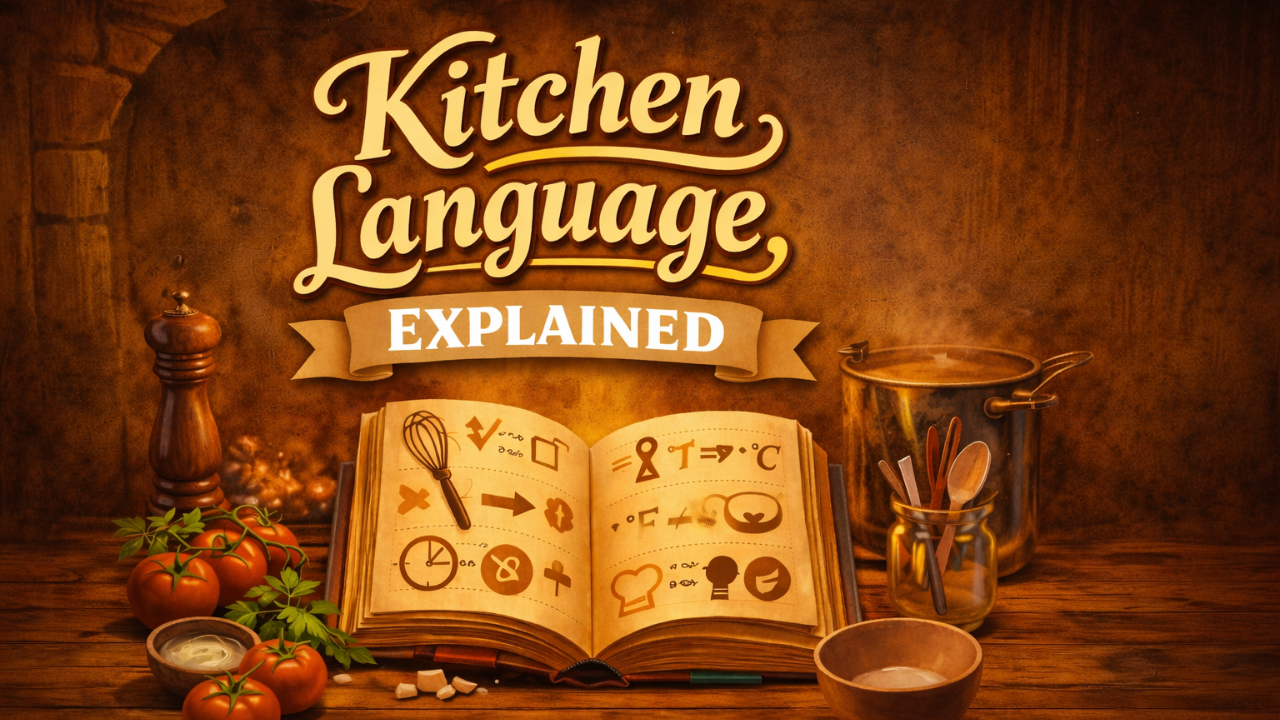
While this guide introduces the idea behind kitchen terminology, the ebook Kitchen Language, Explained organizes those concepts into a more structured reference.
The goal of the book is simple: to clarify the technical language that appears throughout everyday recipes. Instead of encountering unfamiliar words and trying to interpret them in the moment, readers can understand what those terms mean and how they apply during real cooking.
Each entry in the book focuses on a commonly used culinary term and explains it in practical terms. Rather than relying on abstract definitions, the explanations connect the terminology directly to the technique. Readers see what the term describes, how it affects the cooking process, and where it commonly appears in recipes.
Many entries also include examples drawn from typical kitchen situations. These examples help illustrate how small details in technique, such as heat level, knife cuts, or mixing methods, can influence texture, timing, and flavor development. By connecting recipe language to actual cooking actions, the terms become easier to understand and apply.
The book is designed to serve as a working reference rather than something to be read from beginning to end. Cooks can return to it whenever they encounter a term they want to understand more clearly. Over time, those definitions become familiar, and the language used in recipes begins to feel much more intuitive.
In this way, the ebook supports the same goal as this guide: helping cooks interpret recipe instructions with clarity so they can approach cooking with greater confidence and control.
What Readers Will Learn in the Ebook
The ebook organizes common culinary terminology into clear categories so cooks can quickly understand the language used in recipes. Each section explains how specific terms apply in real cooking situations.
Readers will learn about:
- Foundational cooking terminology: Common instructions such as sauté, simmer, reduce, and deglaze appear throughout everyday recipes. Understanding these terms helps cooks interpret instructions correctly and apply the intended technique.
- Knife cuts and preparation language: Terms such as dice, mince, julienne, and chiffonade describe how ingredients should be cut before cooking begins. These preparation details influence cooking time, texture, and presentation.
- Heat control language: Recipes often use terms such as sear, simmer, boil, and braise. Each describes a different relationship between heat, moisture, and time. Recognizing these distinctions helps cooks manage temperature more precisely.
- Sauce and flavor terminology: Techniques such as reduction, emulsification, and deglazing are used to build flavor and structure in sauces. Understanding these concepts makes it easier to follow recipes and develop balanced flavors.
- Professional kitchen shorthand: Many recipes rely on concise terminology used in professional kitchens. Learning this shorthand helps cooks read recipes more confidently and recognize the technique behind each instruction.
As these terms become familiar, recipes become easier to interpret, and the techniques behind them become easier to apply.
Get the Ebook
If you would like a structured reference that explains many of the most common culinary terms used in recipes, the ebook Kitchen Language, Explained is available here:
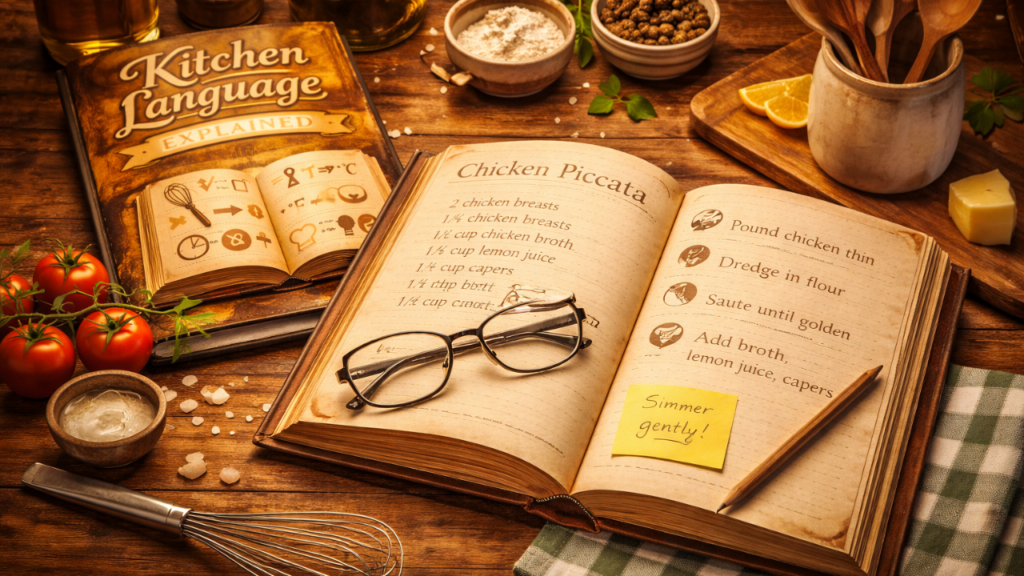
The book organizes essential kitchen terminology into clear explanations with practical examples, helping cooks better understand the language used in everyday recipes.
Why Kitchen Language Matters
Recipes often appear simple on the surface, but the instructions they contain rely on a shared language of technique. When cooks understand that language, the steps in a recipe become easier to interpret and apply.
Instead of guessing what a term might mean, the cook recognizes the action being described and understands how it affects the dish’s outcome. A simmer controls heat, a sauté develops flavor, and a fold protects structure. Each term communicates a technique that shapes the final result.
Learning this language does not require memorizing every culinary term at once. It develops gradually as cooks encounter new instructions and begin to understand the techniques behind them. Over time, those definitions become familiar, and recipes begin to read less like instructions and more like a series of deliberate actions.
When the language of cooking becomes clear, confidence in the kitchen naturally follows.