
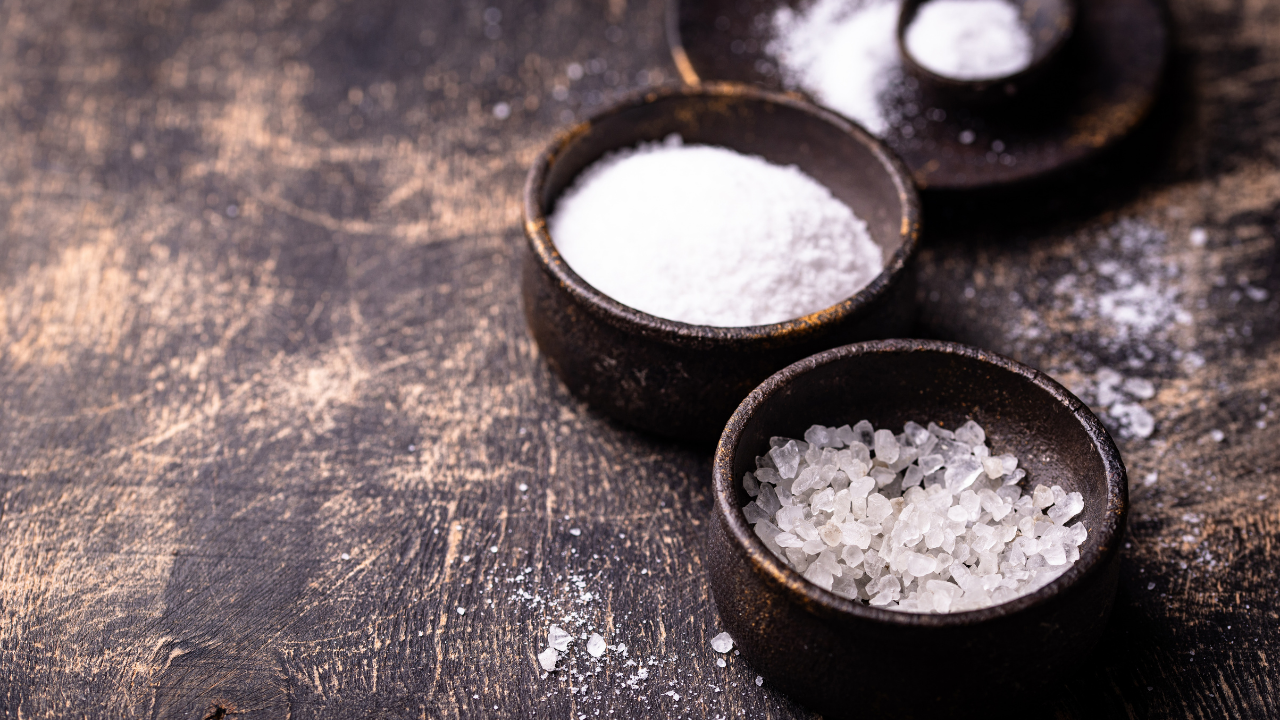
Salt is one of the simplest ingredients in the kitchen, but it is also one of the easiest to misunderstand.
Kosher, sea, and table salt are all salt, but they behave differently. Their crystal size, texture, and density affect measuring, dissolving, spreading, and perceived saltiness.
That is why a recipe that calls for kosher salt may not taste the same if you replace it with the same spoonful of table salt. The salt itself is not magically different. The way it fits into the spoon, lands on the food, and dissolves into the dish can change the result.
Home cooks face this choice everywhere: seasoning meat, salting pasta water, baking, finishing vegetables, balancing a sauce, or adding a pinch to a salad. Understanding the difference lets you season with control, not guesswork.
Once you know how each salt works, choosing the right one becomes less about the label and more about the job. That is the real value of understanding kosher salt, sea salt, and table salt. It helps you cook more consistently, taste more clearly, and adjust with confidence.
What Kosher Salt, Sea Salt, and Table Salt Actually Mean
Kosher salt, sea salt, and table salt are all primarily sodium chloride. That is the basic compound we taste as salt. The important difference for cooking is not only where the salt comes from. It is how the salt is shaped, processed, measured, and used.
| Salt type | What it means | How it behaves | Best kitchen use |
| Kosher salt | Can be fine, coarse, flaky, or crunchy, depending on how it is produced | Easier to pinch, feel, and scatter by hand | Everyday cooking, seasoning meat, vegetables, sauces, soups, and foods adjusted by taste |
| A coarse-grained salt with larger, lighter crystals | Salt made from evaporated seawater | Cooking is fine, finishing when coarse or flaky | Cooking when fine, finishing when coarse or flaky |
| Table salt | A fine, dense, uniform salt | Packs tightly into a spoon and dissolves quickly | Baking, measured mixtures, shakers, and places where fine salt disperses easily |
The key principle is this: salt type matters because crystal size changes control. A tablespoon of table salt does not behave like a tablespoon of kosher salt. A coarse sea salt does not behave like a fine sea salt. When recipes name a specific salt, they are often trying to control how much salt is being used and how it is applied.
Salt is not just an ingredient. It is a tool for adjustment. Once you understand the difference between weight, volume, texture, and purpose, salt becomes easier to manage. You stop asking which salt is best and start asking which salt fits the job.
How Salt Type Affects Seasoning Control
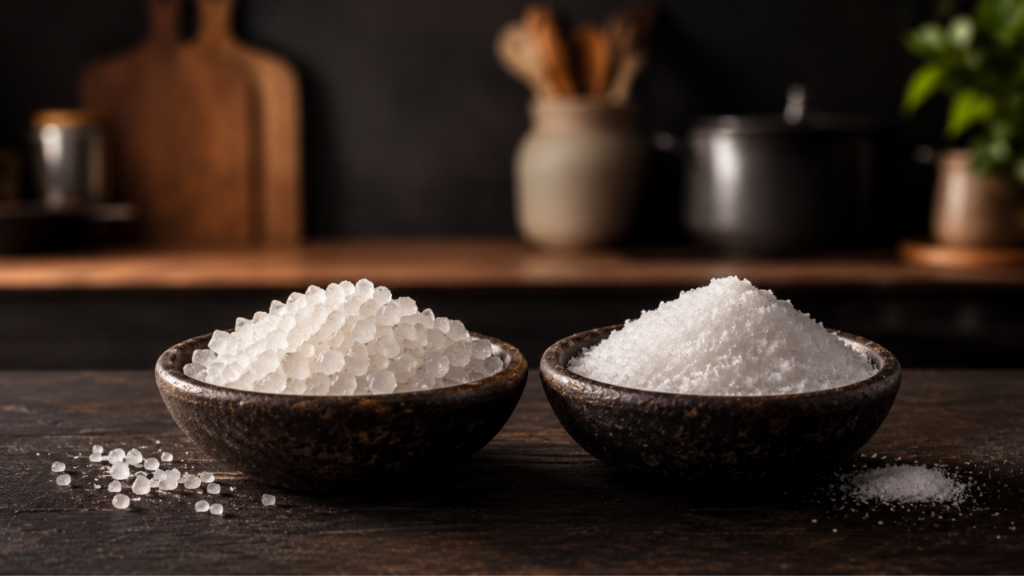
Salt type affects seasoning because different crystals do not measure, dissolve, or spread the same way.
This is where many home cooks get into trouble. They see the word salt in a recipe and assume any salt can be used in the same amount. In practice, a spoonful of fine table salt can contain more salt than the same spoonful of flaky kosher salt because the smaller grains pack together more tightly.
That difference matters most when a recipe measures salt by volume.
A teaspoon of table salt is dense and compact. It fills the spoon with very little empty space between the grains. A teaspoon of kosher salt usually has larger, lighter crystals with more space between them. The spoon may look equally full, but the amount of salt by weight may differ.
That is why the same measured amount can season food differently.
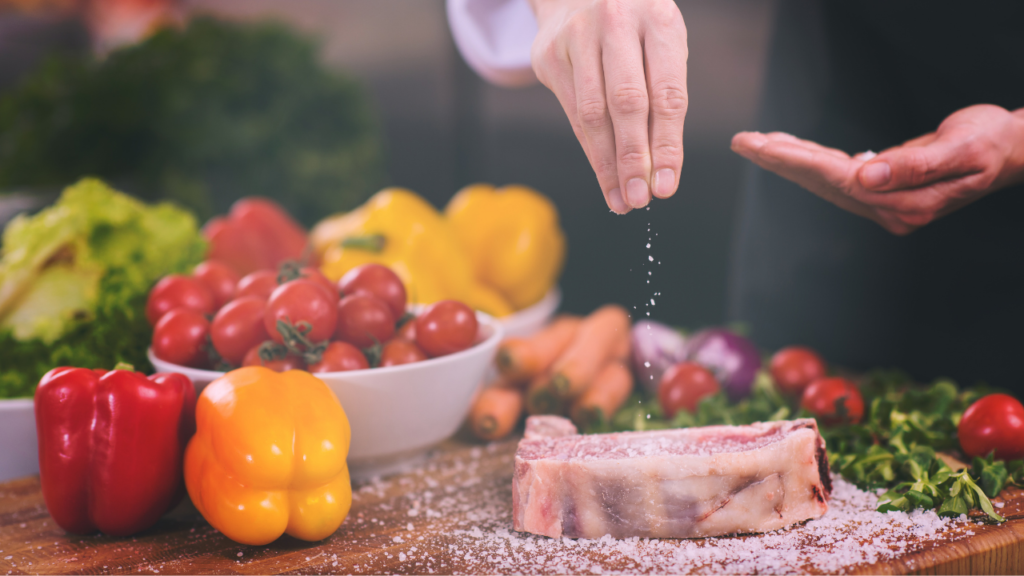
Texture also changes how salt lands on food. Kosher salt is often easier to pinch and scatter evenly over meat, vegetables, and other surfaces. The larger grains make it easier to feel how much you are using. Table salt is finer and pours quickly, which can make it harder to control by hand. Sea salt depends on the type. Fine sea salt may behave more like table salt, while flaky or coarse sea salt may behave more like a finishing salt.
Dissolving matters too.
Fine salt dissolves quickly into batters, doughs, sauces, and liquids. Larger crystals may need more time or more moisture to dissolve fully. If the salt does not dissolve evenly, one bite can taste flat while another tastes too salty.
When the salt type is understood, seasoning becomes more consistent. You know when to measure carefully, when to season gradually, and when to taste before adding more. You also understand why a recipe may seem too salty even though you followed the amount exactly.
When salt type is misunderstood, the problem is usually not the cook. The assumption is that all salts behave the same.
The better habit is to treat salt as both an ingredient and a texture. Ask how it is being used. Is it being dissolved into food? Is it being scattered across a surface? Is it being measured into a dough? Is it being added at the end for texture? That question gives you more control than the label alone.
Where Different Salts Show Up in Real Cooking
Different salts show up in different parts of cooking because they support different kinds of control.
Kosher salt is common in everyday cooking because it is easy to handle. The larger crystals make it easier to pinch, scatter, and see on the surface of food. That matters when seasoning meat before searing, salting vegetables before roasting, building flavor in soups, or adjusting a sauce near the end of cooking.
For many cooks, kosher salt is the main working salt. It sits near the stove or prep area because it responds well to hand seasoning. You can feel it between your fingers, spread it more evenly across the food, and add it gradually as the dish develops.
Table salt appears most often in fine crystals and quickly dissolving matter. It works well in baking, batters, doughs, and liquid mixtures because it disperses evenly when measured carefully. It is also common at the table because the grains pass easily through a salt shaker.
The caution with table salt is the measurement. Because it is fine and dense, it can season more strongly by volume than many larger crystal salts. In a recipe that calls for kosher salt, replacing it with the same spoonful of table salt can push the dish too far.
Sea salt appears in several forms, so its use depends on texture.
Fine sea salt can work much like table salt in some applications. It dissolves easily and can be used when even distribution matters. Coarse sea salt is often used where visible grains and slower dissolving are acceptable. Flaky sea salt is usually best as a finishing salt, adding small bursts of salinity and texture to the surface of food.
You will see these differences across many cooking contexts.
Kosher salt is often used for seasoning proteins, vegetables, stocks, sauces, and general prep. Table salt is often used in baking, brines, and measured mixtures where fine grains dissolve evenly. Sea salt is often used to finish grilled meats, roasted vegetables, salads, chocolate desserts, breads, and simple dishes where the final texture matters.
The main pattern is simple: choose salt based on how it enters the food.
If the salt needs to dissolve completely, fine crystals are useful. If the salt needs to be spread evenly by hand, kosher salt gives better control. If the salt is meant to remain noticeable on the surface, a flaky or coarse sea salt can be the better choice.
That recognition helps you read recipes more clearly. When a recipe calls for a specific salt, it may guide not only flavor but also texture, measurement, and timing.
How to Choose the Right Salt in Your Kitchen
Choosing the right salt starts with one question: What is the salt supposed to do in the dish?
Sometimes salt needs to dissolve completely. Sometimes it needs to spread evenly across the food’s surface. Sometimes it needs to stay slightly noticeable so it adds texture at the end. The best salt is the one that fits that job.
For everyday cooking, kosher salt is usually the easiest to control. It is useful when seasoning by hand, because the crystals are large enough to feel and see. That makes it easier to season meat, vegetables, sauces, soups, and grains gradually instead of adding too much at once.
Use table salt for fine crystals and quick-dissolving matter. This is especially important in baking, where salt is usually measured and mixed into flour, batter, or dough. Because table salt is dense, it should be used carefully if you are replacing kosher salt by volume.
Use sea salt based on its texture. Fine sea salt can work in many places where you need salt to dissolve. Coarse or flaky sea salt is better when you want the salt to sit on the surface and add a clean final pop of flavor.
A simple guide helps:
- If the salt needs to dissolve, choose fine salt.
- If you are seasoning by hand while cooking, choose kosher salt.
- If you want the salt to remain noticeable on the surface, choose flaky or coarse sea salt.
- If the recipe is baked or measured closely, use the salt named in the recipe when possible.
The main cue is how the food tastes and feels as you cook.
| Food tastes flat | The dish may need more dissolved seasoning | Add salt gradually, let it dissolve, then taste again |
| Salt tastes sharp or aggressive | Too much may have been added at once, or the salt may not be fully dissolved | Pause before adding more and give the salt time to spread through the food |
| Seasoning tastes uneven | Salt may not have been distributed well across the surface | Scatter more evenly or stir well before adjusting again |
| Salt disappears quickly into food | It is acting as a surface seasoning | Use this for soups, sauces, doughs, batters, and brines |
| Salt stays visible on the surface | It is acting as surface seasoning | Use this for roasted vegetables, sliced tomatoes, grilled meat, bread, or final seasoning |
| Salt crunches slightly in the final bite | It is adding texture as well as flavor | Use flaky or coarse salt at the end, not early in cooking |
That difference should guide your choice. For cooking during the process, choose a salt that gives you control over the flavor. For measured baking, choose a salt that closely matches the recipe. For finishing, choose a salt that improves the final bite without overwhelming it.
Mistakes That Make Salt Feel Confusing
Most salt mistakes come from treating all salt the same. The label matters, but the crystal size, texture, density, and timing matter more. Once you understand those differences, common seasoning problems become much easier to correct.
Treating Every Salt as Equal by Volume
The most common mistake is measuring all salts as if they behave the same. A teaspoon may look equal, but different salts fill the spoon differently:
- Table salt is fine-grained, so more salt fits into the spoon.
- Kosher salt has larger crystals, so there is more space between the grains.
- Coarse sea salt can vary even more because the crystals are irregular.
That means the same volume can season food differently. This is why recipe wording matters. If a recipe calls for kosher salt and you use the same amount of table salt, the dish may become too salty.
Table salt is not wrong. It is simply finer and denser, so it needs more care when substituted by volume.
Assuming Sea Salt Is Always Better
Sea salt can be excellent, but the label alone does not tell you how to use it. Sea salt can come in different forms:
- Fine sea salt dissolves more easily.
- Coarse sea salt may stay more noticeable on the surface.
- Flaky sea salt is often better for finishing than cooking.
That means sea salt is not automatically better for every job. The better question is not whether sea salt is better. The better question is whether that specific sea salt suits your use.
Adding Finishing Salt Too Early
Flaky or coarse finishing salt works best when it keeps its texture. If it is added too early, it may dissolve before the food reaches the table. This is especially common with hot, wet, or long-cooked dishes.
When that happens, you lose the main reason for using finishing salt:
- The small crunch
- The direct burst of salinity
- The contrast on the final bite
Use finishing salt at the end for texture, surface seasoning, or a cleaner final accent.
Seasoning Only at the End
Final seasoning matters, but some foods need salt earlier so the seasoning has time to move through the ingredient. Salt can help:
- Draw out moisture
- Season below the surface
- Build flavor as food cooks
- Prevent the final bite from tasting salty on the outside but flat inside
This does not mean every dish needs salt at every stage. It means you should understand when salt needs time to work and when a final adjustment is enough.
Thinking Salt Should Make Food Taste Salty
Another common misunderstanding is the idea that salt should make food taste salty. Most of the time, salt should make food taste more complete. It helps:
- Clarify flavor
- Reduce flatness
- Balance ingredients
- Make the dish taste more focused
If the first thing you notice is saltiness, either too much was added or the salt was not distributed well. Good seasoning should support the food, not sit on top of it.
Forgetting That Kosher Salt Brands Can Vary
Kosher salt can also vary by brand. Two common kosher salts, Diamond Crystal and Morton, do not measure the same by volume. Their crystals are shaped and packed differently, so the same spoonful can hold a different amount of salt.
That means:
- One kosher salt may season more lightly by volume.
- Another may season more strongly by volume.
- A recipe can taste different even when you follow the stated amount.
This is why it helps to know which salt you use most often and stay consistent when following recipes.
The Better Habit
The correction is simple: slow down and pay attention to the salt’s form. Before adding or substituting salt, notice:
- The size of the crystals
- Whether the recipe measures by volume or taste
- Whether the salt needs to dissolve
- Whether texture matters in the final bite
Add salt gradually when adjusting, and taste again after it has had time to dissolve or spread through the food. Salt becomes easier to manage when you stop treating it as one fixed ingredient and start treating it as a tool with different forms.
How Salt Crystals Change Measurement and Perception
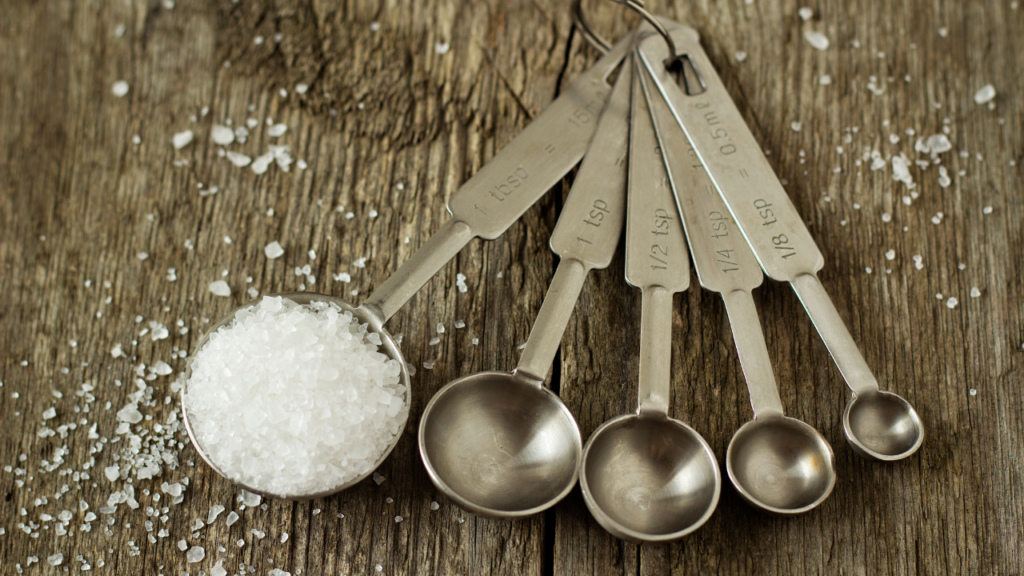
Salt can look simple in a bowl, but the shape of the crystals changes how it behaves.
Fine table salt is made of small, uniform grains. These grains pack tightly in a measuring spoon, so a teaspoon can hold a relatively dense amount of salt. When it comes into contact with moisture, it dissolves quickly and spreads through food quickly.
Kosher salt usually has larger, lighter crystals. The grains do not pack as tightly, so the same spoonful may contain less salt by weight than table salt. This is one reason kosher salt often feels easier to control when seasoning by hand.
Sea salt depends on the style. Fine sea salt can behave much like table salt. Coarse sea salt may dissolve more slowly. Flaky sea salt is thin, crisp, and often used when you want the salt to stay noticeable on the surface.
A simple comparison helps clarify the difference:
| Every day cooking and seasoning by hand | Larger, lighter crystals | Easy to pinch and scatter | Baking, measuring mixtures, and shakers | Brands vary in crystal size and density |
| Table salt | Fine and dense | Dissolves quickly and measures heavily by volume | Baking, measured mixtures, and shakers | Can oversalt if swapped evenly for kosher salt |
| Fine sea salt | Small, even crystals | Dissolves easily | Cooking, sauces, doughs, and general seasoning | Depends on brand and grain size |
| Coarse or flaky sea salt | Large, crunchy, or delicate crystals | Stays noticeable on the surface | Finishing, texture, and final seasoning | Loses texture if added too early |
This is why salt substitution can be tricky.
If a recipe uses weight, the salt type matters less because the amount of sodium chloride is being measured more precisely. If a recipe uses teaspoons or tablespoons, the salt type matters more because different crystals fill the spoon differently.
Perception matters too.
Salt dissolved into a soup, sauce, dough, or brine seasons the food more evenly. Salt sitting on the surface delivers a more immediate salinity hit. Finishing salt can make a bite feel brighter because the crystals come into direct contact with the tongue before fully dissolving.
That does not mean surface salt is stronger. It means you notice it differently.
This distinction is useful in real cooking. A soup that tastes flat needs dissolved seasoning. A sliced tomato may benefit from a sprinkle of salt on the surface. A cookie or caramel dessert may use a few flakes of sea salt at the end to create a contrast that is felt in the final bite.
Once you understand crystal size, reading salt becomes easier. You can see why one salt is better for measuring, another for pinching, and another for finishing.
When Substituting Salt Types Makes Sense
Salt substitutions are not automatically wrong, but they need context. The important question is whether the salt is being dissolved, measured, scattered by hand, or used for finishing texture. Once you know the function, it becomes easier to adjust without oversalting or losing the salt’s purpose.
Substituting one salt for another can work, but it depends on how the salt is being used.
The safest substitutions happen when the salt dissolves completely. In a soup, sauce, brine, or boiling water, the crystal shape matters less once the salt has fully dissolved. At that point, the main issue is the amount of salt, not the texture.
Substitution needs more care when salt is measured by volume.
A teaspoon of table salt is not the same as a teaspoon of many kosher salts. Fine crystals pack more tightly, so the same spoonful can season more strongly. If you replace kosher salt with table salt in the same measured amount, the dish can become too salty before you have a chance to adjust.
Baking also requires more caution.
In baking, salt is usually measured into a dough or batter where balance matters. A small change can affect flavor more than expected because there may be less opportunity to taste and adjust during the process. When baking, use the salt type named in the recipe when possible, or adjust carefully if using a different one.
Finishing salt is the least interchangeable.
Flaky or coarse sea salt is often used for its surface texture and final-bite feel. Replacing it with fine table salt will not give the same texture. It may dissolve too quickly, spread too aggressively, or taste sharper than intended.
The best rule is to match the function.
Use a fine salt when the goal is quick dissolving. Use kosher salt when the goal is hand seasoning and even coverage. Use flaky or coarse sea salt when the goal is surface texture and a clean final accent.
When you do substitute, add less at first. Let the salt dissolve if it is going into something wet. Taste again before adding more. The goal is not to memorize every conversation. The goal is to understand why the salt behaves differently, so you can adjust it with control.
Quick Takeaways
- Salt type matters because crystal size changes measurement, coverage, and how salt is perceived.
- Kosher salt is usually the easiest everyday cooking salt because it is easier to pinch, scatter, and control by hand.
- Table salt is fine and dense, so the same spoonful can season more strongly than a larger crystal salt.
- Sea salt is not one single texture. Fine sea salt, coarse sea salt, and flaky sea salt behave differently.
- Use fine salt for quick dissolving, kosher salt for general cooking control, and flaky or coarse sea salt when finishing texture matters.
- When substituting salts, pay the most attention to recipes measured by teaspoons or tablespoons.
- The best salt is not the most expensive one. It is the one that fits the job in the dish.
FAQs
Salt questions usually come down to measurement, texture, and timing. These answers clarify the most common points so you can choose and substitute salt with better control.
Can I substitute table salt for kosher salt?
Yes, but be careful when the recipe measures salt by volume. Table salt is finer and denser than most kosher salt, so the same spoonful can make food taste saltier than intended. When substituting table salt for kosher salt, start with less and adjust to taste as the dish allows.
Why do many chefs prefer kosher salt?
Many chefs prefer kosher salt because it is easier to pick up, feel, and scatter by hand. The larger crystals give better control when seasoning meat, vegetables, sauces, and other foods during cooking. It is not because kosher salt is automatically more flavorful. It is practical to work with.
Is sea salt stronger than regular salt?
Not always. Sea salt can be fine, coarse, or flaky, so its strength depends on texture and how it is used. Fine sea salt may behave more like table salt. Flaky sea salt may taste more noticeable on the surface because it hits the tongue directly before it dissolves.
Does salt taste different depending on the type?
The basic salty taste comes from sodium chloride, but texture changes how you experience it. Fine salt dissolves quickly and spreads through food. Flaky or coarse salt may stay on the surface, creating a more direct burst of salinity. The difference is often about perception, not just flavor.
Which salt should I use for baking?
Use the salt named in the recipe when possible. Baking usually depends on measured amounts, and there is less opportunity to taste and adjust as you go. Fine salt often disperses well in doughs and batters, but the most important point is consistency with the recipe.
Why does finishing salt go on at the end?
Finishing salt goes on at the end because its texture is part of the experience. If flaky or coarse salt is added too early, it may dissolve and lose its surface crunch or clean final accent, making it less useful.
What is the best everyday salt for home cooking?
Kosher salt is usually the best everyday cooking salt because it is easy to pinch, spread, and control. Table salt is useful for measured applications, and sea salt is useful when texture or finishing matters.
Kitchen Tools That Support This Concept


You do not need many tools to better understand salt. The goal is not to make seasoning complicated. The right tools simply help you control the amount, access, and consistency.
Salt Cellar
A salt cellar is useful for everyday cooking because it lets you season by hand rather than blindly shaking salt over food.
It works especially well with kosher salt. You can feel the crystals between your fingers, scatter them more evenly, and add salt gradually as food cooks. That makes it easier to season meat, vegetables, sauces, soups, and grains with better control.
A salt cellar also keeps your main cooking salt visible and accessible. That matters because seasoning isn’t something that happens only once. It often happens in small adjustments as the dish develops.
Digital Kitchen Scale
A digital kitchen scale helps when precision matters.
Salt can vary widely in volume because different crystal sizes fill a spoon differently. A scale removes that confusion by measuring weight rather than the volume the salt occupies.
This is especially helpful for baking, brines, fermented foods, and any recipe where the salt amount needs to be consistent. When you measure by weight, kosher salt, sea salt, and table salt become easier to compare.
Measuring Spoons
Measuring spoons are still useful, especially when following recipes written by volume.
The key is to understand their limit. A teaspoon of fine table salt does not behave exactly like a teaspoon of kosher salt or coarse sea salt. Measuring spoons help you follow a recipe, but they do not erase the difference between salts.
Use them carefully, especially when substituting one salt type for another. When possible, match the salt named in the recipe. When you cannot, use the spoon as a starting point and adjust with taste and judgment.
Choosing Salt With More Confidence
Kosher salt, sea salt, and table salt are all salt, but they do not give you the same control in the kitchen.
The difference comes down to crystal size, texture, density, and purpose. Some salts are easier to pinch and scatter. Some dissolve quickly. Some are meant to stay on the surface and add texture to the final bite.
Once you understand that, choosing salt becomes easier.
Use kosher salt when you want control during everyday cooking. Use table salt carefully when a recipe depends on fine, measured seasoning. Use sea salt based on its texture, especially when finishing a dish.
The goal is not to keep every salt in your pantry. The goal is to understand what each one does so you can season with more awareness.
For the next step, explore more Kitchen Know How articles on seasoning, flavor balance, and cooking with better control.