
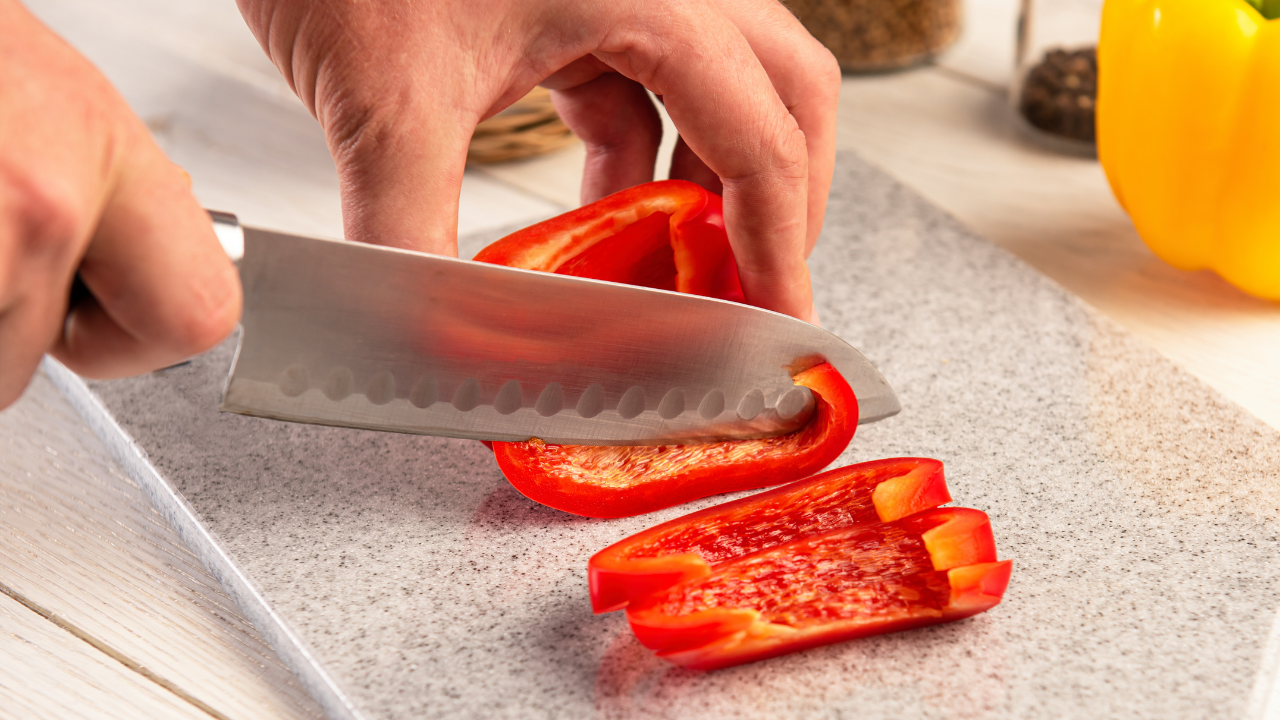
Bell peppers seem simple to cut, but their shape can make handling tricky.
In this demonstration, Chef Mark Sandoval shows how to break down a bell pepper with control before moving into cleaner strips and dice. The important part is not speed. It is how he manages the pepper’s curved walls, seeds, ribs, and uneven surfaces before making the final cuts.
Watch how the pepper changes from a round, unstable vegetable into flatter, more organized sections. That setup is what makes the knife work cleaner, the pieces more consistent, and the final dice easier to control.
Watch: Chef Mark Sandoval Demonstrates How to Cut Bell Peppers
As you watch, focus on how Chef Mark controls the bell pepper before cutting it to the desired size. Notice how he handles the round shape, opens the pepper, removes what gets in the way, and turns the curved walls into flatter sections for cleaner knife work.
What to Watch For in the Demonstration
As you watch the video, pay attention to these visible control points:
- How Chef Mark steadies the whole pepper before the first cut
- How he opens the pepper before asking the knife to make precise cuts
- How the white ribs are removed to create smoother blade travel
- How the pepper wall sits flatter once the interior is cleaned
- How the strips are gathered before the final dice
- How the knife rhythm stays steady through the crosswise cuts
Each point connects to the same idea: Chef Mark controls the pepper’s shape before cutting it for size.
Ingredients and Tools Visible in the Demonstration
The main ingredient in this demonstration is a red bell pepper. A green bell pepper appears at the beginning, but the visible cutting work focuses on the red pepper.
| Red bell pepper | Curved walls, hollow center, seeds, and white ribs all affect control |
| Chef knife | Used for opening, trimming, slicing, and dicing |
| Cutting board | Provides stability as the pepper is turned, flattened, and cut |
| Bowl | Keeps trimmed pieces and discard away from the active cutting area |
The red bell pepper matters because of its structure. It has curved walls, a hollow center, seeds, and white interior ribs. Those details affect how the pepper sits on the board and how cleanly the knife can travel through it.
Chef Mark uses the same knife throughout each stage. Watch how the tool remains consistent as the job shifts from opening and trimming to slicing and dicing.

Technique Breakdown
Before looking at each phase, notice how the demonstration moves from control to precision.
| Initial setup | The pepper must be stabilized before the first cut |
| Opening the pepper | The round shape becomes easier to manage |
| Cleaning the interior | Seeds and ribs are removed so the pepper sits flatter |
| Creating strips | The cleaned panel is cut into even lengths |
| Seeds and ribs are removed, so the pepper sits flatter | Aligned strips become small, consistent pieces |
Initial Setup
Chef Mark begins with whole bell peppers on the cutting board. This first view matters because it shows the main challenge before any cutting begins: the pepper is round, hollow, and uneven.
Watch how the knife is positioned before it enters the pepper. The cut is not rushed. The pepper is held firmly so it does not roll, shift, or collapse under the blade.
At this stage, the goal is control. Before Chef Mark can cut for size, he has to make the pepper safer and more stable to work with.
Opening the Pepper
Chef Mark works around the top and core area to separate the stem and inner structure. This changes the pepper from a closed, rounded vegetable into something more manageable.
As the pepper opens, the focus shifts. He is no longer just cutting into the whole pepper. He is creating access to the interior so the usable pepper walls can be separated and cleaned.
Notice how this stage prepares the pepper for precision later. The cleaner the pepper is opened, the easier it becomes to work with the panels that follow.
Cleaning the Interior
Once the pepper is opened, the seeds and white ribs become visible. Chef Mark removes parts that would impede smoother knife travel.
The ribs matter because they create uneven thickness inside the pepper. If they stay attached, the panel does not sit as cleanly against the board, and the knife has to move through more resistance.
After this cleanup, the pepper becomes flatter, cleaner, and easier to control. This is the point where the demonstration moves from trimming to more precise knife work.
Creating Strips
Chef Mark places the cleaned pepper panel flat against the cutting board. This is an important change from the beginning of the demonstration, as the knife is now working on a stable surface.
He cuts the pepper lengthwise into strips with controlled blade movement. Watch the spacing between cuts. The width of these strips sets up the size and consistency of the final dice.
This phase shows why the earlier cleaning and flattening matter. The flatter the pepper sits, the easier it is to guide the blade evenly.
Dicing the Pepper
The strips are gathered and aligned before the final cuts are made. Chef Mark does not let them spread loosely across the board.
He cuts the strips crosswise at a steady rhythm, creating small, even pieces. The consistency comes from the setup: cleaned panels, even strips, and organized alignment.
The final dice shows the purpose of the whole demonstration. Cleaner bell pepper cuts are not only about the last knife movement. They come from controlling the pepper at every stage before that final cut.
Common Mistakes This Demonstration Helps Correct
This demonstration helps correct several common bell pepper cutting problems:
- Cutting into the pepper while it is still rounded and unstable
- Leaving the white ribs attached, which makes the knife path less even
- Trying to dice before the pepper has been opened and flattened
- Letting strips spread out before the final crosswise cuts
- Rushing the final dice instead of keeping the pieces gathered and controlled
Each mistake connects back to the same lesson. Chef Mark creates control before asking the knife to create precision.
Where This Technique Transfers
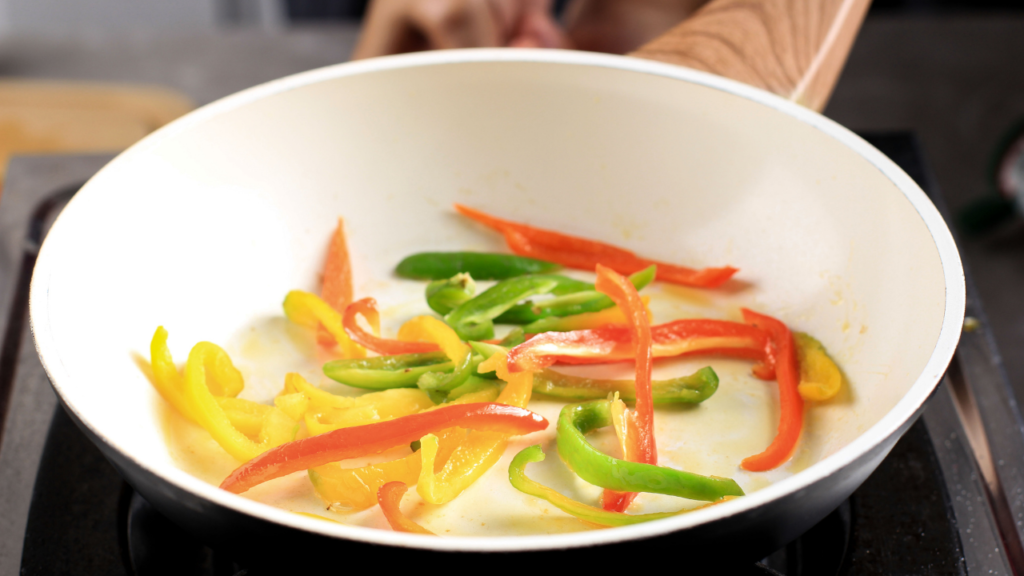
This same control matters anywhere bell pepper needs to cook evenly or mix cleanly into a dish. Cleaner dice are useful for sautés, soups, sauces, salads, omelets, fillings, and garnishes because the pieces behave more consistently once they leave the cutting board.
The larger lesson is how Chef Mark handles shape. A bell pepper starts round and uneven, but he turns it into flatter sections before asking the knife to do more precise work. That same idea applies to other curved or irregular ingredients, where stability must come before size.
A looser cut may be more practical when the pepper will be roasted, grilled, charred, or cooked down for a longer time. In those cases, perfect dice may not matter as much. But when the cut will remain visible, cook quickly, or affect texture in each bite, the control shown in this demonstration becomes more important.
Related Skills or Further Learning
For another view of strip alignment and final dice control, watch Chef Mark Sandoval’s onion julienne and brunoise demonstration. The ingredient shape is different, but the same idea applies: cleaner final cuts depend on how the ingredient is organized before the knife moves across it.
Chef Mark’s small-onion-dice demonstration is also a useful comparison. Bell peppers are hollow and curved, while onions are layered and dense. Watching both demonstrations side by side helps show how the knife setup changes depending on the ingredient’s structure.
For a broader look at knife selection, explore the Kitchen Know How article on choosing the right knife. It helps explain why blade size, board control, and knife handling affect the kind of precision shown in this demonstration.
What This Demonstration Teaches
What matters most in this demonstration is how Chef Mark controls the bell pepper before cutting it to the desired size.
The cleaner dice comes from the earlier choices: steadying the pepper, opening it cleanly, removing the ribs, flattening the panels, aligning the strips, and keeping the final knife rhythm controlled.
When you watch for those details, the technique becomes easier to understand. Good knife work is not only about the final cut. It is about how each adjustment prepares the next one.
Watch another Chef Mark Sandoval demonstration.
2 thoughts on “How to Cut Bell Peppers: Chef Mark Sandoval Demonstration”
Comments are closed.