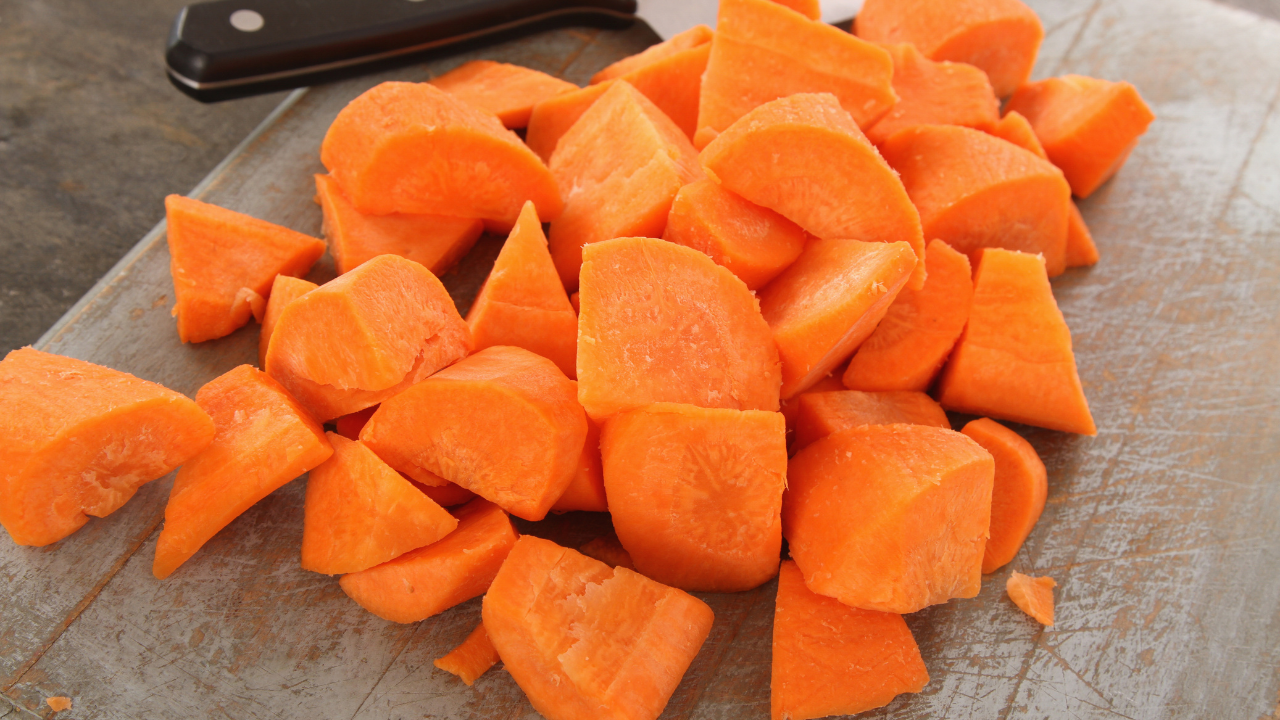
Rough chopping carrots is a foundational knife skill used when vegetables are meant to cook fully and contribute flavor rather than visual precision. This technique focuses on control, consistency, and efficiency during prep.
In this demonstration, Chef Mark Sandoval shows how to break carrots down into manageable pieces that cook evenly and predictably. The goal is not a uniform shape, but a reliable size — a critical skill for making soups, stocks, braises, and other long-cooked dishes.
What You’ll Learn
- How to rough chop carrots with control while keeping pieces consistent in size.
- What visual cues to watch for as the carrots are cut, including thickness and spacing.
- How proper rough chopping supports even cooking and more reliable results in long-cooked dishes.
Tools You’ll Need
- Chef’s knife
A sharp chef’s knife allows for clean, controlled cuts through firmer vegetables like carrots. - Cutting board
Use a stable cutting board with enough space to work comfortably without crowding the ingredients. - Bench scraper (optional)
Useful for gathering chopped carrots and clearing the board between passes. - Damp towel or non-slip mat (optional)
Placed under the board to prevent movement and maintain control while cutting.
Technique Breakdown
1) Preparing the Carrots
Choose firm carrots with a solid texture and minimal surface moisture. Even thickness helps create more consistent pieces, which supports uniform softening during cooking.
- Begin by rinsing the carrots and trimming away the ends. Removing uneven or dried areas helps establish a clean starting point on the board.
- Before cutting, square off the carrot to create a flat surface. This prevents rolling and allows the knife to move with steady control rather than reactive pressure.
Stability at this stage sets the tone for every cut that follows.
2) Breaking the Carrots into Manageable Lengths
- Cut the carrots into shorter segments before rough chopping. Working with smaller pieces improves control and reduces the need to force the blade through dense texture.
These segments should feel easy to handle and remain stable on the board as you continue cutting.
3) Rough Chopping the Carrots
- With the carrot pieces stabilized, begin cutting them into rough, even chunks. The emphasis is on consistent size rather than precise shape.
- As shown in the video, allow the knife to move naturally through the carrot, keeping the motion calm and deliberate. Avoid rushing or applying excess pressure.
The goal is to create pieces that will soften at the same rate once cooking begins.
4) Visual Size Guidelines
Roughly chopped carrots should be large enough to hold their structure at the start of cooking, yet small enough to soften evenly over time.
Focus on repeating a similar size from piece to piece. Consistency ensures predictable cooking and cleaner flavor development, especially in soups, stocks, and braises.
Key Chef Tips
- Let the knife do the work.
Use steady, controlled motion rather than force. If the blade hesitates, slow down and reset instead of pushing through the carrot. - Prioritize consistent size over shape.
Rough chopping is not about visual uniformity. Focus on repeating similar piece sizes so the carrots cook evenly. - Establish control before increasing speed.
Work at a pace that allows clean cuts and stable movement. Speed develops naturally once the motion feels predictable. - Keep your guide hand relaxed and stable.
A light, secure grip improves control and reduces tension. Stability comes from positioning, not pressure.
Common Mistakes to Avoid
| Mistake | Why It Happens | Chef Correction |
| Cutting uneven pieces | Size varies as cuts are rushed or inconsistent | Pause occasionally and adjust size before continuing |
| Skipping flat surfaces | Rounded carrots roll on the board | Square off one side before chopping |
| Forcing the knife | Blade resistance leads to added pressure | Slow down and let the knife work naturally |
| Chasing precision | Treating rough chop like a fine cut | Focus on consistency, not exact shape |
When to Use This Technique
Rough chopping carrots works best when the vegetable will be fully cooked and used to build flavor rather than presentation.
This technique is well-suited for:
- Soups and stews, where carrots soften gradually and contribute sweetness and body.
- Stocks and broths, allowing flavor to extract evenly during long simmering.
- Braises and long-cooked sauces, where structure breaks down naturally over time.
Rough chopping is less effective when carrots are meant to remain visually distinct or cook very quickly.
It is not ideal for:
- Garnishes or finishing elements, where shape and appearance matter.
- Quick sautés or stir-fries, which require smaller, more uniform cuts to cook evenly in a short time.
Understanding when to use this cut helps you choose the right level of prep for the dish ahead.
Final Thoughts
Rough chopping carrots is a fundamental prep skill that supports consistency and confidence in the kitchen. When pieces are cut with control and are similar in size, cooking becomes more predictable and easier to manage.
Strong results begin before heat is applied. Developing reliable knife habits during prep improves timing, organization, and overall execution in everyday cooking.
To continue building these fundamentals, watch another Chef Mark Sandoval technique video and keep refining your skills through focused practice.